Advertisement






What really powers the cloud? Behind every Google search, A...
A lot of what defines a home isn’t visible at handover. I...
Private equity has played a significant role in shaping Indi...
Luxury real estate is one of the most talked-about segments ...
Airports play a much bigger role than just enabling travel -...
The Navi Mumbai Municipal Corporation (NMMC) is preparing a scientific tree management strategy after widespread tree falls during the heavy rainfall witnessed in July 2026. Municipal Commissioner Dr Kailas Shinde chaired a meeting with arborists and tree experts to examine the causes behind uprooted trees and identify preventive measures. The experts attributed most incidents to restricted root growth caused by excessive concretisation, improper pruning, waterlogging, root damage during utility works and species-specific characteristics. Based on the recommendations, NMMC plans to introduce a standard operating procedure (SOP) for tree pruning, conduct scientific risk assessments, document vulnerable trees and adopt urban forestry guidelines to improve tree safety while preserving the city's green cover.
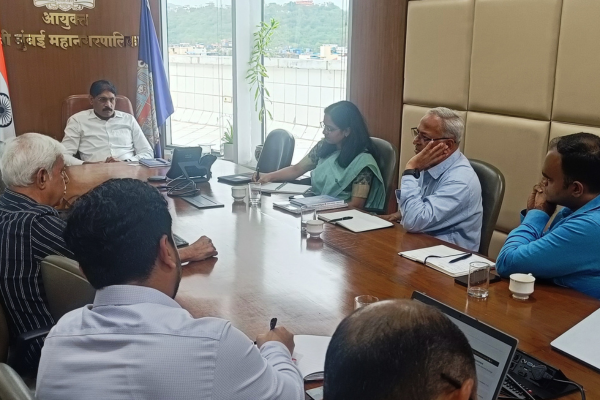
The Navi Mumbai Municipal Corporation (NMMC) has initiated a scientific review of tree management practices following the large-scale uprooting of trees during the heavy rainfall experienced across the Mumbai Metropolitan Region in July 2026. Municipal Commissioner Dr Kailas Shinde chaired a special meeting with tree experts and arborists at the civic headquarters to assess the causes behind the incidents and formulate preventive measures for future monsoon seasons.
The meeting was attended by Deputy Municipal Commissioner (Gardens) Smita Kale and tree experts Shrikant Ingalhalikar, Dr Chandrakant Salunkhe, Sharvari Barve, Sarang Phale and arborist Vaibhav Raje. Participants conducted a detailed review of trees that had collapsed during the recent spell of intense rainfall and discussed scientific factors influencing tree stability in urban environments.
According to the experts, while heavy rainfall and strong winds remain the primary triggers, several urban planning and maintenance issues significantly increase the risk of tree falls. Excessive use of cement and concrete around roads and residential complexes was identified as one of the principal causes, as insufficient open space around tree bases restricts root growth. Frequent excavation for underground utilities, including cables and pipelines, also damages roots and weakens the anchorage of trees. Experts observed that more than 90% of fallen trees were located along roads or within housing societies, whereas tree falls were minimal in village settlements and informal housing areas where ground surfaces remain largely unpaved.
The experts also highlighted phototropism as a contributing factor. Trees deprived of adequate sunlight due to surrounding buildings tend to lean towards open spaces in search of light, resulting in uneven weight distribution and structural imbalance. Improper pruning practices, particularly excessive trimming from one side or only from the upper canopy, were also found to increase stress on trees during storms. Such practices were reported to be common within housing societies.
Waterlogging during the initial monsoon showers further increases the weight of tree canopies while simultaneously loosening the surrounding soil. Given Navi Mumbai's coastal location and relatively high groundwater table, these conditions make trees more susceptible to uprooting. The experts also noted that certain species are inherently more vulnerable. Ficus species are unsuitable for roadside planting due to their growth characteristics, while Gulmohar and Peltophorum trees have comparatively brittle wood, making them more prone to branch failures. In contrast, coconut and palm trees generally withstand severe storms more effectively.
Based on the recommendations, NMMC plans to implement a series of scientific management measures in accordance with National Green Tribunal (NGT) guidelines and urban forestry principles. The civic body will prepare a standard operating procedure (SOP) for tree pruning, with pruning activities scheduled before the onset of the monsoon, preferably during March and April, while avoiding pruning in October.
Future maintenance will focus on balancing the tree canopy rather than concentrating solely on root-related interventions. Pruning will be carried out under expert supervision to maintain structural stability and minimise wind resistance. The corporation will also make it mandatory to document trees through before-and-after photographs during pruning operations and create an inventory of leaning trees for case-by-case evaluation.
In addition, NMMC will undertake visual assessments of recently fallen trees, examine historical pruning records from the past year and, where necessary, employ advanced technologies for scientific risk assessment. The municipal corporation said the exercise is intended to strengthen long-term urban tree management while reducing risks associated with extreme weather events.
Advertisement













 Facebook
 Whatsapp
