Advertisement






The Gulf conflict has disrupted global supply chains, pushed...
REITs have changed the way commercial real estate is owned a...
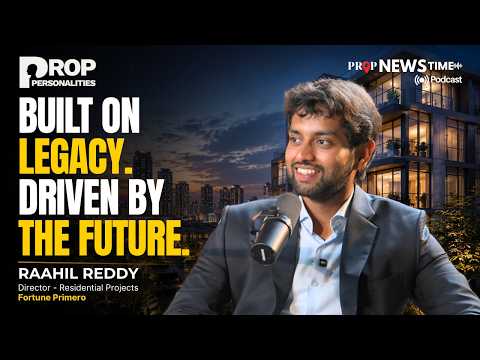
What does it take to preserve a real estate legacy while bui...
What really powers the cloud? Behind every Google search, A...
A lot of what defines a home isn’t visible at handover. I...
As the real estate sector moves towards more sustainable and context-driven development, ecological considerations are increasingly influencing projects from the earliest planning stages rather than being treated as a design afterthought. This article examines how understanding a site's natural systems, landscape and cultural context is reshaping master planning, placemaking and long-term value creation across hospitality, residential and destination-led developments. It also explores why integrating ecological intelligence into development decisions is becoming essential for creating resilient, distinctive and enduring built environments.

The next generation of landmark developments will be remembered not only for their architecture but also for how intelligently they respond to their surroundings. Across hospitality and destination-led projects, the earliest conversations are shifting beyond development potential and built-up area towards a more fundamental question: what already exists on the site that should shape the development itself?
This shift is redefining the role of ecological context. Rather than being considered after planning decisions have been made, it is increasingly becoming the framework that informs how places are conceived, designed and sustained over time.
Every site possesses its own ecological intelligence. It is reflected in the contours of the land, the movement of water, seasonal patterns, existing vegetation, biodiversity and the cultural memory embedded within the landscape. These characteristics influence not only environmental performance but also how people experience a place.
In hospitality developments, ecological context shapes the guest experience by creating destinations that feel authentic and connected to their surroundings. In institutional and infrastructure projects, it influences movement, comfort, resilience and long-term operational performance. Instead of beginning with architecture, many projects are allowing the landscape to guide decisions on master planning, orientation, circulation and spatial relationships. The result is development that sits naturally within its setting rather than appearing imposed upon it.
Developers are also recognising that long-term value is increasingly created through placemaking rather than land optimisation alone. A deeper understanding of a site's ecological, cultural and spatial characteristics produces places with stronger identity, greater resilience and more enduring appeal. Ecological context is therefore no longer viewed solely through the lens of environmental responsibility. It has become a defining factor in shaping character, responding to climatic conditions and ensuring projects remain relevant over time.
This evolution is encouraging greater collaboration across disciplines. Architecture, landscape architecture, environmental planning, spatial design, behavioural research, graphic design, visitor experience and brand strategy are increasingly contributing from the earliest stages of a project rather than being introduced sequentially. This reflects a simple but significant understanding: people do not experience landscapes, buildings and interiors separately. They experience places as continuous journeys where movement, orientation, emotion and memory are shaped by the relationship between all these elements.
The influence of ecological context extends well beyond environmental performance. It informs arrival sequences, circulation patterns, public spaces, visual connections, material selection and spatial narratives. Existing landforms guide movement through a site. Mature vegetation becomes an organising element rather than an obstacle to development. Natural water systems increasingly inform planning decisions instead of being engineered around. These approaches represent not only environmentally responsible design but also more thoughtful and context-sensitive development.
One area where this transformation is particularly evident is wayfinding. Traditionally associated with signage installed towards the end of a project, wayfinding is now being considered much earlier in the design process. Successful environments enable people to understand where they are and where they need to go through spatial organisation itself. The relationship between built form, landscape, natural light, views, pathways and landmarks creates intuitive orientation long before directional signs become necessary.
In hospitality environments, this creates journeys that feel effortless rather than prescribed. It reduces cognitive effort while encouraging visitors to engage more naturally with the place. Existing trees become gathering points, natural contours influence movement, and ecological systems contribute to thermal comfort, biodiversity and wellbeing. Landscape is no longer treated as a decorative addition but as an integral component of the development strategy.
Climate resilience has accelerated this shift, but it is not its only driver. Today's users increasingly value environments that feel authentic and rooted in their local geography and culture. Whether visiting a luxury resort or a mixed-use destination, people are drawn to places that reflect their surroundings rather than relying on a generic design language. Distinctiveness emerges from the relationship between architecture and landscape, creating experiences that cannot be replicated elsewhere.
This is also reshaping how developers think about long-term value. For years, differentiation relied on larger amenities, iconic architecture or premium finishes. While these continue to matter, they are becoming easier to replicate. Ecological context, by contrast, is unique to every site. Developments that recognise and strengthen these inherent qualities create identities that endure far beyond visual appeal. As competition intensifies across hospitality, residential and destination-led developments, creating an authentic sense of place is becoming an increasingly important competitive advantage.
The industry's greatest opportunity lies in changing the sequence of development itself. Rather than asking how ecological considerations can be accommodated after a master plan has been prepared, the more important question is how ecological context can inform the master plan from the outset. That subtle shift influences every subsequent decision, from movement networks and landscape integration to built form and user experience.
The most successful developments of the future will not simply minimise their impact on nature. They will recognise ecological context as a source of design intelligence that shapes places with greater resilience, stronger identity and lasting relevance. Projects that begin with this understanding are more likely to create environments that remain meaningful long after construction is complete.
Disclaimer:
The views, opinions, and information expressed in this article are solely those of the author and do not necessarily reflect the views of Prop News Time. The content has not been independently verified or endorsed by Prop News Time. Readers are advised to exercise their own discretion and seek professional advice if required.
Advertisement













 Facebook
 Whatsapp
