Advertisement






What really powers the cloud? Behind every Google search, A...
A lot of what defines a home isn’t visible at handover. I...
Private equity has played a significant role in shaping Indi...
Luxury real estate is one of the most talked-about segments ...
Airports play a much bigger role than just enabling travel -...
Navi Mumbai Municipal Corporation (NMMC) presented its Textile Recycling Facility (TRF) as a model for urban circular economy initiatives during a national summit on textiles held in New Delhi earlier this week. Municipal Commissioner Dr Kailas Shinde outlined how urban local bodies can support India's textile recycling ecosystem by creating reliable post-consumer textile collection systems. Developed in collaboration with the Ministry of Textiles' Textile Committee, the TRF currently engages more than 50,000 households and has trained over 300 women in textile upcycling through self-help groups. The presentation also highlighted the project's contribution to reducing textile waste sent to landfills and creating sustainable livelihood opportunities while aligning with Maharashtra's Textile Policy 2023–2028.
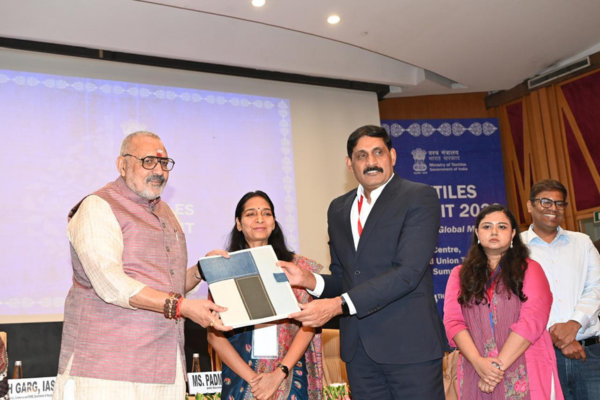
Navi Mumbai Municipal Corporation (NMMC) presented its Textile Recycling Facility (TRF) as a scalable model for municipal-led textile waste management at the National Summit on 'Textiles for Global Markets' held in New Delhi earlier this week. During a technical session on quality, sustainability, certification and procurement decisions aimed at positioning India as a preferred global sourcing destination, Municipal Commissioner Dr Kailas Shinde delivered a presentation on the framework for municipal-state collaboration, highlighting the city's experience in developing a circular textile economy.
The summit brought together representatives from government, academia and industry, including Textile Committee Secretary Kartikeya Dhanda, Professor Bipin Kumar from the Department of Textile and Fibre Engineering at IIT Delhi, former National Accreditation Board Chief Executive Officer Dr Anil Johri, TEA Vice-President V Elangovan, IKEA Director Sayantani Chatterjee and other stakeholders from the textile sector.
During his presentation, Dr Shinde stated that urban local bodies should be recognised as key participants in the textile recycling value chain. He said municipal authorities possess the infrastructure, citizen outreach mechanisms, 3R centres, waste collection networks and operational capacity required to establish reliable systems for collecting and segregating post-consumer textile waste. According to him, these capabilities enable cities to emerge as dependable suppliers of raw materials required by the recycling industry while supporting the transition towards a circular economy.
The commissioner highlighted that NMMC's Textile Recycling Facility, established in collaboration with the Textile Committee under the Ministry of Textiles, has developed into a successful pilot project with the direct participation of more than 50,000 households. He added that the initiative has demonstrated how local governments can integrate waste management with resource recovery and community participation.
The presentation further noted that more than 300 women have received skill development training to manufacture value-added products from discarded textiles. Through self-help groups, the initiative has created sustainable livelihood opportunities while simultaneously reducing the quantity of textile waste reaching landfill sites.
Drawing on the project's implementation experience, Dr Shinde said the initiative had enabled the establishment of a dedicated textile collection system, strengthened segregation and material recovery processes, created a dependable supply chain for recyclable textile waste and promoted the reuse of post-consumer textile materials. He added that discussions had also commenced with industry stakeholders to facilitate large-scale implementation of the model.
The commissioner also outlined opportunities available under the Maharashtra Textile Policy 2023–2028, stating that the policy provides an enabling framework to support textile recycling and sustainability-focused initiatives. He called for collaborative public-private partnerships involving urban local bodies, the state government, recycling industries, technology providers, industrial partners, self-help groups and citizens to expand such projects. Dr Shinde further stated that the Navi Mumbai Textile Recycling Facility could serve as a reference model for adoption by other cities and deserved consideration for wider implementation at both the state and national levels.
NMMC said the Textile Recycling Facility, operated under the guidance of Commissioner Dr Kailas Shinde and supervised by Deputy Municipal Commissioner Smita Kale, has gained recognition as one of India's pioneering municipal projects dedicated to textile waste recycling. The civic body added that the opportunity to present the initiative at a national summit reflects growing recognition of Navi Mumbai's approach to sustainable urban waste management and environmental stewardship.
Advertisement













 Facebook
 Whatsapp
