Advertisement






What really powers the cloud? Behind every Google search, A...
A lot of what defines a home isn’t visible at handover. I...
Private equity has played a significant role in shaping Indi...
Luxury real estate is one of the most talked-about segments ...
Airports play a much bigger role than just enabling travel -...
The Bombay High Court has directed authorities to submit a status report on compensatory afforestation linked to the Versova–Bhayandar Coastal Road project after environmental NGO Vanashakti raised concerns over compliance with conditions attached to mangrove felling approvals. The 26.3-km project, being developed by the Brihanmumbai Municipal Corporation, received permission for the removal of 45,675 mangroves subject to restoration and plantation measures. The court’s latest direction focuses on the implementation of those environmental safeguards.
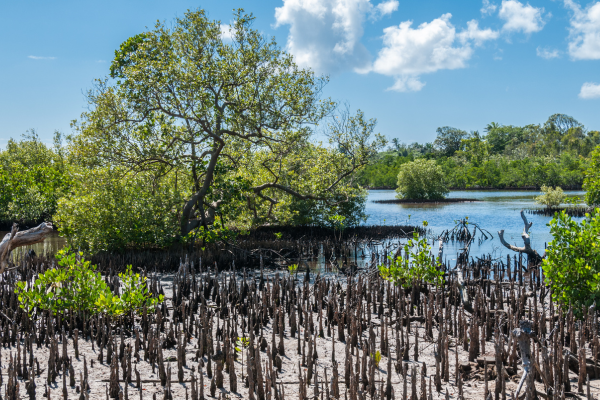
The Bombay High Court has sought a status report on compensatory afforestation measures associated with the Versova–Bhayandar Coastal Road project after environmental organisation Vanashakti alleged non-compliance with conditions governing the felling of mangroves for the infrastructure scheme in Mumbai.
The matter came up before the court in the past week following an application filed by the NGO, which contended that statutory safeguards and ecological commitments attached to earlier approvals had not been fully implemented. The petition relates to mangrove removal undertaken for the Brihanmumbai Municipal Corporation’s (BMC) proposed 26.3-km coastal road connecting Versova and Bhayandar.
The dispute stems from a Bombay High Court order issued in late 2025 permitting the felling of 45,675 mangroves for the project on grounds of public interest. The court had approved the proposal subject to a series of environmental safeguards, including compensatory afforestation, restoration of affected mangrove areas and long-term monitoring of plantation efforts.
According to submissions cited in court proceedings, approximately 84 hectares of mangrove habitat are affected by the project. BMC had informed the court that around 8.24 hectares containing nearly 9,000 mangroves would be permanently diverted, while about 68.55 hectares comprising 36,675 mangroves would be restored after construction activities are completed.
As part of the mitigation measures, authorities had stated that 137,025 mangrove saplings, equivalent to three times the number of mangroves approved for removal, would be planted on 30 hectares of degraded mangrove land in Bhayandar village in Palghar district. The plantation programme was also to include protective fencing and maintenance through the state Mangrove Cell.
Vanashakti argued before the court that construction work had already commenced and that mangrove felling began in March this year. The NGO maintained that the environmental conditions forming the basis of judicial approval had not been fulfilled and that compensatory afforestation was intended to restore ecological balance in the affected region.
The issue comes against the backdrop of multiple legal challenges surrounding the coastal road project. Earlier this year, the Supreme Court declined to interfere with the High Court’s order permitting mangrove removal, observing that environmental safeguards and compensatory measures had been incorporated into the approval framework.
The Versova–Bhayandar Coastal Road is among Mumbai’s largest ongoing transport infrastructure projects. Estimated to cost more than INR 22,000 crore, the road is intended to improve connectivity between Mumbai’s western suburbs and the northern parts of the Mumbai Metropolitan Region. Environmental compliance related to mangrove conservation and restoration continues to remain a key aspect of the project’s regulatory oversight.
Advertisement













 Facebook
 Whatsapp
