Advertisement






What really powers the cloud? Behind every Google search, A...
A lot of what defines a home isn’t visible at handover. I...
Private equity has played a significant role in shaping Indi...
Luxury real estate is one of the most talked-about segments ...
Airports play a much bigger role than just enabling travel -...
Western Railway is advancing a series of infrastructure upgrades aimed at enabling train operations of up to 160 kmph on key sections of the Mumbai-Delhi corridor. The works form part of Indian Railways’ broader Mission Raftaar programme, which seeks to improve speed, safety and capacity on some of the country's busiest rail routes. The initiative includes track strengthening, signalling modernisation, fencing, curve realignment and deployment of advanced train protection systems to support faster and more reliable services.
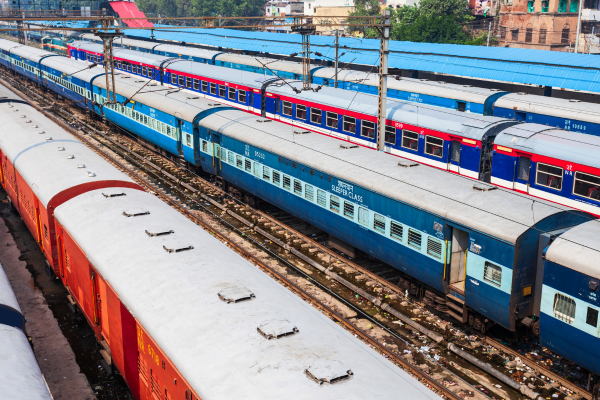
As India pushes to modernise its rail network, speed enhancement has emerged as a key priority alongside safety and capacity expansion. One of the most significant efforts is underway on the Mumbai-Delhi corridor, where Western Railway and other zonal railways are executing a comprehensive package of upgrades designed to prepare the route for train speeds of up to 160 kmph. The project represents a major step toward reducing travel times while improving operational efficiency on a route that carries some of the highest passenger and freight traffic in the country.
The speed enhancement programme is part of Mission Raftaar, a route-based development strategy focused on improving the performance of high-density rail corridors. Rather than implementing isolated upgrades, the project combines track, signalling, electrical and safety improvements into a single integrated framework aimed at delivering higher speeds with minimal disruption to existing train operations. Mission Raftaar Raising of speed up to 160 Kmph.pdf
A significant portion of the work involves strengthening rail infrastructure to meet the requirements of high-speed operations. This includes curve realignment, replacement of track components, installation of advanced crossings, deployment of specialised sleepers and improvements to railway formations. Boundary walls and cattle fencing are also being constructed along vulnerable stretches to reduce the risk of trespassing and animal intrusion, both of which become critical concerns as train speeds increase. Mission Raftaar Raising of speed up to 160 Kmph.pdf Mission Raftaar Raising of speed up to 160 Kmph.pdf
On the signalling front, Indian Railways is introducing advanced safety technologies to support faster operations. A key component is Kavach, the indigenous automatic train protection system designed to prevent collisions and improve operational safety. The system uses technologies such as radio communication, RFID-based train tracking and automated intervention mechanisms, enabling trains to operate at higher speeds while maintaining stringent safety standards. The project document notes that widespread implementation of Kavach would place India alongside developed railway networks in the field of automatic train protection. Mission Raftaar Raising of speed up to 160 Kmph.pdf Mission Raftaar Raising of speed up to 160 Kmph.pdf
Electrical infrastructure is also being upgraded to support faster train movement. Enhancements to overhead equipment, feeder systems and traction infrastructure are being carried out to ensure reliable power supply for high-speed operations. These improvements are intended to create a seamless operating environment where track, signalling and electrical systems function together as a unified network. Mission Raftaar Raising of speed up to 160 Kmph.pdf
The Mumbai–Delhi corridor remains one of Indian Railways’ busiest routes, making execution particularly challenging. Officials have emphasised the need to complete the works while minimising disruption to regular train services. The route-based planning model adopted under Mission Raftaar is expected to allow better coordination of projects, assured funding and more efficient execution across multiple railway zones. According to the project framework, the initiative is intended not only to raise speeds but also to improve passenger comfort, safety and overall network performance. Mission Raftaar Raising of speed up to 160 Kmph.pdf
Source IRICEN Gov
Advertisement













 Facebook
 Whatsapp
