Advertisement






What really powers the cloud? Behind every Google search, A...
A lot of what defines a home isn’t visible at handover. I...
Private equity has played a significant role in shaping Indi...
Luxury real estate is one of the most talked-about segments ...
Airports play a much bigger role than just enabling travel -...
The Slum Rehabilitation Authority (SRA) has proposed cluster redevelopment of three large slum pockets in Mumbai Antop Hill-Wadala, Majaswadi and Behrampada covering hundreds of acres. The initiative aims to enable integrated planning, improve infrastructure and accelerate rehabilitation by bringing fragmented settlements under unified redevelopment schemes. The Antop Hill-Wadala cluster alone spans around 450 acres. Authorities believe the approach will help unlock land potential, provide better housing and create planned urban spaces in some of Mumbai’s most densely populated areas.
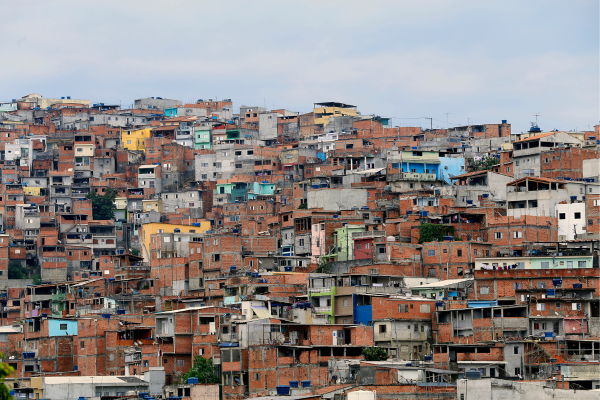
The Slum Rehabilitation Authority (SRA) has proposed cluster redevelopment for three of Mumbai’s large slum pockets—Antop Hill-Wadala, Majaswadi in Jogeshwari East and Behrampada in Bandra East—in a move aimed at enabling integrated planning and accelerating rehabilitation efforts.
Among the three, the Antop Hill-Wadala cluster is the largest, covering nearly 450 acres. The other proposed clusters include Majaswadi, spread over approximately 32 hectares, and Behrampada, one of the city's most densely populated informal settlements. The projects are expected to be taken up under the cluster redevelopment framework, which allows fragmented land parcels and multiple slum schemes to be merged into a single integrated development.
Officials said the objective is to overcome hurdles that have delayed redevelopment in these areas for years. Individual slum rehabilitation projects have often faced challenges related to land ownership, lack of adequate infrastructure, consent issues and financial viability. The cluster model is expected to facilitate comprehensive planning and provide room for roads, open spaces and social amenities.
The Antop Hill-Wadala cluster includes settlements spread across Wadala East, Antop Hill and adjoining areas. According to reports, private developers, including Reliance Industries-backed entities, have shown interest in the redevelopment potential of the area, although no final approvals have been granted.
The Majaswadi cluster in Jogeshwari East comprises several slum pockets and has been identified for integrated redevelopment to address infrastructure deficiencies and improve living conditions. Similarly, the Behrampada cluster, located near the Bandra-Kurla Complex, has long witnessed piecemeal redevelopment attempts. Authorities believe a unified approach could help expedite rehabilitation and create planned residential and commercial spaces.
The SRA has submitted proposals to the state government, which will take a final call on the redevelopment framework. Once approved, detailed surveys and planning exercises are expected to begin.
Urban planners believe cluster redevelopment can help address infrastructure gaps while improving the quality of housing and civic amenities. However, experts also point to challenges involving rehabilitation timelines, consent from residents and coordination among multiple stakeholders.
The proposed redevelopment of these clusters forms part of broader efforts to transform large informal settlements into planned neighbourhoods while unlocking land value and strengthening urban infrastructure in Mumbai.
Advertisement













 Facebook
 Whatsapp
