Advertisement






What really powers the cloud? Behind every Google search, A...
A lot of what defines a home isn’t visible at handover. I...
Private equity has played a significant role in shaping Indi...
Luxury real estate is one of the most talked-about segments ...
Airports play a much bigger role than just enabling travel -...
Construction of the final deck slab on Delhi's Barapullah Phase-III elevated corridor was completed this week, physically joining both ends of the structure across the Yamuna River. The project, approved in 2014 and originally due in 2017, was held up for nearly a decade by land acquisition disputes, environmental clearances and forest department approvals, with its cost revised to around INR 1,635 crore. Once finished, the corridor is intended to give East Delhi a signal-free route towards South Delhi via Sarai Kale Khan. Authorities have indicated a target opening date of 30 June 2026.
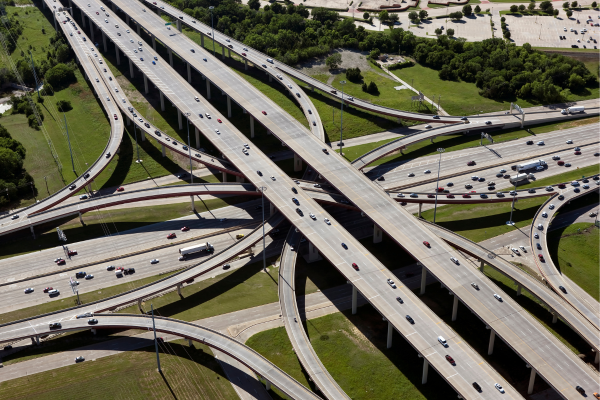
Delhi's Public Works Department (PWD) this week completed casting the final deck slab of the Barapullah Phase-III elevated corridor, joining both ends of the structure across the Yamuna River and bringing one of the city's most delayed road projects to its final stage of construction. The slab, comprising around 175 cubic metres of concrete, took the corridor's cumulative concrete usage to nearly 4.5 lakh cubic metres since work began. PWD Minister Parvesh Sahib Singh visited the site to mark the milestone and met with the workers and engineers involved.
The corridor was approved in 2014, with construction beginning in 2015 against an original completion target of 2017. That deadline slipped repeatedly over the following years. Officials have attributed the delay to a combination of factors: disputes over land acquisition that persisted for roughly seven years, the time taken to secure environmental clearances, technical complications arising from construction over the Yamuna floodplain, and a separate forest department clearance tied to tree cover near the site that took years to resolve. The project's cost has since been revised upward to approximately INR 1,635 crore.
According to the PWD, work on the corridor picked up pace over the past year and a half, following closer coordination between the agencies involved and more frequent site monitoring. Singh said the project had been designated a priority after the current government took office, and that pending approvals and no-objection certificates that had stalled work for years were cleared during this period.
Once operational, the new stretch is expected to connect with the existing Barapullah flyover near Sarai Kale Khan, forming a continuous elevated corridor of around nine kilometres. The route is intended to offer a largely signal-free link between East and South Delhi, with officials citing potential relief for traffic on NH-24, the DND Flyway, Ring Road and the Sarai Kale Khan interchange. The corridor is also expected to improve access to a multimodal transit point connecting the National Capital Region Transport Corporation, Indian Railways, the Inter-State Bus Terminal, the Delhi Metro Rail Corporation and the Delhi-Mumbai Expressway. Commuters travelling from Mayur Vihar towards AIIMS and South Delhi are among those expected to benefit from shorter journey times.
The design includes three traffic lanes in each direction, four loops apiece at the Sarai Kale Khan and Mayur Vihar ends, a dedicated cycle track that officials describe as the first of its kind on an Indian flyover of this scale, and pedestrian footpaths. The bridge section crossing the Yamuna floodplain has been constructed with pillar spans of close to 125 metres, a design choice officials say was intended to limit interference with the river's flow.
Remaining work on carriageways, loops, connectivity points, safety systems and landscaping is reported to be in progress. The PWD has set a target of 30 June 2026 for the corridor's completion and opening, though no formal inauguration date has been confirmed.
Advertisement













 Facebook
 Whatsapp
