Advertisement






What really powers the cloud? Behind every Google search, A...
A lot of what defines a home isn’t visible at handover. I...
Private equity has played a significant role in shaping Indi...
Luxury real estate is one of the most talked-about segments ...
Airports play a much bigger role than just enabling travel -...
The Centre has reaffirmed its commitment to the ambitious Great Nicobar Island development programme, with groundwork for the Galathea Bay transshipment port now expected to begin in 2028. Union Minister Sarbananda Sonowal said the project remains on track despite environmental concerns and legal challenges. Conceived as a strategic maritime hub capable of handling some of the world's largest vessels, the port is expected to strengthen India's position in global shipping routes. The larger Great Nicobar master plan also includes an international airport, power infrastructure and urban development projects aimed at transforming the remote island.
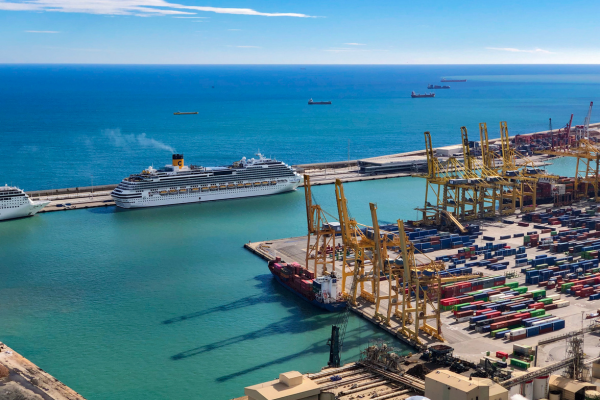
India's bid to emerge as a major maritime and logistics power is increasingly shifting towards one of its most remote territories. The Great Nicobar Island project, envisioned as a multi-sector economic and strategic hub, has entered a new phase with the government indicating that construction activity at the proposed Galathea Bay transshipment port could commence in 2028. The project, which has drawn both enthusiasm and scrutiny, is seen as central to India's efforts to capture a larger share of international cargo traffic while enhancing its presence in the Indian Ocean region.
The Union government has reiterated that the Galathea Bay International Container Transshipment Terminal will move ahead as planned, with Union Ports, Shipping and Waterways Minister Sarbananda Sonowal stating that preparatory work is expected to culminate in groundbreaking activities by 2028. The project forms the centrepiece of the larger Great Nicobar Island development programme and is intended to create a world-class maritime hub near some of the busiest global shipping lanes.
The proposed terminal is designed to handle large container vessels that currently rely heavily on foreign ports such as Colombo, Singapore and Port Klang for transshipment services. By creating a deep-water port at Galathea Bay, India hopes to reduce dependence on overseas facilities and establish itself as a competitive player in international cargo movement.
Beyond the port, the integrated development plan for Great Nicobar includes a greenfield international airport, power generation facilities and township infrastructure. The government views the initiative not only as an economic investment but also as a strategic asset that could strengthen India's maritime footprint in the Indo-Pacific region.
Officials have maintained that environmental safeguards and statutory clearances will be adhered to throughout the execution process. The project has faced criticism from environmental groups and conservationists concerned about its impact on ecologically sensitive habitats and indigenous communities. However, the Centre has indicated that the development will proceed while complying with prescribed norms and mitigation measures.
The proposed infrastructure is expected to be implemented in phases over several years and is seen as one of the largest and most ambitious island development initiatives undertaken by the country. Policymakers believe that once operational, the port and associated facilities could spur economic activity, create employment opportunities and improve connectivity in the Andaman and Nicobar archipelago.
With the Galathea Bay transshipment port now targeting a 2028 construction start, the Great Nicobar project is gradually moving from planning to execution. While debates over ecology and sustainability are likely to continue, the government's resolve signals that the island could play a pivotal role in India's long-term maritime ambitions. If realised as envisioned, Great Nicobar may evolve into a strategic gateway linking India more closely with global trade networks and the wider Indo-Pacific region.
Advertisement













 Facebook
 Whatsapp
