Advertisement






What really powers the cloud? Behind every Google search, A...
A lot of what defines a home isn’t visible at handover. I...
Private equity has played a significant role in shaping Indi...
Luxury real estate is one of the most talked-about segments ...
Airports play a much bigger role than just enabling travel -...
The Andhra Pradesh Capital Region Development Authority (APCRDA) conducted a training programme on climate change and sustainable urban development for officials, consultants and project stakeholders involved in the development of Amaravati. Organised by the Environmental and Social Management Unit (ESMU) in collaboration with the Project Grievance Management Cell (PgMC) Capacity Building Team, the session focused on climate-resilient infrastructure, environmental sustainability and long-term development planning. Experts highlighted global climate challenges, Andhra Pradesh's sustainability initiatives and the state's commitment to achieving Net Zero emissions by 2070 while promoting environmentally responsible growth in Amaravati.
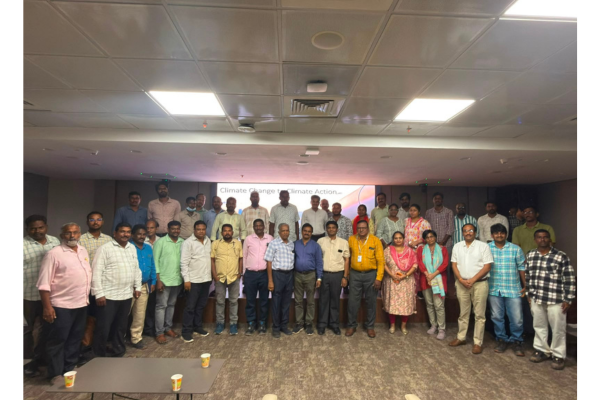
The Environmental and Social Management Unit (ESMU) of the Andhra Pradesh Capital Region Development Authority (APCRDA), in collaboration with the Project Grievance Management Cell (PgMC) Capacity Building Team, conducted a training programme on climate change in the context of Amaravati Capital City at the APCRDA Project Office earlier this week.
The programme brought together Environmental Managers, Social and Labour Managers from Project Management Consultants (PMCs), contractor representatives and members of the APCRDA ESMU team. The session was aimed at strengthening awareness of climate-related challenges and promoting sustainable development practices among stakeholders associated with Amaravati's development.
Dr. D. Prem Kumar, Environmental Manager at TYPSA PMC, served as the resource person for the programme. He presented an overview of global climate change trends and discussed their impact on economies worldwide, including India. He also explained the increasing need for climate-resilient infrastructure as cities face growing environmental risks linked to changing weather patterns and resource pressures.
During the session, Dr. Prem Kumar highlighted that the Government of Andhra Pradesh is giving significant importance to sustainable and climate-resilient development. He explained that the state's development strategy includes measures designed to address climate-related challenges while supporting long-term urban growth. He further referred to the vision of the Chief Minister of Andhra Pradesh to achieve Net Zero emissions by 2070 and outlined the sustainability initiatives being integrated into Amaravati's development plans to improve environmental performance and maintain ecological balance.
The programme featured interactive discussions, with participants raising questions on climate-resilient infrastructure, environmental management and sustainable urban development practices. The exchanges provided practical insights into how different stakeholders can contribute to building a resilient and environmentally responsible capital city.
The session also highlighted the role of environmental stewardship in large-scale urban projects and the importance of incorporating sustainability considerations into planning, construction and long-term city management. Participants discussed ways to strengthen climate adaptation measures and improve awareness of environmental responsibilities across project teams.
At the end of the programme, participants reiterated their commitment to supporting environmental protection initiatives and sustainable development goals in Amaravati.
The training programme was organised under the guidance of Sri Ramulu, Group Director (Social Development), Smt. Anita Bhupati, Assistant Commissioner of Labour, Sri Raghuvendra, Environmental Expert, and the APCRDA ESMU Team. Coordination of the programme was undertaken by Dr. Suryanarayana, Senior Expert (Capacity Building), and Sri M. Mohana Rao, Capacity Building Expert.
Source APCRDA
Advertisement













 Facebook
 Whatsapp
