Advertisement






What really powers the cloud? Behind every Google search, A...
A lot of what defines a home isn’t visible at handover. I...
Private equity has played a significant role in shaping Indi...
Luxury real estate is one of the most talked-about segments ...
Airports play a much bigger role than just enabling travel -...
The Maharashtra government has said the first phase of the Dharavi Redevelopment Project is expected to deliver around 10,000 homes within the next 18 months, with rehabilitation of eligible residents remaining central to the initiative. Speaking in the State Legislative Assembly in the past week, Chief Minister Devendra Fadnavis described the project as an economic transformation programme extending beyond housing. Covering nearly 95 million sq ft of planned development, the redevelopment seeks to integrate housing, employment and commercial activity while retaining Dharavi's informal economy. The government also outlined wider urban renewal measures, including 19 cluster redevelopment projects across Mumbai, a target of constructing 7.8 lakh homes in the Mumbai Metropolitan Region by 2030, transport upgrades, parking infrastructure, healthcare expansion and digital governance initiatives.
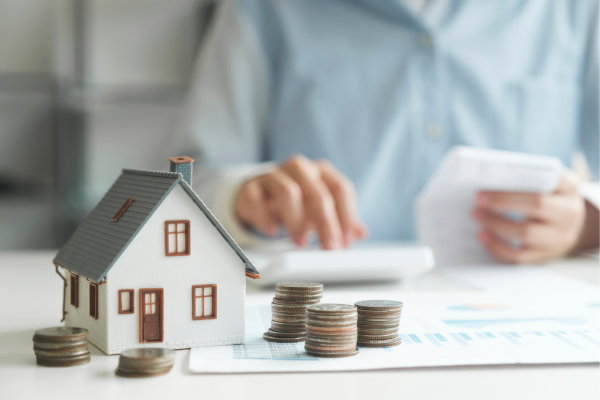
The Maharashtra government has stated that the first phase of the Dharavi Redevelopment Project is expected to be completed within the next 18 months, with around 10,000 homes planned for delivery as part of the initial stage. Speaking in the State Legislative Assembly in the past week, Chief Minister Devendra Fadnavis said the redevelopment programme was conceived as an economic transformation initiative aimed at modernising infrastructure, improving housing and supporting livelihoods in Mumbai.
According to the Chief Minister, eligible residents will be rehabilitated within Dharavi, while those not accommodated at the project site will be provided homes at nearby locations. He added that the state has identified 19 cluster redevelopment projects across Mumbai as part of its broader strategy for planned urban renewal and housing development.
The Dharavi Redevelopment Project, which commenced in January 2025, seeks to redevelop Asia's largest slum into a modern, transit-oriented urban district while preserving its established informal economy and local industries. The project envisages approximately 95 million sq ft of development integrating residential, commercial and employment-generating spaces.
Fadnavis informed the Assembly that all eligible beneficiaries would receive homes measuring 350 sq ft within Dharavi. Residents covered under the extended 2011 eligibility criteria would also be rehabilitated after paying the prescribed charge of INR 2.5 lakh. He further stated that residents found ineligible would not be relocated to distant locations but rehabilitated at nearby sites.
Describing Dharavi as a future growth driver for Mumbai, the Chief Minister said the redevelopment would help formalise informal economic activities while providing modern infrastructure for residents and businesses. He also highlighted the government's cluster redevelopment model, noting that work on the first of the 19 identified clusters had already commenced. The model, he said, is intended to facilitate large-scale renewal of ageing buildings while improving civic infrastructure without compromising open spaces.
The government also outlined several parallel urban infrastructure initiatives. Fadnavis said the underground tunnel connecting north and south Mumbai is scheduled for completion by October 2027 and is expected to improve connectivity, reduce travel time to the city's business district and ease congestion on major arterial roads.
To address parking shortages, he said an underground robotic parking plaza with capacity for 640 cars and 112 two-wheelers is under development, while another underground parking project has been proposed. The state is also evaluating advanced parking technologies adopted internationally for possible implementation in Mumbai.
On civic infrastructure, the Chief Minister said the Brihanmumbai Municipal Corporation (BMC) has initiated waste-to-energy projects to scientifically process municipal waste and reduce reliance on dumping grounds. He added that the state has launched projects to add around 8,000 hospital beds, introduced an integrated Hospital Management Information System (HMIS), and accelerated redevelopment of ageing housing societies through interest concessions and policy support.
Fadnavis further stated that the government has set a target of constructing 7.8 lakh homes across the Mumbai Metropolitan Region by 2030. Of these, work on 2.39 lakh homes has already commenced, while planning for another 5.43 lakh homes is underway. He also highlighted technology-led governance initiatives, including a MyBMC grievance redressal platform, WhatsApp-based citizen services and the creation of a digital twin of Mumbai using aerial photography, GIS mapping, cadastral surveys and 360-degree imaging to strengthen urban planning and civic administration.
Source - PTI
Advertisement













 Facebook
 Whatsapp
