Advertisement






What really powers the cloud? Behind every Google search, A...
A lot of what defines a home isn’t visible at handover. I...
Private equity has played a significant role in shaping Indi...
Luxury real estate is one of the most talked-about segments ...
Airports play a much bigger role than just enabling travel -...
The Brihanmumbai Municipal Corporation (BMC) will consult experts from IIT Bombay and the University of Mumbai to study the causes of tree falls across the city after recent monsoon incidents. Municipal Commissioner Ashwini Bhide said ongoing road concretisation cannot be solely blamed for uprooted trees, citing multiple contributing factors such as ageing trees, heavy rainfall, strong winds and soil conditions. The civic body plans to adopt a scientific approach to strengthen urban tree management and improve public safety
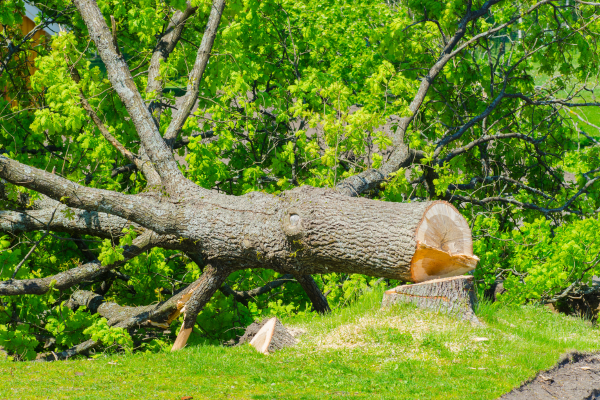
The Brihanmumbai Municipal Corporation (BMC) has announced that it will undertake a scientific assessment of tree falls in Mumbai by consulting experts from IIT Bombay and the University of Mumbai, following concerns over a rise in incidents during the ongoing monsoon. The civic administration said the study will help identify the factors responsible for tree failures and support the development of long-term measures for urban tree management.
Municipal Commissioner Ashwini Bhide said it would be incorrect to attribute tree falls solely to the city's ongoing road concretisation programme. Responding to concerns raised by residents and public representatives, she said multiple factors contribute to trees becoming unstable, including ageing, species characteristics, root health, heavy rainfall, strong winds, soil conditions, drainage patterns and previous damage.
Bhide stated that while road construction activities may affect trees in certain cases, there is currently no scientific evidence establishing road concretisation as the primary reason behind the recent increase in tree falls. She stressed that conclusions should be based on technical analysis rather than assumptions and that the BMC intends to rely on expert studies before framing policy interventions.
The proposed assessment will involve specialists from IIT Bombay and the University of Mumbai examining the structural stability of trees, root systems, soil conditions and the impact of surrounding infrastructure. The study is expected to recommend measures for improving tree health, reducing the risk of uprooting and strengthening maintenance practices in urban areas.
The issue has gained attention following several incidents of trees collapsing during intense rainfall and strong winds across Mumbai this monsoon. Fallen trees have damaged vehicles, disrupted traffic, affected electricity supply and, in some instances, caused injuries. The incidents have also prompted questions about whether large-scale road concretisation projects have reduced the permeability of soil around tree roots.
BMC officials said routine inspections and pruning exercises are already carried out before the monsoon to minimise risks. However, the civic body acknowledged that climate variability, changing rainfall patterns and ageing urban tree stock require a more comprehensive scientific approach to tree management.
The administration also indicated that findings from the expert study could guide future infrastructure planning, ensuring that road development projects and utility works incorporate measures to protect existing trees. Recommendations may also influence standards for planting, monitoring and maintaining roadside trees across Mumbai.
Urban planners and environmental experts have long advocated integrated planning that balances infrastructure development with ecological preservation. The proposed study is expected to provide evidence-based recommendations that help the BMC strengthen public safety while conserving the city's green cover.
The civic body said the findings would support future policy decisions aimed at reducing tree-fall incidents, improving resilience during extreme weather events and ensuring that infrastructure development and environmental conservation progress together.
Advertisement













 Facebook
 Whatsapp
