Advertisement






The Gulf conflict has disrupted global supply chains, pushed...
REITs have changed the way commercial real estate is owned a...
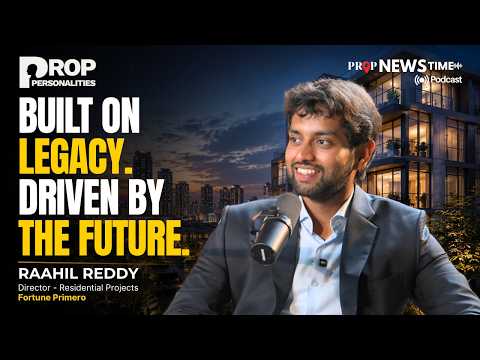
What does it take to preserve a real estate legacy while bui...
What really powers the cloud? Behind every Google search, A...
A lot of what defines a home isn’t visible at handover. I...
India's senior living market is transitioning from a niche housing concept to a mainstream residential asset class, driven by demographic changes, rising life expectancy, evolving family structures and increasing purchasing power among older adults. Developers are responding with integrated communities that combine independent living, healthcare support, wellness amenities and professionally managed services. Institutional participation is also gathering pace, with major developers entering the segment as demand expands beyond traditional markets. As India's population continues to age, senior living is expected to become an increasingly significant component of the country's residential real estate landscape.

India's residential real estate sector is witnessing the emergence of senior living as a distinct and rapidly expanding asset class, reflecting changing demographics, lifestyle preferences and housing requirements. Once largely associated with assisted care facilities, the segment has evolved into a residential offering centred on independent living, wellness, community engagement and professionally managed services for older adults.
According to estimates by the United Nations, India's population aged 60 years and above is expected to nearly double over the next three decades, exceeding 340 million by 2050. Longer life expectancy, increasing urbanisation, changing family structures and higher disposable incomes are collectively reshaping demand for housing designed specifically for senior citizens.
Today's retirees differ significantly from previous generations. Many have accumulated wealth through long professional careers and property ownership, enabling them to seek homes that support an active and independent lifestyle. Rather than viewing retirement as a period of reduced consumption, many older homebuyers are prioritising residential communities that provide wellness facilities, social interaction, security and convenience while allowing them to maintain their independence.
This shift has altered the nature of senior living developments. Developers are increasingly delivering integrated residential communities featuring clubhouses, fitness centres, landscaped open spaces, hobby rooms, healthcare support, concierge services and organised social activities. The emphasis is on creating environments that encourage active ageing while ensuring access to professional assistance whenever required.
Changing household structures are also contributing to demand. With nuclear families becoming more common and younger generations relocating to other cities or overseas for education and employment, many elderly parents are choosing professionally managed communities that combine safety, healthcare access and opportunities for social engagement.
The growing influence of India's silver economy is reinforcing the sector's prospects. Older adults now account for a significant share of household wealth and discretionary spending, encouraging developers to view senior living as a long-term residential opportunity rather than a specialised housing category.
Institutional participation is also increasing. Several established developers have either launched or announced dedicated senior living projects, reflecting growing confidence in the segment's commercial viability. Their entry is expected to improve product quality, operational standards and consumer confidence while broadening the market across metropolitan regions.
One of the most notable developments is the planned entry of DLF into the senior living sector. The country's largest listed real estate developer is developing its first senior living project in Gurugram, with an estimated revenue potential of around INR 2,000 crore. The development, spread across nearly 5 lakh sq ft in Sector 63 on Golf Course Extension Road, signals the increasing acceptance of senior living as a mainstream residential product among large organised developers.
Technology is expected to play an increasingly important role in the evolution of these communities. Smart home systems, emergency response solutions, telemedicine platforms, digital health monitoring and app-based resident services are improving convenience and safety while enabling family members to remain connected with elderly residents living independently.
While Bengaluru, Chennai, Pune, Coimbatore and Hyderabad have traditionally accounted for much of India's senior living supply, demand is now expanding across Delhi-NCR, Mumbai and other major metropolitan regions as awareness increases and developers introduce premium projects.
As India's demographic profile continues to evolve, senior living is expected to become an increasingly important segment of the residential market. For developers, it represents an opportunity to create integrated communities that combine housing with healthcare, wellness and lifestyle services. For homebuyers, it offers purpose-built environments that support independence, social interaction and quality of life, positioning senior living as one of the country's fastest-growing residential real estate categories.
Advertisement













 Facebook
 Whatsapp
