Advertisement






The Gulf conflict has disrupted global supply chains, pushed...
REITs have changed the way commercial real estate is owned a...
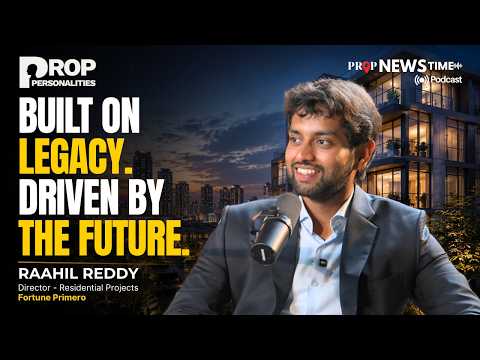
What does it take to preserve a real estate legacy while bui...
What really powers the cloud? Behind every Google search, A...
A lot of what defines a home isn’t visible at handover. I...
Dharavi's redevelopment presents an opportunity to redefine urban renewal by placing integrated Mechanical, Electrical, Plumbing and Fire Protection (MEPF) infrastructure at the centre of planning. While new housing remains the project's primary objective, long-term success will depend on engineering systems that support resilient, efficient and sustainable communities. Coordinated utility planning, digital engineering, climate-resilient infrastructure, renewable energy integration and lifecycle cost optimisation can transform Dharavi into a benchmark for future urban regeneration in India. As one of the country's largest redevelopment programmes progresses, embedding engineering considerations from the earliest design stages will be essential to creating infrastructure capable of supporting millions of residents and businesses for decades.

The success of urban redevelopment is often measured by the number of homes delivered, the pace of rehabilitation or the scale of investment attracted. While these indicators remain important, they do not fully determine whether a redevelopment project will function efficiently over the long term. As Dharavi embarks on one of the world's largest urban regeneration programmes, integrated planning of Mechanical, Electrical, Plumbing and Fire Protection (MEPF) systems should be regarded as a fundamental component of the redevelopment rather than a supporting technical function.
Dharavi is not a conventional residential neighbourhood. It is a mixed-use urban ecosystem where housing exists alongside manufacturing units, workshops, retail establishments, educational institutions and community facilities. This complexity requires infrastructure to be planned at a precinct level rather than on an individual building basis. Utilities, mobility and public services must operate as a coordinated network capable of supporting residential, commercial and social activities while remaining adaptable to future growth.
Delivering a project of this scale also requires close coordination across multiple engineering disciplines from the earliest planning stages. Architectural design, structural engineering, MEPF systems, information and communication technology infrastructure, security systems and municipal utility networks must be developed through integrated design processes. Early collaboration reduces design conflicts, improves construction efficiency and minimises delays during project execution.
Mechanical engineering will play an important role in enhancing liveability within high-density neighbourhoods. Effective ventilation, passive building design, energy-efficient cooling systems and heat mitigation measures can improve indoor environmental quality while reducing energy consumption. These considerations become increasingly important as cities experience higher temperatures and more intensive urban development.
Fire and life safety systems should be embedded into the overall planning framework rather than treated solely as regulatory requirements. Integrated fire detection, suppression systems, smoke management, emergency access routes and evacuation planning contribute significantly to community safety and urban resilience.
Electrical infrastructure will also influence the long-term performance of the redevelopment. Reliable power distribution, smart metering, digital monitoring platforms and redundant utility networks can improve operational efficiency while supporting growing residential, commercial and digital infrastructure requirements. Integrating rooftop solar generation, battery storage and other renewable energy technologies wherever feasible would further strengthen energy resilience while contributing to broader decarbonisation objectives.
Water management deserves equal priority. Rainwater harvesting, water recycling, dual plumbing systems and precinct-level sewage treatment facilities can reduce dependence on potable water while improving long-term resource efficiency. Common utility corridors and integrated service tunnels would also simplify maintenance and reduce disruption to residents over the lifecycle of the development.
Climate resilience must remain central to infrastructure planning. Mumbai's increasingly intense rainfall events require stormwater management systems, flood-resilient utility corridors and sustainable drainage solutions capable of managing extreme weather conditions while maintaining continuity of essential services.
Digital engineering technologies such as Building Information Modelling (BIM), Geographic Information Systems (GIS) and Digital Twins offer opportunities to simulate utility networks, identify design conflicts and assess long-term operational performance before construction begins. These technologies can improve coordination, reduce construction risks and support predictive maintenance throughout the asset lifecycle.
Lifecycle engineering should guide infrastructure investment decisions from the outset. MEPF systems typically account for 20–30% of construction costs in large urban developments while significantly influencing long-term operational expenditure. Planning should therefore consider not only capital investment but also maintenance, future upgrades and operational efficiency over several decades.
Experience from large residential townships, commercial developments, healthcare facilities, hospitality projects and institutional campuses consistently demonstrates that engineering delivers the greatest value when integrated during the conceptual planning stage. Early coordination improves design quality, enhances sustainability outcomes and reduces both construction and lifecycle costs.
Dharavi has the opportunity to establish a new benchmark for urban regeneration in India. By embedding integrated MEP planning, digital engineering, climate resilience and lifecycle infrastructure management into the redevelopment strategy from the beginning, the project can demonstrate that the long-term success of urban renewal depends not only on the buildings that are constructed, but on the invisible engineering systems that enable communities to function safely, efficiently and sustainably for generations.
Advertisement













 Facebook
 Whatsapp
