Advertisement






The Gulf conflict has disrupted global supply chains, pushed...
REITs have changed the way commercial real estate is owned a...

What does it take to preserve a real estate legacy while bui...
What really powers the cloud? Behind every Google search, A...
A lot of what defines a home isn’t visible at handover. I...
The Bombay High Court has upheld the Maharashtra government's decision to undertake integrated cluster redevelopment of MHADA layouts at Bandra Reclamation and Adarsh Nagar, dismissing petitions challenging the policy and tender process. The court observed that planned cluster redevelopment would enable better infrastructure, amenities, open spaces and coordinated urban planning compared to fragmented redevelopment. he redevelopment will cover approximately 98.27 acres at Bandra Reclamation and 34.33 acres at Adarsh Nagar, involving several ageing residential buildings developed by MHADA.
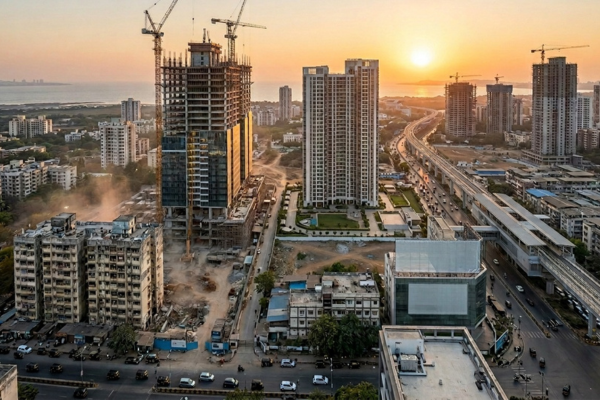
The Bombay High Court has cleared the way for the integrated cluster redevelopment of MHADA's Bandra Reclamation and Adarsh Nagar layouts by dismissing a batch of petitions challenging the Maharashtra government's redevelopment policy and the tender process for appointing a single Construction and Development Agency.
In its judgment, the court observed that cluster redevelopment is a practical and inclusive approach to urban renewal, noting that Mumbai must continue to grow while addressing changing infrastructure needs and increasing economic activity. It held that the state's decision to undertake integrated redevelopment could not be termed arbitrary or irrational.
The redevelopment proposal covers approximately 98.27 acres at Bandra Reclamation and 34.33 acres at Adarsh Nagar in Worli. Both layouts comprise several residential buildings constructed by MHADA between the 1950s and 1960s for middle- and lower-income groups. Many of these structures have since become old and require comprehensive redevelopment.
The court noted that the state government had adopted a policy to redevelop MHADA layouts measuring 20 acres or more through an integrated approach instead of allowing individual housing societies to pursue separate redevelopment projects. According to the judgment, a unified redevelopment model would facilitate better planning of roads, parking facilities, drainage, water supply, public amenities and open spaces across the entire layout.
The bench further observed that decisions relating to whether redevelopment should be undertaken independently or through an integrated cluster model fall within the policy domain of the state government and MHADA. It reiterated that courts should ordinarily refrain from interfering in such policy decisions unless they are patently arbitrary or contrary to larger public interest.
The petitions had been filed by some housing societies, which argued that the policy deprived them of their right to independently redevelop their buildings and expressed concerns that residents of sea-facing buildings could be relocated elsewhere under the cluster redevelopment plan. However, the High Court found no grounds to invalidate the government's policy, allowing the redevelopment process to proceed.
Source: PTI
Advertisement













 Facebook
 Whatsapp
