Advertisement






What really powers the cloud? Behind every Google search, A...
A lot of what defines a home isn’t visible at handover. I...
Private equity has played a significant role in shaping Indi...
Luxury real estate is one of the most talked-about segments ...
Airports play a much bigger role than just enabling travel -...
Developers across the Gulf region need to rethink residential design as rising temperatures and heat stress expose the limitations of conventional construction methods, according to Talal M. Al Gaddah, CEO and Founder of Keturah. Citing new research from the European Centre for Medium-Range Weather Forecasts, he said luxury homes should increasingly incorporate materials and systems designed to address heat, humidity and indoor air quality. The comments come as the UAE and Saudi Arabia continue to promote sustainable urban development through long-term planning frameworks, while buyers place greater emphasis on healthy indoor environments alongside traditional luxury features.
Developers across the Gulf region should adopt construction methods and building materials that are better suited to the region's increasingly challenging climatic conditions, according to Talal M. Al Gaddah, CEO and Founder of Keturah, who said rising heat stress is reshaping expectations for luxury residential developments.
His comments follow recent research by scientists at the European Centre for Medium-Range Weather Forecasts, which identified a significant increase in global heat stress since the 1970s, with the Arabian Peninsula among the regions experiencing some of the most pronounced changes. The study found that heat stress, recognised as the leading cause of weather-related deaths, results from the accumulation of body heat due to high temperatures, often compounded by elevated humidity.
According to the research, heat can aggravate underlying cardiovascular, respiratory and mental health conditions, particularly among vulnerable populations, outdoor workers and urban residents. Across the Arabian Peninsula, the ten warmest days of the year are now perceived to be up to 4°C hotter than during the 1970s, with further increases expected as global emissions continue to rise.
Al Gaddah said the challenges extend beyond outdoor temperatures, noting that indoor environments are also affected by moisture accumulation, condensation-related mould growth and volatile organic compounds (VOCs) released from conventional paints and finishes in air-conditioned buildings.
He said factors such as moisture management within walls, air circulation and the selection of interior materials play a significant role in determining whether residential buildings provide healthy living environments for occupants.
According to Al Gaddah, growing awareness of indoor environmental quality is influencing how buyers assess premium residential properties, with air quality, certified construction materials and overall environmental performance becoming increasingly important considerations.
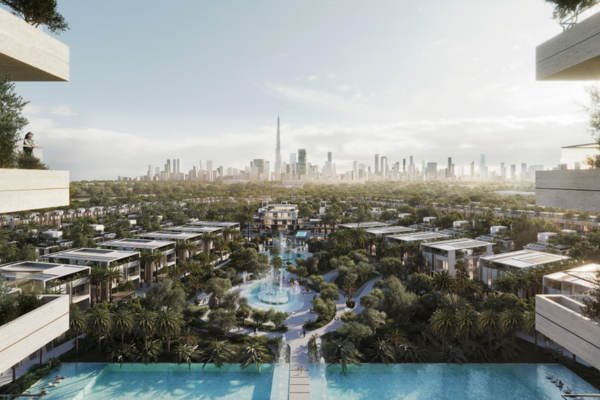
Keturah said these principles have been incorporated into its developments in Dubai. At Keturah Reserve, a AED5.7 billion luxury bio-living community, the company has invested AED200 million in health-focused construction measures, including antimicrobial tiling, breathable wall systems and zero-VOC finishes selected to suit the Gulf's climatic conditions.
The company added that similar design principles have also been adopted at The Ritz-Carlton Residences at Keturah Resort, located along Dubai Creek adjacent to the Ras Al Khor Wildlife Sanctuary. The development combines branded residences with hospitality facilities and a dedicated wellness centre.
Al Gaddah said health-led construction is becoming an essential consideration for developers across the region rather than an optional feature, reflecting both changing buyer expectations and increasing scientific evidence regarding the impact of indoor environmental quality.
He also noted that broader policy initiatives support this direction. Saudi Arabia's Vision 2030 and the UAE's Dubai 2040 Urban Master Plan both place emphasis on sustainable, healthy and resilient urban development, providing a framework for greater adoption of health-conscious building practices across the region's two largest real estate markets.
According to Al Gaddah, future luxury housing in the Gulf will increasingly be judged by its ability to provide healthier and more resilient living environments, with buyers expected to place greater importance on building performance alongside design and location.
Advertisement













 Facebook
 Whatsapp
