Advertisement






What really powers the cloud? Behind every Google search, A...
A lot of what defines a home isn’t visible at handover. I...
Private equity has played a significant role in shaping Indi...
Luxury real estate is one of the most talked-about segments ...
Airports play a much bigger role than just enabling travel -...
India's redevelopment boom is reshaping urban landscapes while driving strong demand for advanced vertical mobility solutions across major cities such as Mumbai, Pune, Thane and Delhi NCR. As ageing low-rise buildings give way to taller residential, commercial and mixed-use developments, developers are increasingly investing in high-performance elevator systems that improve efficiency, safety and user experience. The trend is accelerating the adoption of smart, energy-efficient and space-saving technologies, while also boosting elevator modernisation in existing buildings. As cities continue to build vertically, modern vertical transportation is becoming a fundamental element of redevelopment-led urban growth.
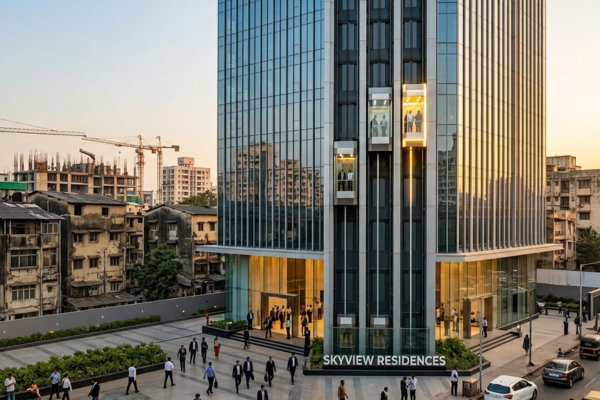
India's redevelopment boom is reshaping urban infrastructure and significantly accelerating the demand for modern vertical mobility solutions. Cities such as Mumbai, Pune, Thane and Delhi NCR are witnessing a wave of redevelopment activity as ageing residential societies, older commercial buildings and congested urban clusters are transformed into modern high-rise developments. This shift is creating substantial opportunities for elevator and vertical transportation companies.
Redevelopment projects typically replace low-rise or ageing structures with taller buildings that accommodate more residents, expanded amenities, improved infrastructure and higher safety standards. As buildings grow vertically to maximise land utilisation, elevators have become one of the most critical components of project planning and execution. Modern developments require high-performance elevator systems capable of handling greater passenger volumes while delivering speed, comfort and operational efficiency. Increasingly, elevators are viewed not merely as utility infrastructure but as an integral part of the overall user experience and long-term building performance.
Mumbai has emerged as one of India's strongest redevelopment-driven elevator markets. Limited land availability, ageing housing stock and rising housing demand continue to encourage developers to undertake large-scale redevelopment projects across suburban and central locations. Redeveloped towers often rise significantly higher than the original buildings, increasing demand for multiple high-speed elevators, intelligent traffic management systems and advanced safety technologies. The growing preference for premium residential developments is also encouraging builders to adopt aesthetically designed elevators featuring touchless controls, destination dispatch systems and energy-efficient technologies.
Efficient space planning remains one of the key challenges in redevelopment projects. Developers increasingly require compact yet high-capacity elevator systems that optimise building cores without compromising passenger movement. In response, elevator manufacturers are offering customised solutions tailored to redevelopment projects, including machine room-less elevators, energy-efficient systems and smart dispatch technologies that reduce waiting times and improve traffic flow. These innovations enable developers to maximise usable floor space while enhancing overall building efficiency and sustainability.
Redevelopment activity is also contributing to the growth of elevator modernisation services. In phased redevelopment projects or partially upgraded buildings, existing elevator systems often require enhancements to meet contemporary infrastructure and safety standards. This has increased demand for retrofitting, controller replacements, cabin upgrades and technology integration. At the same time, stricter regulatory requirements and greater awareness of passenger safety are encouraging modernisation across older residential and commercial properties.
Beyond the residential segment, commercial and mixed-use redevelopment projects are further expanding demand for sophisticated vertical mobility systems. Premium office towers, retail developments and integrated townships increasingly require elevators that combine speed, operational efficiency, aesthetics and smart technology. As India's cities continue to evolve through redevelopment-led growth, intelligent and future-ready vertical transportation systems are expected to become an increasingly important component of modern urban development.
Disclaimer:
The views, opinions, and information expressed in this article are solely those of the author and do not necessarily reflect the views of Prop News Time. The content has not been independently verified or endorsed by Prop News Time. Readers are advised to exercise their own discretion and seek professional advice if required.
Advertisement













 Facebook
 Whatsapp
