Advertisement






What really powers the cloud? Behind every Google search, A...
A lot of what defines a home isn’t visible at handover. I...
Private equity has played a significant role in shaping Indi...
Luxury real estate is one of the most talked-about segments ...
Airports play a much bigger role than just enabling travel -...
The Union Cabinet has approved the construction of an 8.1-km, six-lane tunnel connecting the Dwarka Expressway with Nelson Mandela Marg at Vasant Kunj in Delhi at an estimated cost of INR 6,969.67 crore. To be developed by the National Highways Authority of India (NHAI) under the Hybrid Annuity Model (HAM), the project is expected to be completed within five years. The corridor includes a 1.98-km underground section beneath the Southern Ridge Forest, twin-tube tunnels built using tunnel boring machines, an elevated road along Nelson Mandela Marg and additional flyover infrastructure. The project is intended to improve connectivity between West and South Delhi while easing traffic from Gurugram, Dwarka, IGI Airport and surrounding areas.
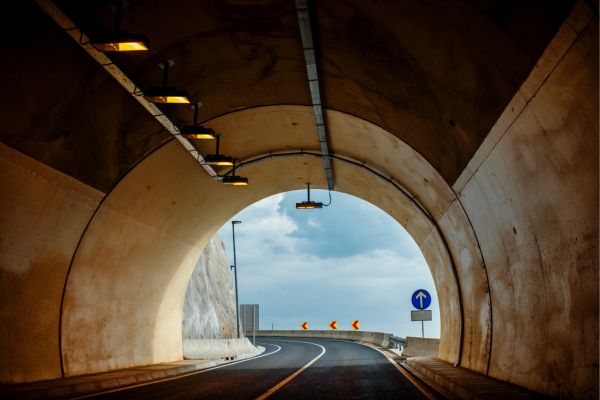
The Union Cabinet has approved the construction of an 8.1-km, six-lane tunnel connecting the Dwarka Expressway with Nelson Mandela Marg at Vasant Kunj in Delhi at an estimated cost of INR 6,969.67 crore. The decision, announced in the past week, clears the way for the National Highways Authority of India (NHAI) to develop the National Highway-148AE project under the Hybrid Annuity Model (HAM). Union Minister Ashwini Vaishnaw said the project is scheduled to be completed within five years.
The proposed corridor has been designed to improve connectivity between West Delhi and South Delhi by linking the Urban Extension Road-2 (UER-2) and the Dwarka Expressway with Vasant Kunj. According to the government, the project will reduce travel time and ease traffic movement for commuters travelling from Gurugram, Dwarka, Indira Gandhi International Airport and West Delhi towards South Delhi.
The tunnel will begin at the Shivmurti interchange and terminate before the junction of Nelson Mandela Marg and Mahipalpur–Chhatarpur Road. It will be constructed using tunnel boring machine (TBM) technology and will comprise twin underground tubes designed to minimise surface disruption. Of the total alignment, a 1.98-km section will pass beneath the Southern Ridge Forest, allowing the environmentally sensitive ridge area to remain largely undisturbed.
The main carriageway of the tunnel will extend for 6.3 km. Including associated infrastructure, such as the proposed flyover and elevated U-turn along the Mahipalpur–Chhatarpur Road, the overall project length will be 8.1 km.
To address congestion at the Nelson Mandela Marg and Mahipalpur–Chhatarpur Road intersection, the project includes an elevated 1.8-km road along Nelson Mandela Marg. An additional flyover has also been proposed to facilitate traffic travelling from Chhatarpur towards Mahipalpur alongside the existing flyover. The project further provides for an elevated U-turn to improve right-turn movements towards Chhatarpur.
The government also stated that NHAI is planning a separate elevated corridor between AIIMS and Mahipalpur. Once completed, this link will connect the new tunnel with the Barapullah elevated road, creating a continuous route linking West Delhi and South Delhi with East Delhi, Ghaziabad and Noida.
According to the official statement, the project is expected to generate significant employment during construction. The government estimates that each lane-kilometre of a national highway creates an average of 264 person-days of direct employment and 55 person-days of indirect employment. Based on these estimates, the tunnel project is expected to generate nearly 7.54 lakh person-days of direct employment and around 9.80 lakh person-days of indirect employment over the course of its execution.
Source - PTI
Advertisement













 Facebook
 Whatsapp
