Advertisement






What really powers the cloud? Behind every Google search, A...
A lot of what defines a home isn’t visible at handover. I...
Private equity has played a significant role in shaping Indi...
Luxury real estate is one of the most talked-about segments ...
Airports play a much bigger role than just enabling travel -...
Myanmar's government is preparing to restart the long-delayed Myitsone hydropower project in Kachin State, with construction expected to be completed in around eight years. Backed by China, the USD 3.6 billion project has remained suspended since 2011 due to public opposition over environmental and social concerns. Officials say fresh assessments and modern technology will help address safety and displacement issues, while civil society groups continue to oppose the project. The dam's revival comes as Myanmar seeks to address its electricity shortage and strengthen economic ties with China.
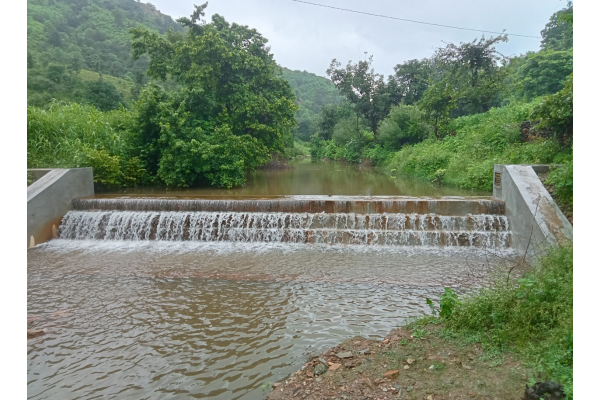
Myanmar's government is preparing to restart the long-delayed Myitsone hydropower project in Kachin State, with officials targeting completion in around eight years. The USD 3.6 billion project, backed by China, has remained suspended since 2011 after widespread public opposition over its environmental and social impact. The renewed push follows President Min Aung Hlaing's visit to China in recent weeks, where the project was discussed as part of bilateral cooperation.
According to two sources familiar with discussions led by Kachin State administration chief Khet Htein Nan, work on the project is expected to begin soon. Htet Paing Htoo, a member of the Kachin State parliament, said construction would resume shortly and that an official announcement would be made. He added that the President had already confirmed plans to restart the project.
The Myitsone dam, planned at the meeting point of the Mali and Nmai rivers in northern Myanmar, is designed to generate 6 gigawatts of electricity, making it one of Southeast Asia's largest hydropower projects. Under the original agreement signed in 2009, about 90 per cent of the electricity generated was expected to be exported to China, a key reason behind public criticism. Reuters could not confirm whether this arrangement has since been revised.
The project was suspended in 2011 by the government led by former President Thein Sein following rare nationwide protests. Environmental groups, local communities and political leaders raised concerns about the flooding of an area comparable in size to Singapore, displacement of residents and the impact on the culturally significant confluence of the two rivers. Former leader Aung San Suu Kyi had also opposed the project.
During discussions held in recent days, the presidential office said the project could supply more than half of Myanmar's estimated 10-gigawatt electricity requirement, helping ease the country's chronic power shortages. Presidential spokesperson Khaing Khaing Soe said the government was carefully examining concerns related to flooding and displacement while assessing whether the overall benefits outweighed the risks. She indicated that authorities were trying to strike a balance between development needs and environmental and social impacts.
Officials also said Chinese partners were prepared to use updated engineering and construction technologies to improve the project's safety. According to one source present at the discussions, Khet Htein Nan stated that the new technology would help the dam withstand potential risks and reduce concerns surrounding the project. The issue has gained greater attention after the powerful 7.7-magnitude earthquake that struck central Myanmar earlier this year, raising fresh questions about building a large dam in a seismically active region.
The proposed structure will stand around 152 metres high and span 152 metres across the river. While the original project cost was estimated at USD 3.6 billion in 2009, current construction costs suggest the investment could rise to nearly USD 11.5 billion. This estimate is based on the latest average hydropower construction costs published by the International Renewable Energy Agency for projects across Asia, excluding China and India.
Myanmar's current administration, which assumed office in April following an election won by a military-aligned political party, has made the revival of the project a priority. The effort comes against the backdrop of the country's prolonged civil conflict that began after the military seized power in 2021. Despite the ongoing instability, authorities have continued discussions with China on major infrastructure and energy projects.
The government has also been working to build local support for the dam. Following a visit by former deputy military chief Soe Win to Myitkyina earlier this year, at least 26 public meetings were held across Kachin State in support of the project, according to members of a government-backed committee. Committee member Naw Khon said the objective was to provide residents with accurate information so they could make informed decisions about the project.
However, opposition remains strong. Earlier this year, 49 civil society organisations jointly called for the project to be permanently cancelled, arguing that it would bring little benefit to the public while causing severe environmental damage, displacement and loss of homes and livelihoods. Their concerns continue to reflect the issues that led to the project's suspension more than a decade ago.
Source Reuters
Advertisement













 Facebook
 Whatsapp
