Advertisement






What really powers the cloud? Behind every Google search, A...
A lot of what defines a home isn’t visible at handover. I...
Private equity has played a significant role in shaping Indi...
Luxury real estate is one of the most talked-about segments ...
Airports play a much bigger role than just enabling travel -...
• Reliance Industries' entry into the redevelopment of Mumbai's 101-acre Juhu Galli slum cluster has renewed optimism among residents after years of stalled rehabilitation efforts.
• The project is expected to provide more than 28,000 rehabilitation homes while transforming one of Mumbai's largest informal settlements into an integrated urban neighbourhood.
• Despite renewed confidence following the selection of a financially strong developer, residents remain cautious about execution timelines, transit arrangements and timely rehabilitation.
• The redevelopment marks a significant shift in Mumbai's housing sector, with large corporate groups increasingly participating in complex slum renewal projects under Maharashtra's cluster redevelopment policy.
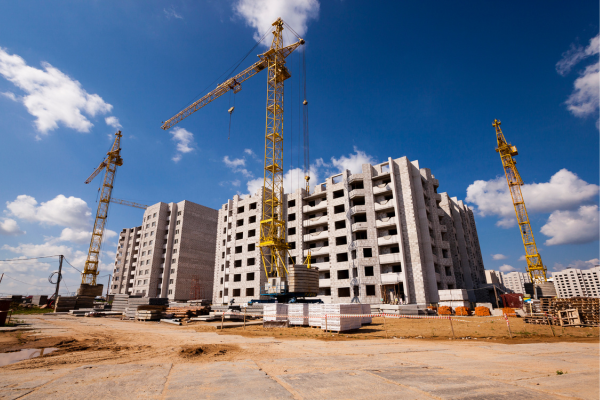
For thousands of families living in Mumbai's Juhu Galli settlement, the announcement of a new developer has rekindled hopes that a long-awaited redevelopment project may finally move forward. Yet alongside the optimism runs a familiar sense of caution, shaped by years of delays, changing proposals and unrealised promises that have characterised many of the city's slum rehabilitation projects.
A consortium led by Reliance 4IR Realty Development, a subsidiary of Reliance Industries, has secured the rights to redevelop the 101.4-acre Juhu Galli slum cluster in Andheri (West), marking the conglomerate's formal entry into Mumbai's large-scale slum redevelopment sector. The project is expected to deliver more than 28,000 rehabilitation homes, making it one of the city's largest urban renewal initiatives.
For residents, the selection of a financially robust developer has strengthened expectations that the project could avoid many of the funding and execution challenges that have affected earlier redevelopment schemes. Large infrastructure and real estate projects in Mumbai have often faced delays due to financing constraints, legal disputes and fragmented land ownership. The involvement of a major corporate player is therefore being viewed as a positive signal by many stakeholders.
However, optimism is tempered by practical concerns. Families who stand to benefit from rehabilitation housing remain focused on issues such as temporary relocation, transit rent payments, construction timelines and the timely delivery of promised homes. Previous redevelopment experiences across Mumbai have made many residents wary of celebrating before construction actually begins.
Under the project conditions, the selected developer is required to provide substantial financial support for transit accommodation during the redevelopment period. Safeguards, including advance rent commitments and performance guarantees, have been incorporated into the framework to protect residents while construction progresses. These measures are intended to reduce uncertainty and ensure continuity for affected households.
The redevelopment also reflects a broader transformation in Mumbai's housing sector. Traditionally dominated by specialised real estate developers, slum rehabilitation is increasingly attracting large corporate groups following policy reforms introduced by the Maharashtra government. The revised cluster redevelopment framework offers larger contiguous land parcels and enhanced development potential, making complex rehabilitation projects more commercially viable.
Urban planners believe such projects can significantly improve living conditions by replacing ageing informal settlements with planned housing, upgraded civic infrastructure, wider roads and improved public amenities. At the same time, successful execution remains critical, as delays can affect thousands of families awaiting permanent rehabilitation.
The Juhu Galli redevelopment is expected to reshape a strategically located part of Andheri, an area that has witnessed sustained commercial and residential growth over the past decade. Beyond housing, the project could unlock additional infrastructure and urban development opportunities across the surrounding neighbourhood.
For Mumbai, where land scarcity continues to challenge affordable housing supply, the success of large-scale cluster redevelopment projects will play an important role in the city's long-term urban renewal strategy. For Juhu Galli's residents, however, the priority remains straightforward: seeing promises translate into completed homes after years of waiting.
Source- Reuters
Advertisement













 Facebook
 Whatsapp
