Advertisement






What really powers the cloud? Behind every Google search, A...
A lot of what defines a home isn’t visible at handover. I...
Private equity has played a significant role in shaping Indi...
Luxury real estate is one of the most talked-about segments ...
Airports play a much bigger role than just enabling travel -...
Mumbai’s western suburbs are emerging as the city’s primary redevelopment corridor as ageing residential societies, limited land availability and expanding infrastructure networks accelerate urban renewal activity across locations including Santacruz, Andheri, Goregaon, Kandivali and Dahisar. Industry estimates indicate that redevelopment-led projects could add more than 44,000 housing units valued at nearly INR 1.3 lakh crore in the coming years. According to Knight Frank India, over 900 housing societies across Mumbai have signed redevelopment agreements since 2020, with a significant share concentrated in the western suburbs. Alongside housing society redevelopment, slum rehabilitation projects continue to reshape several suburban clusters, with more than 2,500 projects reportedly completed across Mumbai over the past three decades, benefiting approximately 2.83 lakh families and expanding the city’s formal housing supply.
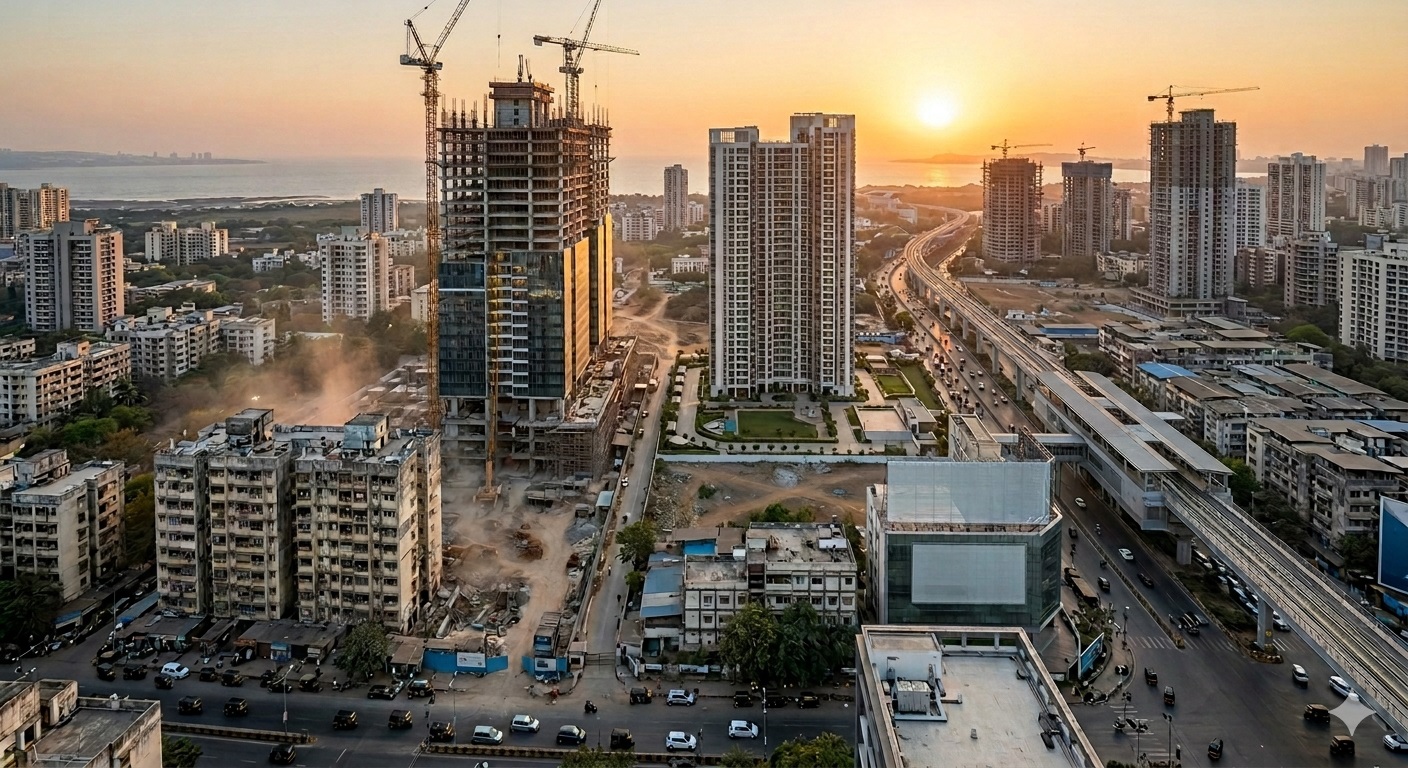
Mumbai’s western suburbs are witnessing increased redevelopment activity as ageing residential buildings, constrained land supply and infrastructure expansion continue to reshape the city’s urban development landscape.
Areas including Santacruz, Andheri, Goregaon, Kandivali and Dahisar have emerged as key redevelopment micro-markets where older housing societies are increasingly being replaced by new residential projects. Developers and consultants state that redevelopment has become one of the primary drivers of housing supply growth in Mumbai due to limited availability of greenfield land parcels within the city.
According to estimates cited by industry stakeholders, Mumbai is expected to witness the development of more than 44,000 new residential units with an estimated value of nearly INR 1.3 lakh crore through redevelopment-led projects over the coming years.
Data released by Knight Frank India indicates that more than 900 housing societies across Mumbai have entered redevelopment agreements since 2020, with a substantial concentration of projects located across the western suburban belt.
In parallel with housing society redevelopment, slum rehabilitation projects continue to play a major role in reshaping suburban residential clusters. Industry reports indicate that more than 2,500 slum rehabilitation projects have been completed across Mumbai over the past three decades, benefiting nearly 2.83 lakh families while contributing to the city’s formal housing inventory.
Developers stated that redevelopment activity is increasingly being viewed as a broader urban restructuring process rather than only reconstruction of ageing buildings. Current projects are integrating housing upgrades with infrastructure improvements, community rehabilitation and enhanced urban planning standards.
Rohan Brahmdev Shukla, Director and Chief Civil Officer at DGS Group, stated that redevelopment across western suburbs and slum rehabilitation clusters is contributing towards improved housing and infrastructure creation in areas that evolved organically over several decades.
He noted that while redevelopment execution requires coordination between authorities, residents and developers, the process is facilitating large-scale urban transformation across several suburban locations.
Industry participants stated that western suburbs have become commercially attractive redevelopment markets due to sustained end-user housing demand combined with scarcity of fresh development land. Redevelopment projects in established neighbourhoods are also witnessing buyer interest because they provide upgraded residential units within already developed social and civic ecosystems.
Shraddha Kedia Agarwal, Director at Transcon Developers, stated that redevelopment projects are increasingly focused on creating integrated urban communities with improved infrastructure, open spaces and long-term liveability standards rather than merely replacing old structures.
She added that established suburban locations continue to attract homebuyers due to existing connectivity networks and mature social infrastructure, which support redevelopment viability despite execution-related complexities.
A spokesperson from Chandak Group stated that redevelopment across western suburbs has become essential for optimising urban land utilisation and improving housing standards in a land-constrained city such as Mumbai.
Dhruman Shah, Promoter of Ariha Group, stated that redevelopment momentum in locations such as Andheri, Goregaon and Kandivali is being supported by strong infrastructure, connectivity and sustained residential demand.
Industry stakeholders also indicated that the sector is witnessing increased focus on policy support, regulatory streamlining and approval efficiency. Developers stated that faster clearances and stronger coordination among stakeholders would remain critical for sustaining redevelopment activity and supporting long-term urban renewal across Mumbai’s western suburban corridor.
Advertisement













 Facebook
 Whatsapp
