Advertisement






What really powers the cloud? Behind every Google search, A...
A lot of what defines a home isn’t visible at handover. I...
Private equity has played a significant role in shaping Indi...
Luxury real estate is one of the most talked-about segments ...
Airports play a much bigger role than just enabling travel -...
The chief engineer of the cargo vessel Dali has entered into a deferred prosecution agreement with U.S. authorities in connection with the collapse of Baltimore’s Francis Scott Key Bridge in 2024. The engineer admitted that he failed to report a hazardous condition involving the vessel’s fuel supply system to the U.S. Coast Guard. The agreement comes as legal proceedings continue against the ship’s operators and technical superintendent. The bridge collapse resulted in six deaths, caused billions of dollars in damage, and remains the subject of multiple civil and criminal investigations.
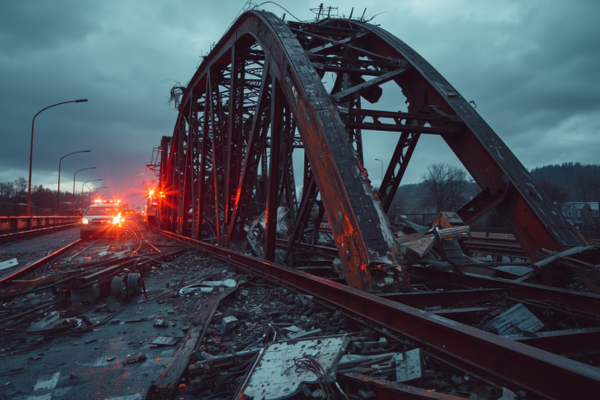
The chief engineer of the cargo ship Dali, which struck and destroyed Baltimore’s Francis Scott Key Bridge in March 2024, has reached a deferred prosecution agreement with the U.S. Department of Justice. The bridge collapse claimed the lives of six construction workers and triggered one of the most significant maritime infrastructure disasters in recent U.S. history.
According to the Justice Department, Karthikeyan Deenadayalan admitted that he failed to disclose a hazardous condition to the U.S. Coast Guard. Authorities said he was aware that the 984-foot vessel was operating with an unsafe fuel supply pump but did not report the issue.
As part of the agreement, Deenadayalan, an Indian national, will be placed on probation for 36 months. If he complies with all conditions during this period, criminal prosecution against him will not proceed.
The development follows charges filed in the past month against two foreign vessel operators and a shoreside technical superintendent linked to the incident. Prosecutors have alleged that key decisions regarding the vessel’s fuel supply system contributed to the events leading up to the bridge collision.
Maryland also finalized a USD 2.25 billion settlement in the past month with Grace Ocean Private Limited and Synergy Marine Pte Ltd, the owner and operator of the Dali. The settlement marked one of the largest financial resolutions arising from the disaster, although certain claims remain unresolved.
The Justice Department has estimated that the bridge collapse caused at least USD 5 billion in economic losses and environmental damage. The destruction disrupted a major shipping route serving the Port of Baltimore, one of the busiest ports on the U.S. East Coast, and led to extensive recovery and reconstruction efforts.
Investigations by the National Transportation Safety Board previously found that a single loose wire in the vessel’s electrical system triggered an unexpected breaker opening. This initiated a chain of failures that resulted in two blackouts aboard the vessel and caused it to lose propulsion and steering shortly before the collision.
Maryland's claims against shipbuilder Hyundai Heavy Industries remain unresolved.
Criminal charges have also been brought against Singapore-based Synergy Marine Pte Ltd, Chennai-based Synergy Maritime Pte Ltd, and Radhakrishnan Karthik Nair, an Indian national who served as the Dali’s technical superintendent. Prosecutors believe Nair is currently in India.
In response to the charges, the Synergy companies said they would contest the allegations. Synergy Marine also expressed concern that members of the Dali crew have remained in the United States for more than two years despite what it described as evidence showing that their actions were timely and reasonable under the circumstances.
According to the indictment, the defendants relied on a flushing pump to provide fuel to two of the ship’s four generators. Prosecutors allege that the pump was not designed to restart automatically after a blackout, leaving the generators without a fuel supply when electrical failures occurred.
The indictment further alleges that had the vessel been operating with the proper fuel supply pumps, power could have been restored quickly enough for the ship to safely pass beneath the bridge and avoid the collision.
Source Reuters
Advertisement













 Facebook
 Whatsapp
