Advertisement






What really powers the cloud? Behind every Google search, A...
A lot of what defines a home isn’t visible at handover. I...
Private equity has played a significant role in shaping Indi...
Luxury real estate is one of the most talked-about segments ...
Airports play a much bigger role than just enabling travel -...
Mumbai's infrastructure landscape is set for another transformation as MMRDA modifies the design of the Orange Gate twin-tunnel project to reclaim land along Marine Drive and improve traffic capacity in South Mumbai. The revised plan is expected to create additional road space, strengthen east-west connectivity and complement the city's long-term underground mobility strategy. The move comes as tunnelling work on the Orange Gate corridor advances, positioning the project as a key component of Mumbai's future transport network.
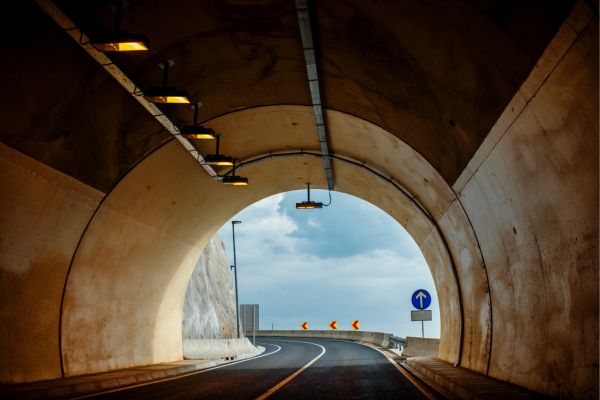
The Mumbai Metropolitan Region Development Authority (MMRDA) has revised the design of its proposed twin-tunnel corridor connecting Orange Gate and Marine Drive, enabling the reclamation of land along one of the city's most prominent waterfront stretches while creating additional capacity for road infrastructure in South Mumbai.
The modification forms part of the broader Orange Gate underground road project, a major mobility initiative aimed at improving east-west connectivity across Mumbai's island city. Officials believe the redesign will help optimise available urban space, ease traffic pressure on existing arterial roads and support future transportation requirements in a part of the city where opportunities for surface-level expansion remain limited.
Under the revised proposal, the authority plans to utilise reclaimed land along the Marine Drive stretch for road widening and associated transport infrastructure. The move is expected to improve traffic circulation in the area while integrating with the larger underground corridor being developed beneath densely built urban zones.
The Orange Gate tunnel project is emerging as one of Mumbai's most significant underground road infrastructure developments. Designed as a high-capacity twin-tunnel system spanning approximately 4.8 kilometres, the corridor will provide a direct connection between key parts of South Mumbai, reducing dependence on congested surface roads.
According to project details released by MMRDA, the tunnels are being constructed using advanced slurry shield tunnel boring machine (TBM) technology capable of operating beneath complex urban environments without disrupting daily city activity. The authority recently crossed a key construction milestone with more than 250 metres of tunnelling completed and hundreds of permanent tunnel lining rings already installed.
Once operational, the underground corridor is expected to significantly improve travel efficiency across the island city. MMRDA estimates that travel times on certain routes could reduce from around 40 minutes during peak traffic periods to nearly five minutes, while also lowering congestion, fuel consumption and vehicle emissions.
The project is being developed as part of a wider vision to create a multi-layered mobility network for Mumbai, integrating underground roads, metro systems, elevated corridors and coastal infrastructure. Urban planners increasingly view such underground solutions as essential for accommodating future traffic growth without requiring large-scale land acquisition in already developed areas.
The revised Marine Drive reclamation plan reflects this approach, allowing the city to extract greater value from a major infrastructure investment while improving connectivity in one of Mumbai's busiest districts. As construction progresses, the Orange Gate tunnel is expected to play a central role in reshaping mobility patterns across South Mumbai and strengthening the city's long-term transport capacity.
Source MMRDA
Advertisement













 Facebook
 Whatsapp
