Advertisement






What really powers the cloud? Behind every Google search, A...
A lot of what defines a home isn’t visible at handover. I...
Private equity has played a significant role in shaping Indi...
Luxury real estate is one of the most talked-about segments ...
Airports play a much bigger role than just enabling travel -...
• Delhi has approved the Delhi Slum and JJ Cluster Rehabilitation and Resettlement Policy, 2026, creating a framework for large-scale redevelopment of JJ clusters across the city.
• Five JJ clusters have been identified for the first phase, while planning and tender preparations are underway for 50 additional clusters.
• The rehabilitation programme will be implemented through a public-private partnership (PPP) model to accelerate housing delivery and infrastructure development.
• The eligibility cut-off date has been extended to January 1, 2025, expanding the number of families that can benefit from rehabilitation.
• The policy aims to provide formal housing along with schools, healthcare facilities, anganwadis and other community infrastructure for nearly four lakh families.
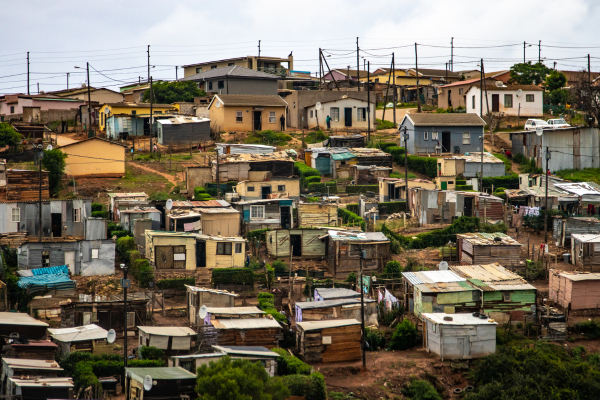
Delhi has taken a major step towards the redevelopment of its slum settlements after finalising the Delhi Slum and JJ Cluster Rehabilitation and Resettlement Policy, 2026. The policy was approved during a review meeting chaired by Union Home Minister Amit Shah, with senior officials from the Delhi government, Delhi Development Authority (DDA) and Delhi Urban Shelter Improvement Board (DUSIB) participating in discussions on implementation and execution.
The policy is expected to become the foundation for one of the capital's largest housing rehabilitation programmes, targeting the redevelopment of JJ clusters and improving living conditions for lakhs of residents currently residing in informal settlements. Officials indicated that the new framework is designed to create a structured and time-bound approach for rehabilitation while ensuring that beneficiaries receive access to essential civic and social infrastructure.
As part of the first phase, five JJ clusters have been selected for redevelopment. DDA and DUSIB have been directed to begin the tendering process within the next 45 days so that work can move forward without delays. At the same time, authorities have been asked to prepare detailed project reports and tender documents for another 50 JJ clusters, signalling a broader redevelopment pipeline that could be rolled out in stages over the coming years.
The rehabilitation projects will be executed through a public-private partnership (PPP) model, which the government believes will help attract investment, improve project viability and accelerate construction timelines. Officials have also been instructed to ensure that rehabilitation projects are launched regularly, with a target of initiating at least five PPP-based projects every month.
One of the most significant changes under the policy is the extension of the eligibility cut-off date to January 1, 2025. This revision is expected to increase the number of families that qualify for rehabilitation benefits and provide housing security to a larger section of Delhi's slum population. Government estimates suggest that nearly four lakh families could eventually benefit from the programme.
Unlike earlier rehabilitation initiatives that focused primarily on housing units, the new policy places considerable emphasis on creating complete residential communities. Authorities have been directed to integrate schools, anganwadi centres, healthcare facilities, community spaces and playgrounds into redevelopment projects. The objective is to ensure that residents receive access to social infrastructure alongside formal housing.
The policy also builds on reforms introduced over the last few years to make slum redevelopment projects more viable. Delhi authorities had previously approved higher floor area ratios (FAR), density relaxations and revised land-use norms to improve the financial feasibility of redevelopment projects and encourage greater participation from private developers. These measures were introduced under the Jahan Jhuggi Wahin Makaan initiative, which focuses on rehabilitating eligible residents at or near their existing locations wherever possible.
The latest move comes amid a wider effort to improve housing conditions across Delhi's JJ clusters. In recent months, authorities have also undertaken plans to upgrade and refurbish around 18,000 existing flats and improve civic infrastructure, including roads, drainage systems, water supply networks and sanitation facilities. Several rehabilitation colonies have faced maintenance and infrastructure challenges over the years, prompting the government to focus on both redevelopment and upgrading existing housing stock.
Delhi is home to hundreds of JJ clusters that accommodate a significant share of the city's workforce. Many of these settlements have existed for decades and continue to face issues related to overcrowding, inadequate infrastructure and limited access to formal housing. Urban planners and policymakers have long viewed large-scale rehabilitation as a key requirement for improving living standards while supporting planned urban development.
With the policy now finalised, attention will shift towards project execution, land planning and coordination between multiple agencies. The success of the initiative will largely depend on how quickly identified projects move through the approval, tendering and construction stages and how effectively rehabilitation benefits reach eligible residents.
Source PTI
Advertisement













 Facebook
 Whatsapp
