Advertisement






What really powers the cloud? Behind every Google search, A...
A lot of what defines a home isn’t visible at handover. I...
Private equity has played a significant role in shaping Indi...
Luxury real estate is one of the most talked-about segments ...
Airports play a much bigger role than just enabling travel -...
The Delhi government has approved a new slum rehabilitation policy aimed at providing permanent housing to nearly four lakh families living across approximately 675 slum clusters in the national capital. The policy seeks to accelerate in-situ redevelopment through public-private partnerships, allowing eligible residents to receive formal housing at or near their existing locations wherever feasible. The framework is designed to address longstanding challenges associated with fragmented land ownership, funding constraints and project viability. Authorities expect the initiative to improve living conditions for a substantial section of Delhi’s urban population while facilitating the redevelopment of underutilised land parcels. The policy also draws upon ongoing discussions around large-scale redevelopment models and forms part of broader efforts to strengthen urban housing infrastructure and rehabilitation mechanisms in the city.
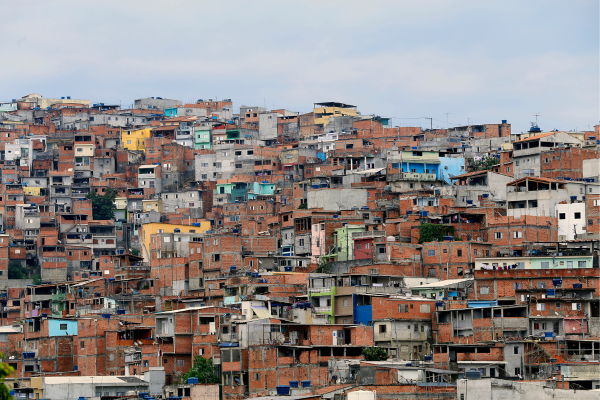
The Delhi government has introduced a comprehensive slum rehabilitation policy for 2026 that aims to provide permanent housing to nearly four lakh families residing in slum clusters across the capital. Announced in the past week, the policy is intended to accelerate redevelopment and rehabilitation efforts across approximately 675 slum settlements, with a focus on improving housing conditions while retaining residents close to their existing livelihoods wherever possible.
The framework places significant emphasis on in-situ rehabilitation, under which eligible beneficiaries would receive formal housing at the locations where they currently reside or in nearby areas if redevelopment at the original site is not feasible. Officials have indicated that the approach is intended to minimise displacement and preserve access to employment, education and public services that many residents depend upon. The policy aligns with previous rehabilitation strategies that prioritised housing within existing communities rather than relocation to distant peripheral locations.
Under the proposed model, redevelopment projects are expected to be undertaken through public-private partnerships. Government agencies, including the Delhi Development Authority (DDA) and other concerned authorities, would identify eligible slum clusters and determine the number of housing units required at each site. Developers participating in the programme would be responsible for constructing rehabilitation housing while being provided with development opportunities intended to improve project viability.
The policy seeks to address financial challenges that have historically slowed rehabilitation projects. According to the proposed framework, developers may be permitted to construct Economically Weaker Section (EWS) housing in adjoining zones where required. After fulfilling rehabilitation obligations, the remaining development potential could be utilised for group housing, commercial or mixed-use projects in accordance with applicable floor area ratio norms. The government believes this mechanism could encourage greater private sector participation in redevelopment projects that have previously attracted limited investor interest.
Housing and urban development officials have stated that the initiative is designed to tackle the scale of Delhi’s informal housing challenge. Estimates indicate that more than three million people reside in the city’s slum clusters, making rehabilitation a significant urban planning and social infrastructure priority. The new policy is expected to create a structured pathway for redevelopment while integrating housing delivery with broader city planning objectives.
The announcement follows ongoing discussions regarding large-scale rehabilitation models and redevelopment frameworks in major Indian cities. While policymakers have examined different approaches to slum renewal, Delhi’s strategy continues to emphasise rehabilitation within existing urban areas, reflecting the dispersed nature of the capital’s settlements and the need to balance redevelopment with livelihood considerations. Authorities are expected to finalise implementation mechanisms, project identification processes and eligibility guidelines as the policy moves towards execution.
Source - PTI
Advertisement













 Facebook
 Whatsapp
