Advertisement






What really powers the cloud? Behind every Google search, A...
A lot of what defines a home isn’t visible at handover. I...
Private equity has played a significant role in shaping Indi...
Luxury real estate is one of the most talked-about segments ...
Airports play a much bigger role than just enabling travel -...
Project Management Institute (PMI) has warned that South Asia’s construction sector could face a talent shortfall of 558,000 professionals by 2035, nearly double the current gap of 291,000, as infrastructure and industrial investments accelerate across the region. The findings were highlighted during a construction and infrastructure roundtable organised by PMI South Asia in New Delhi, which brought together more than 25 senior industry leaders from infrastructure, energy, transportation, manufacturing, technology and advisory sectors. According to PMI’s 2026 Construction Project Management Talent Gap Report, India alone is expected to require nearly 395,000 construction project professionals by 2035. Industry participants stressed the need to strengthen project execution capabilities, develop future-ready talent and improve delivery outcomes as project complexity and investment volumes continue to increase.
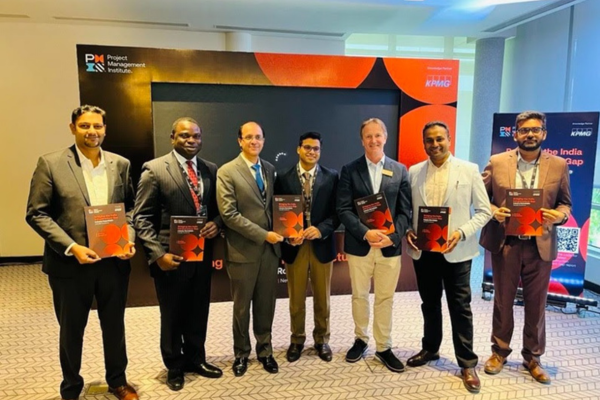
Project Management Institute (PMI) has highlighted a growing shortage of skilled project management professionals in the construction sector, warning that South Asia’s talent gap could expand from 291,000 professionals at present to 558,000 by 2035 if current infrastructure and industrial investment trends continue.
The findings were presented during a construction and infrastructure roundtable organised by PMI South Asia in New Delhi. The event brought together more than 25 senior executives from public and private sector organisations operating across infrastructure, construction, transportation, energy, renewable energy, manufacturing, technology and advisory services.
Held under the theme “Closing the delivery capability gap in Indian infrastructure: From national ambition to predictable on-ground execution”, the discussion focused on improving project delivery capabilities, strengthening execution frameworks and building a future-ready workforce capable of managing increasingly complex infrastructure programmes.
According to PMI’s Construction Project Management Talent Gap Report 2026, India is expected to account for a substantial share of future demand, with the country projected to require nearly 395,000 construction project professionals by 2035. The report indicates that sustained investment in infrastructure, industrial development and urban expansion is expected to drive significant demand for specialised project management expertise over the coming decade.
Amit Goyal, Managing Director of PMI South Asia, stated that the success of India’s infrastructure growth story would increasingly depend on effective project execution. He noted that infrastructure developments are becoming larger, more interconnected and more time-sensitive, requiring professionals capable of managing complexity, coordinating multiple stakeholders and optimising resources to achieve predictable outcomes.
The roundtable also examined the operational and financial consequences of project delivery challenges across the infrastructure sector. Participants discussed industry data indicating that project overruns remain a widespread concern globally.
According to PMI, a global survey conducted in 2020 found that 72 per cent of projects exceed their budgets, while 73 per cent face schedule delays. The study also reported that 70 per cent of projects experience scope creep, resulting in changes to project requirements beyond the original plan. PMI estimated that inefficiencies in project performance result in losses of approximately USD127 million for every USD1 billion invested.
Industry representatives noted that such overruns affect profitability, investor confidence, stakeholder trust and long-term competitiveness, particularly as governments and private developers continue to increase spending on infrastructure and industrial projects.
Yash Singh, Partner, Business Consulting at KPMG India, stated that India’s infrastructure and construction sector is entering a phase of accelerated growth, making investments in skilled project talent increasingly important for delivering projects efficiently and sustainably. He added that industry collaboration and knowledge-sharing initiatives can play an important role in advancing project delivery standards.
The event formed part of PMI South Asia’s broader Construction Roundtable series, which aims to create a platform for industry leaders to identify capability gaps, exchange best practices and explore strategies to improve infrastructure delivery outcomes. The initiative builds on an earlier roundtable held during PMSAC24 in September 2024, where senior executives from across the infrastructure ecosystem discussed project management challenges and workforce development requirements.
As infrastructure investment continues to expand across India and the wider South Asian region, industry stakeholders indicated that addressing the growing project management talent shortage will be critical to ensuring timely and cost-effective delivery of large-scale developments.
Advertisement













 Facebook
 Whatsapp
