Advertisement






What really powers the cloud? Behind every Google search, A...
A lot of what defines a home isn’t visible at handover. I...
Private equity has played a significant role in shaping Indi...
Luxury real estate is one of the most talked-about segments ...
Airports play a much bigger role than just enabling travel -...
• Housing societies across Pimpri-Chinchwad have opposed PCMC's move to levy property tax on common amenities such as clubhouses, swimming pools, libraries and society offices.
• Several residential complexes have received tax demands ranging from around INR 1 lakh to over INR 5 lakh, triggering concerns among residents.
• Societies argue that homeowners already pay property tax on individual flats and bear the cost of maintaining common facilities through monthly charges.
• PCMC has clarified that the levy is not new and follows a citywide assessment drive that identified previously unassessed amenity spaces.
• Resident groups and housing federations have termed the move an additional financial burden and have questioned its fairness.
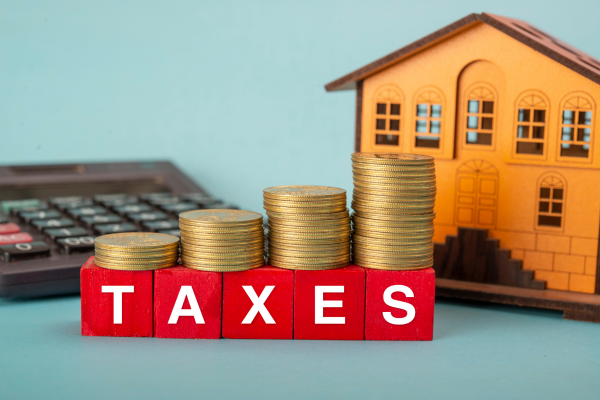
Housing societies in Pimpri-Chinchwad have raised objections to the Pimpri Chinchwad Municipal Corporation's (PCMC) decision to impose property tax on common amenities within residential complexes, arguing that the move could significantly increase the financial burden on residents.
Over the past few weeks, several housing societies have received property tax bills for facilities such as clubhouses, swimming pools, libraries, society offices, community halls and other shared spaces. The tax demands reportedly range from around INR 1 lakh to more than INR 5 lakh depending on the size of the project and the amenities available within the complex.
Residents have questioned the basis of the levy, stating that flat owners already pay property tax on their individual units while also contributing towards the construction, upkeep and maintenance of common facilities through monthly maintenance charges. According to housing society representatives, these amenities are created for the collective use of residents and do not generate commercial income.
A residential society in Wakad with 266 apartments reportedly received a tax demand of INR 3.18 lakh for its common facilities. Society office-bearers said every homeowner in the project already pays property tax separately and expressed concern over the additional levy on shared infrastructure. They also pointed to practical difficulties in recovering the amount from residents, particularly in large housing complexes where maintenance contributions vary across apartment sizes.
Another housing society in Kaspate Wasti with nearly 650 flats received a property tax bill of about INR 5.45 lakh covering facilities including a swimming pool, library and society office. Residents stated that they had submitted objections after receiving draft assessment notices but the final demand was issued despite their representations.
Housing society members have argued that the civic body's property tax calculations are generally based on the built-up area of a project, which already factors in common spaces and amenities. As a result, several residents believe that levying a separate tax on these facilities amounts to double taxation. Similar concerns had emerged recently when societies objected to tax assessments on open amenity areas such as gardens, playgrounds, jogging tracks and recreational spaces.
The issue has drawn support from housing federations across Pimpri-Chinchwad. Federation representatives said residents are already bearing rising maintenance costs, including expenses for water tankers, sewage treatment systems, waste management and security services. They contend that adding another layer of taxation on common amenities will further increase the cost of living for apartment owners.
PCMC officials, however, have maintained that the tax is not a newly introduced levy. Civic authorities explained that common amenity spaces have always been taxable under the existing provisions of the Maharashtra Municipal Corporation Act. According to officials, many such spaces were not assessed in the past and therefore remained outside the tax net.
As part of a recent property assessment and survey exercise, the municipal corporation identified a large number of previously unassessed properties and amenity spaces across the city. Following this exercise, tax notices have been issued to bring these properties under the formal assessment system.
The assessment drive has substantially expanded the city's property tax database. PCMC officials said around 1.54 lakh previously unassessed properties have been identified, increasing the total number of assessed properties from nearly 6.3 lakh to 7.84 lakh. Civic authorities have also pointed out that the law permits recovery of property tax for up to six previous years in cases where taxable properties were not assessed earlier.
The controversy comes amid broader discussions around property taxation in Pimpri-Chinchwad. In recent months, resident groups and housing societies have also raised concerns over other civic levies and charges, arguing that any increase in financial obligations should be accompanied by corresponding improvements in municipal services and infrastructure.
Advertisement













 Facebook
 Whatsapp
