Advertisement






What really powers the cloud? Behind every Google search, A...
A lot of what defines a home isn’t visible at handover. I...
Private equity has played a significant role in shaping Indi...
Luxury real estate is one of the most talked-about segments ...
Airports play a much bigger role than just enabling travel -...
Vietnam's Vingroup is accelerating the construction of a 135,000-seat stadium near Hanoi, which the company says will become the world's largest stadium upon completion. The project forms part of a USD 35 billion Olympic Sports City development and is expected to be completed by July 2027, a year ahead of its original schedule. While experts have questioned whether current demand can support a venue of this scale, Vingroup believes the stadium will remain commercially sustainable over the long term. The development also aligns with Vietnam's broader infrastructure expansion programme, which includes projects worth an estimated USD 200 billion by 2030.
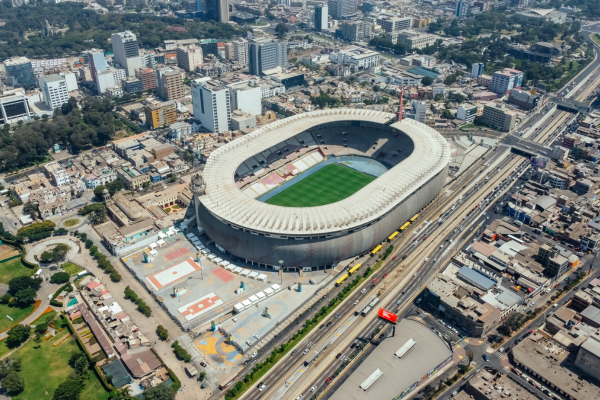
Vietnam's largest listed conglomerate, Vingroup, is accelerating the construction of a 135,000-seat stadium on the outskirts of Hanoi, aiming to create what it says will be the world's largest sports venue. The project is being developed around 25 kilometres south of central Hanoi and is now targeted for completion by July 2027, a year earlier than the timeline announced when plans were unveiled in late 2025.
According to company representatives, thousands of workers are operating around the clock at the construction site to meet the revised deadline. The stadium will feature a fully retractable roof, which Vingroup claims will be the largest of its kind globally, while also offering the world's largest seating capacity for a stadium.
The project highlights Vingroup's continued expansion into large-scale infrastructure and development projects. Besides the stadium, the group is involved in several major ventures across Vietnam, including a proposed high-speed railway network, urban developments and renewable energy projects.
The planned venue, named Trong Dong Stadium after Vietnam's traditional bronze drum, is a key component of a USD 35 billion Olympic Sports City development. The broader project will cover more than 9,000 hectares on the outskirts of Hanoi and is intended to host major international sporting events, cultural programmes and large-scale concerts.
The world's largest stadium is currently considered to be the Rungrado 1st of May Stadium in North Korea. While it is often cited as having a capacity of 150,000, some independent assessments have estimated the actual number of seats to be below 120,000.
Industry experts have raised questions about whether a stadium of this size can be supported by current demand. James Walton, Sports Business Group Leader at Deloitte Asia Pacific, noted that although football remains one of Vietnam's most popular sports, domestic attendance figures remain relatively low. Vietnam's top football competition, V.League 1, recorded average attendances of fewer than 6,000 spectators per match during the 2023-24 season.
Walton said that domestic football demand alone would likely not justify a 135,000-seat venue. However, he added that integrating the stadium into a larger urban development could improve its long-term commercial viability. He also pointed out that most modern national stadiums around the world typically accommodate between 60,000 and 80,000 spectators.
Vingroup has not disclosed financial projections for the project but stated that it expects the facility to remain commercially sustainable over the long term. The company has been managing significant financial commitments, with liabilities reaching USD 36.7 billion last year. That figure accounted for more than 4 per cent of Vietnam's total private-sector debt in 2025 and excludes additional borrowings held by affiliated private entities.
The stadium project comes as Vietnam intensifies efforts to modernise its infrastructure and support rapid economic growth. The country's leadership has set a target of maintaining annual economic growth of at least 10 per cent through the end of the decade. To support this objective, authorities have announced hundreds of infrastructure projects, including airports, ports, bridges and railway networks, with a combined estimated value of around USD 200 billion by 2030.
Quynh Nguyen, a finance lecturer at Hoa Sen University in Ho Chi Minh City, said infrastructure upgrades were necessary for Vietnam's development but cautioned that financing and banking-sector exposure should be closely monitored.
Meanwhile, researcher Tran Thi Mong Tuyen of the Hawaii-based Pacific Forum said rapidly growing economies often need to build infrastructure ahead of demand. However, she also highlighted the risks associated with underutilised assets and longer investment payback periods if anticipated demand takes time to materialise.
Source Reuters
Advertisement













 Facebook
 Whatsapp
