Advertisement






What really powers the cloud? Behind every Google search, A...
A lot of what defines a home isn’t visible at handover. I...
Private equity has played a significant role in shaping Indi...
Luxury real estate is one of the most talked-about segments ...
Airports play a much bigger role than just enabling travel -...
The breakthrough of the main tunnel at the eastern portal of the Zojila Tunnel project marks a significant milestone in India's efforts to establish year-round connectivity between Jammu & Kashmir and Ladakh. Witnessed by Union Minister for Road Transport and Highways Nitin Gadkari, the achievement brings the nearly 14-km-long tunnel closer to completion. Once operational, the INR 6,800-crore project is expected to dramatically reduce travel time, improve road safety, boost tourism and trade, and strengthen strategic connectivity in the Himalayan region. The milestone also comes amid the government's broader push to develop highway and tunnel infrastructure worth over INR 1.35 lakh crore across Jammu & Kashmir and Ladakh.
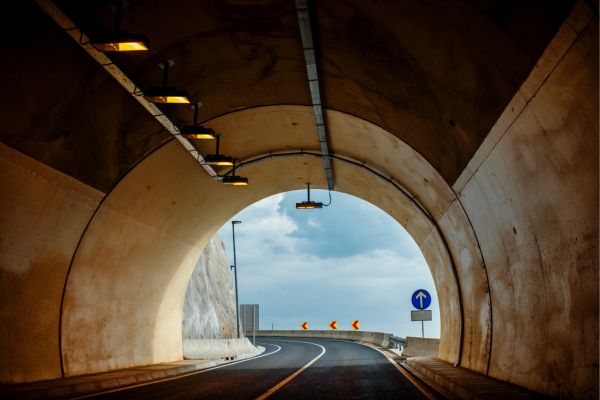
Union Minister for Road Transport and Highways Nitin Gadkari witnessed the historic breakthrough of the main tunnel at the eastern portal of the Zojila Tunnel project at Minamarg in Kargil district, marking a major step towards achieving all-weather connectivity between Jammu & Kashmir and Ladakh.
The event was attended by Jammu & Kashmir Lieutenant Governor Manoj Sinha, Chief Minister Omar Abdullah, Members of Parliament, public representatives and senior officials, while Ladakh Lieutenant Governor Vinai Kumar Saxena joined virtually and hailed the achievement as a transformative moment for the region.
Constructed between Baltal and Minamarg on National Highway-1, the Zojila Tunnel is among India's most ambitious mountain infrastructure projects. Spanning nearly 14 kilometres and being developed at an estimated cost of INR 6,800 crore, the tunnel traverses some of the country's most challenging terrain at altitudes ranging from 2,900 metres to 3,310 metres. Despite harsh weather conditions, heavy snowfall and complex geological challenges, the project has steadily progressed through the efforts of engineers, workers, consultants, contractors and the National Highways & Infrastructure Development Corporation Limited (NHIDCL).
Speaking on the occasion, Gadkari highlighted that the tunnel will feature advanced safety systems, including modern ventilation facilities, automatic fire detection mechanisms, CCTV surveillance and pedestrian cross-passages. The larger project also incorporates extensive supporting infrastructure such as cut-and-cover sections, bridges, culverts, snow galleries, avalanche protection structures, catch dams and approach roads designed to ensure safe and uninterrupted travel throughout the year.
The tunnel is expected to transform connectivity in the region by reducing travel time between Sonamarg and Minamarg from nearly two hours to approximately 30 minutes. The project will not only improve travel reliability and reduce accident risks associated with avalanches and severe weather but also deliver substantial savings in fuel and transportation costs.
Beyond transportation benefits, the Zojila Tunnel is expected to act as a catalyst for economic growth across Jammu & Kashmir and Ladakh. Improved accessibility is likely to boost tourism, facilitate trade, enhance access to remote areas and create new employment opportunities for local communities. Enhanced regional integration is also expected to improve the quality of life for residents living in difficult-to-reach areas.
The project carries significant strategic importance as well. Year-round connectivity to Ladakh will enable faster movement of military personnel, equipment and supplies, strengthening India's logistical capabilities and preparedness in border regions.
Highlighting the government's broader infrastructure vision, Gadkari stated that road and tunnel projects worth around INR 18,000 crore are currently under implementation between Kargil and Leh-Ladakh. Key initiatives include the Kargil–Zanskar–Padum highway project, bypass projects in Leh, and proposed tunnels at Fatu-La and Kela Pass aimed at improving all-weather connectivity and access to major tourist destinations.
The Minister also announced plans for tunnel projects at Baralacha La, Lachulung La and Tanglang La along the Manali–Leh route, which are expected to further enhance travel reliability and year-round access to Ladakh.
In addition, highway projects worth approximately INR 1.35 lakh crore, including completed, ongoing and proposed developments, are being implemented across Jammu & Kashmir. These include major high-speed corridors connecting Jammu, Srinagar, Anantnag, Uri, Poonch and other strategic locations, as well as ring road projects in Srinagar and Jammu designed to ease congestion and improve regional mobility.
Gadkari also highlighted the Delhi–Amritsar–Katra Greenfield Expressway, which is expected to strengthen connectivity between northern India and Jammu & Kashmir through a modern access-controlled corridor.
Emphasising the importance of tunnel infrastructure in mountainous regions, Gadkari said such projects are crucial for ensuring all-weather connectivity, enhancing road safety, supporting economic development and strengthening national security. He described the successful breakthrough of the Zojila Tunnel as a symbol of India's growing ability to overcome geographical challenges through engineering excellence and infrastructure-led development.
Source: PIB
Advertisement













 Facebook
 Whatsapp
