Advertisement






What really powers the cloud? Behind every Google search, A...
A lot of what defines a home isn’t visible at handover. I...
Private equity has played a significant role in shaping Indi...
Luxury real estate is one of the most talked-about segments ...
Airports play a much bigger role than just enabling travel -...
• Indian Railways has approved the INR 220.51 crore doubling of the 10.65-km Mararikulam-Alappuzha rail section in Kerala.
• The project will remove the last remaining single-line bottleneck on the Ernakulam-Alappuzha-Kayamkulam corridor.
• Once completed, the upgraded section will support nine additional passenger trains in each direction every day.
• The project is expected to increase freight capacity by 2.88 million tonnes annually and improve network efficiency.
• The approval forms part of the Centre's ongoing efforts to strengthen rail infrastructure and capacity across Kerala.
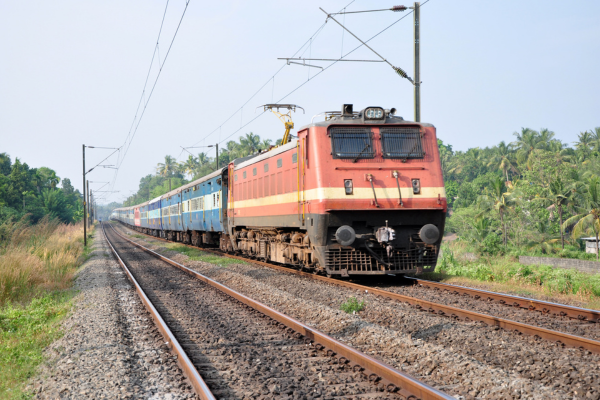
Indian Railways has approved the doubling of the 10.65-km Mararikulam-Alappuzha railway section in Kerala at an estimated cost of INR 220.51 crore, providing a major boost to rail capacity on the busy Ernakulam-Alappuzha-Kayamkulam corridor.
The approved project covers the only remaining single-line stretch on the corridor. Railway officials said the work is aimed at eliminating an operational bottleneck that currently affects the smooth movement of both passenger and freight trains. With the completion of the doubling work, the entire corridor will move closer to operating as a continuous double-line route, improving overall efficiency and reducing congestion.
The Ministry of Railways stated that the project is part of a broader national programme focused on increasing rail network capacity through track doubling, tripling, quadrupling, flyovers and bypass lines. The Mararikulam-Alappuzha section has been identified as a critical link due to the growing demand for rail services across Kerala.
According to railway estimates, the project will allow the operation of nine additional passenger trains in each direction every day, effectively creating capacity for 18 more daily train services on the route. The additional infrastructure is also expected to facilitate smoother train scheduling, reduce delays caused by crossing movements and improve punctuality across the corridor.
Freight movement is expected to receive a significant boost as well. Railway projections indicate that the doubling work will create an additional freight handling capacity of around 2.88 million tonnes per annum. The enhanced capacity is expected to support the transportation of industrial goods, agricultural produce and other commodities moving through the region while improving logistics efficiency.
The latest approval follows a series of railway infrastructure investments announced for Kerala in recent months. Earlier, Indian Railways sanctioned the INR 450.59 crore doubling of the 21.10-km Turavur–Mararikulam section, another key segment of the same corridor. Together, these projects are expected to strengthen connectivity between Ernakulam, Alappuzha and Kayamkulam while addressing long-standing capacity constraints.
Railway authorities have also estimated that the Mararikulam–Alappuzha doubling project could generate additional annual earnings of approximately INR 3.08 crore. Beyond revenue generation, the project is expected to support growing passenger demand and accommodate future traffic growth on one of Kerala's important railway routes.
The approval comes at a time when several railway expansion and modernisation projects are being implemented across Kerala. Over the past few years, the state has seen increased investments in track doubling, station redevelopment, signalling upgrades and capacity enhancement works as part of efforts to improve connectivity and strengthen the rail network.
With the removal of the final single-line section on the corridor, the project is expected to play an important role in improving operational flexibility, increasing carrying capacity and supporting the long-term development of rail transport infrastructure in Kerala.
Advertisement













 Facebook
 Whatsapp
