Advertisement






What really powers the cloud? Behind every Google search, A...
A lot of what defines a home isn’t visible at handover. I...
Private equity has played a significant role in shaping Indi...
Luxury real estate is one of the most talked-about segments ...
Airports play a much bigger role than just enabling travel -...
• The Great Nicobar Project aims to develop the island into a strategic maritime and economic hub near the East–West international shipping route while strengthening India's security presence in the Indo-Pacific region.
• The project includes a transshipment terminal, international airport, township and hybrid gas-solar power plant to support long-term regional development.
• Authorities have emphasised environmental safeguards, including 42 clearance conditions, phased implementation and compensatory afforestation measures.
• The government has stated that no displacement of Shompen and Nicobarese communities is proposed, with tribal welfare and ecological protection integrated into project planning.
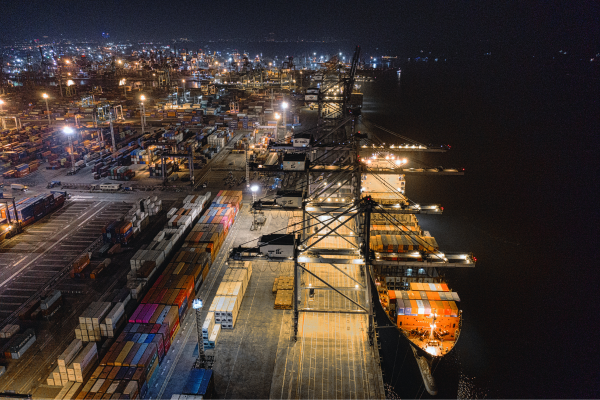
The Great Nicobar Project is being positioned as a major strategic and infrastructure initiative aimed at strengthening India's maritime presence, economic capabilities and national security interests in the Indian Ocean Region. According to a recent government background note, the project seeks to leverage Great Nicobar Island's location near the East–West international shipping corridor while pursuing a development model that incorporates environmental safeguards and tribal welfare measures.
The project comprises four major infrastructure components: an International Container Transhipment Terminal (ICTT) with a planned capacity of 14.2 million TEU, a greenfield international airport, a 450 MVA gas and solar-based power plant, and a new township covering approximately 16,610 hectares. Together, these facilities are intended to support economic activity, improve connectivity and create supporting urban infrastructure on the island.
A key element of the development is the proposed transhipment terminal at Galathea Bay. The government has highlighted the project's strategic location, approximately 40 nautical miles from the East–West shipping route, and its natural deep-water conditions. Officials believe the facility could help reduce India's dependence on foreign transhipment hubs such as Colombo, Singapore and Klang while strengthening maritime logistics and defence preparedness in the region.
The planned international airport is expected to improve connectivity to Great Nicobar and support tourism development. Government projections indicate that the airport could initially handle around one million passengers annually, with future capacity expansion linked to the island's long-term growth plans. The accompanying township will provide residential, commercial and institutional infrastructure required to support port-led development and associated economic activity.
Implementation of the project has been structured in three phases extending from 2025 to 2047 across a total development area of 166.10 sq km. The government has stated that the phased approach is intended to ensure that infrastructure development progresses alongside environmental monitoring and social safeguards.
According to the official note, the project received environmental clearance after undergoing the statutory Environmental Impact Assessment process. The clearance includes 42 specific conditions covering biodiversity, pollution control, marine ecology, disaster management and community welfare. Multiple expert institutions, including the Zoological Survey of India, Wildlife Institute of India and Indian Institute of Science, participated in environmental studies related to the project.
The government has also outlined mitigation measures to address ecological concerns. While a portion of forest land will be diverted for development, authorities have proposed phased tree felling, preservation of designated green zones and compensatory afforestation on identified land outside the islands. Independent monitoring committees have been constituted to oversee environmental compliance, biodiversity conservation and tribal welfare.
Officials have further stated that no displacement of the Shompen and Nicobarese communities is planned. The project framework includes consultation with tribal welfare institutions and provisions aimed at safeguarding the interests of indigenous communities while maintaining the integrity of notified tribal reserves.
The government has described the Great Nicobar Project as an initiative intended to combine strategic infrastructure development with environmental stewardship and social inclusion, positioning the island as a key node in India's long-term maritime and economic strategy.
Source- PIB
Advertisement













 Facebook
 Whatsapp
