Advertisement






What really powers the cloud? Behind every Google search, A...
A lot of what defines a home isn’t visible at handover. I...
Private equity has played a significant role in shaping Indi...
Luxury real estate is one of the most talked-about segments ...
Airports play a much bigger role than just enabling travel -...
Chief Justice of India Surya Kant has called for strengthening alternative dispute resolution (ADR) mechanisms to support the growing economic relationship between India and the United Kingdom following the conclusion of the bilateral Free Trade Agreement (FTA). Speaking at the fourth edition of the International Conference on “Arbitrating Indo-UK Commercial Disputes” in London, he said the FTA is expected to increase bilateral trade by approximately USD 34 billion annually in the coming years. He emphasised that robust arbitration and mediation systems are essential to converting commercial confidence into practical business outcomes. Justice Kant also advocated joint arbitrator training programmes, affordable dispute resolution processes and stronger integration of mediation and arbitration to ensure accessibility for businesses of all sizes.
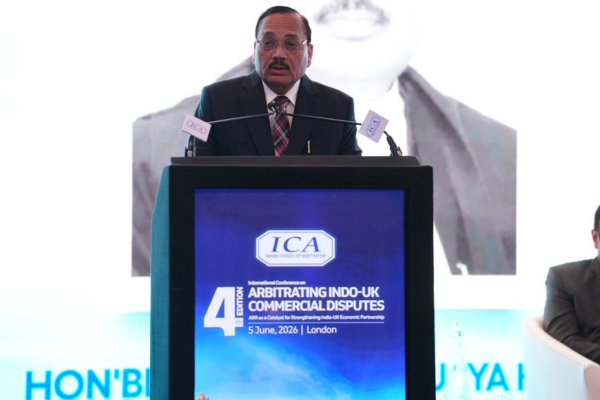
Chief Justice of India Surya Kant has urged policymakers, legal institutions and industry stakeholders to strengthen alternative dispute resolution (ADR) mechanisms to support the next phase of economic engagement between India and the United Kingdom following the signing of their Free Trade Agreement (FTA).
Addressing the fourth edition of the International Conference on “Arbitrating Indo-UK Commercial Disputes” in London on June 5, Justice Kant said the recently concluded FTA is expected to increase bilateral trade between the two countries by an estimated USD 34 billion annually in the near future. However, he stressed that commercial ambitions can only be realised when businesses have access to efficient, fair and accessible dispute resolution systems.
Justice Kant observed that trade agreements and investment commitments alone are insufficient to strengthen economic partnerships. According to him, businesses operating across borders require confidence that commercial disputes can be resolved efficiently without excessive costs, procedural delays or unequal bargaining positions.
He highlighted the importance of strengthening institutional arbitration and ensuring that party autonomy remains a safeguard for procedural fairness rather than becoming a source of procedural disputes. The Chief Justice noted that the next phase of Indo-UK trade growth is likely to be driven not only by large conglomerates but also by pharmaceutical companies, fintech firms, clean energy businesses, digital platforms and mid-sized manufacturers.
Justice Kant cautioned that ADR mechanisms must remain accessible to businesses of varying scales. He stated that if arbitration systems become viable only for disputes involving large legal teams and substantial financial resources, they may fail to serve the broader commercial ecosystem that the India-UK partnership seeks to support. He therefore called for efforts to ensure a level playing field for all participants.
Among the measures proposed, Justice Kant advocated the creation of a joint India-UK arbitrator accreditation and cross-training programme to develop a pool of professionals familiar with both legal and commercial environments. He also suggested establishing streamlined protocols for disputes involving technology licensing, fintech partnerships and other emerging sectors. Such frameworks, he said, should include capped fees, documentary-based procedures, virtual hearings where appropriate, short mediation windows and clearly defined timelines for dispute resolution.
The Chief Justice further emphasised the need to integrate arbitration and mediation through hybrid dispute resolution models. He noted that many Indo-UK commercial disputes arise from ongoing business relationships such as joint ventures, technology partnerships, distribution arrangements and infrastructure contracts, where preserving the commercial relationship can be more valuable than securing a favourable award.
Referring to India's Mediation Act, 2023, and the growing acceptance of mediation in the United Kingdom, Justice Kant said both countries possess a strong foundation to develop dispute resolution protocols that protect confidentiality, neutrality and procedural fairness.
The conference also featured a keynote address by Sir Geoffrey Vos, Master of the Rolls and Head of Civil Justice of England and Wales, who discussed the growing role of technology and artificial intelligence in dispute resolution while emphasising the need to maintain trust, efficiency and fairness within legal systems.
Among other speakers, Kartik Pande, Deputy High Commissioner of India to the United Kingdom, reaffirmed the Indian government's commitment to promoting ADR for faster dispute resolution. Brett Dixon, Vice President of The Law Society of England and Wales, highlighted the importance of legal cooperation and institutional engagement in strengthening commercial confidence between the two countries.
NG Khaitan, President of the Indian Council of Arbitration (ICA) and Senior Partner at Khaitan & Co, said India continues to attract global business confidence and stressed the importance of arbitration in expediting commercial dispute resolution. Arun Chawla, Director General of ICA, described arbitration as a critical component of economic growth, noting that both India and the United Kingdom are continuing to invest in strengthening their arbitration ecosystems.
Advertisement













 Facebook
 Whatsapp
