Advertisement






What really powers the cloud? Behind every Google search, A...
A lot of what defines a home isn’t visible at handover. I...
Private equity has played a significant role in shaping Indi...
Luxury real estate is one of the most talked-about segments ...
Airports play a much bigger role than just enabling travel -...
The Supreme Court of India has stayed the demolition of illegal constructions in Fatehpuri, Chandni Chowk, New Delhi, after reviewing photos showing ongoing unauthorized building activities. The court criticized the Municipal Corporation of Delhi (MCD) for not effectively preventing these violations despite prior orders. The MCD claimed to have removed illegal structures but delayed submitting a detailed report due to public holidays, which the court found unconvincing. The Supreme Court asked for independent experts to inspect the site and report back. The next hearing is scheduled for May 23, 2025. Earlier, the court also considered a possible CBI investigation amid concerns of builder influence on the MCD.
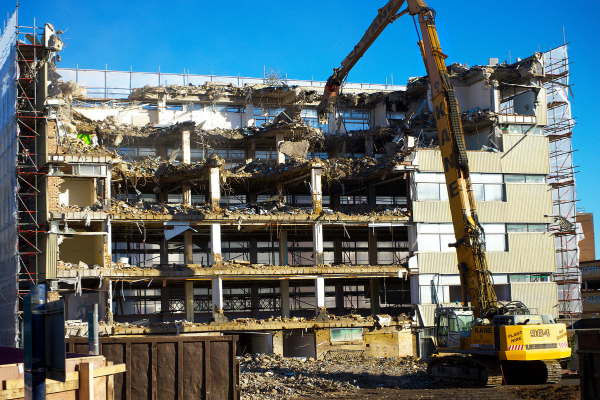
The Supreme Court of India recently issued a ruling, staying the demolition of residential and commercial properties in the Fatehpuri area of Chandni Chowk, New Delhi. This decision came after the court reviewed photographic evidence, presented by an intervenor, showing ongoing illegal construction activities in the area. The court's bench, comprising Justices Surya Kant and N. Kotiswar Singh, expressed concern over the Municipal Corporation of Delhi's (MCD) failure to prevent these unauthorized constructions, despite being aware of the situation. As a result, the Supreme Court issued a stay on the demolition and conversion of properties in the region. Advertisement






The case stems from ongoing issues surrounding the preservation of the heritage-rich Chandni Chowk area. In the past, the MCD had been directed to take action against unauthorized constructions, yet reports of illegal buildings continued to surface.
As part of the latest proceedings, the court ordered the MCD to submit a detailed status report, outlining the steps it had taken to address the issue of illegal construction. The court also warned the MCD that failure to submit this report could lead to contempt proceedings, casting serious doubts on the corporation's efforts.
During the hearing, the MCD's counsel stated that a team had visited the area and inspected the properties and nearby locations. The counsel assured the bench that all illegal constructions had been removed from the region. However, the report could not be filed as planned due to public holidays. This explanation was met with skepticism from the bench, which expressed doubts regarding the effectiveness and thoroughness of the MCD's efforts. The Supreme Court, therefore, directed the petitioner to suggest independent architects and civil engineers who could carry out an impartial inspection of the site and submit their findings to the court.
The matter is scheduled for further hearings on May 23, 2025, where the court will review the MCD's report and any subsequent developments. This follows earlier concerns voiced by the Supreme Court regarding unauthorized commercial constructions in the area. In February 2025, the court had hinted at the possibility of a Central Bureau of Investigation (CBI) probe into the issue, expressing concerns that the MCD might be under the influence of builders.
Advertisement













 Facebook
 Whatsapp
