Advertisement






What really powers the cloud? Behind every Google search, A...
A lot of what defines a home isn’t visible at handover. I...
Private equity has played a significant role in shaping Indi...
Luxury real estate is one of the most talked-about segments ...
Airports play a much bigger role than just enabling travel -...
The Madhya Pradesh government has announced plans to develop two major metropolitan regions-one integrating Indore, Ujjain, Dewas, and Dhar, and the other encompassing Bhopal, Sehore, Raisen, Vidisha, and Biora. This initiative aims to transform these clusters into economic hubs, boosting investment, employment, and business opportunities. The state is implementing policies like Transfer of Development Rights (TDR), the Integrated Township Policy-2025, and the Green FAR concept to ensure sustainable urban growth. Learning from cities like Mumbai and Delhi, MP seeks to balance rapid urbanization with infrastructure and environmental planning, positioning itself as a key economic player.
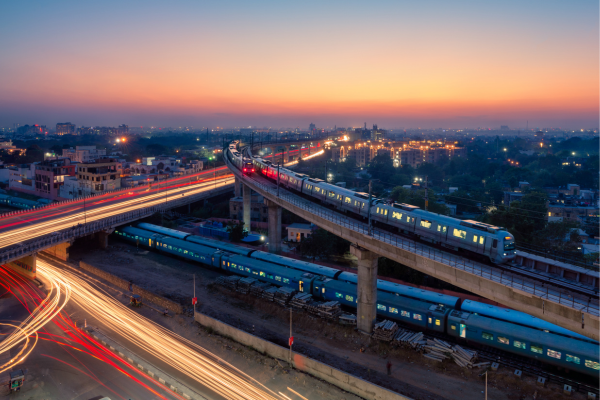
The Madhya Pradesh government has unveiled an ambitious plan to boost economic growth by developing two major metropolitan regions. The first region will integrate the districts of Indore, Ujjain, Dewas, and Dhar, while the second will encompass Bhopal, Sehore, Raisen, Vidisha, and Biora (Rajgarh). This initiative aims to transform these clusters into significant economic centers, enhancing employment, business, and investment opportunities across the state. Advertisement






The state's Urban Development and Housing Department is spearheading this project, aligning with the central government's vision of fostering regional economic growth. In addition to the two metropolitan regions, efforts are underway to develop other divisional headquarters-such as Gwalior, Sagar, Rewa, Jabalpur, Narmadapuram, and Shahdol-as Regional Economic Growth Hubs. These developments are expected to create a more balanced and robust economic landscape throughout Madhya Pradesh.
To facilitate these urban development projects, the state has introduced several policies and tools. One such measure is the implementation of Transfer of Development Rights (TDR) rules, designed to ensure the systematic use of valuable urban land. An online TDR portal has been established to streamline the process, allowing builders and property owners to acquire additional construction capacity as compensation. This system promotes efficient land use and supports urban expansion.
Moreover, the Integrated Township Policy-2025 has been formulated to encourage sustainable urban development. This policy aims to develop well-organized, modern, and self-reliant townships through collaboration between the private and public sectors. Key features include the promotion of green residential areas and smart infrastructure. The policy also incorporates a land pooling concept, providing landowners with opportunities to participate in development projects while receiving appropriate compensation.
The Green Floor Area Ratio (FAR) concept has also been introduced to enhance urban aesthetics and promote environmental sustainability. This initiative focuses on developing green areas, wooded zones, and urban forests, contributing to environmental protection and sustainable development within urban settings.
These initiatives in Madhya Pradesh mirror similar efforts in other parts of India. For example, the Mumbai Metropolitan Region (MMR) encompasses Mumbai and its surrounding areas, including Navi Mumbai, Thane, and Kalyan-Dombivli. This region has experienced rapid urbanization, leading to challenges such as unorganized development. To address these issues, government agencies like the Mumbai Metropolitan Region Development Authority (MMRDA) have been working to implement organized development plans and improve infrastructure.
Similarly, the National Capital Region (NCR) integrates Delhi with neighboring cities like Gurgaon, Noida, and Ghaziabad across multiple states. This regional approach has facilitated coordinated urban planning and development, resulting in improved infrastructure and economic growth. However, the NCR also faces challenges related to rapid urbanization, such as environmental degradation and resource management.
In Karnataka, the Bengaluru Metropolitan Region has expanded to include surrounding areas, aiming to manage the city's rapid growth and associated challenges. Despite these efforts, Bengaluru continues to face issues like traffic congestion, water scarcity, and infrastructure strain due to its burgeoning population and economic activities.
Madhya Pradesh's plan to develop these metropolitan regions reflects a strategic approach to urbanization, focusing on sustainable development and economic enhancement.
Advertisement













 Facebook
 Whatsapp
