Advertisement






What really powers the cloud? Behind every Google search, A...
A lot of what defines a home isn’t visible at handover. I...
Private equity has played a significant role in shaping Indi...
Luxury real estate is one of the most talked-about segments ...
Airports play a much bigger role than just enabling travel -...
The Uttarakhand High Court has instructed the state government to file a rehabilitation plan in a week after slum habitats were demolished to widen a road between Haldwani and Kathgodam. The court issued the directive on a public interest petition protesting the absence of prior notice for the eviction. The petitioner claimed that the demolition had breached Supreme Court rules mandating a 15-day notice period. The case is reminiscent of previous cases of evictions by force throughout India, such as the Haldwani railway land case, demolitions in Delhi slums, and recent Supreme Court actions against arbitrary demolitions. The court has called on authorities to take the extreme weather conditions into account and provide temporary shelter for the residents displaced. The next hearing is on March 4.
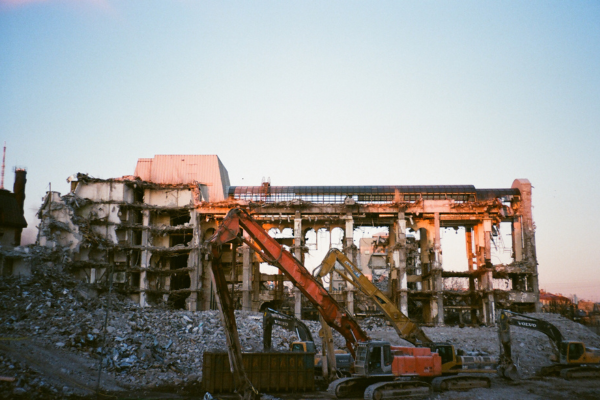
The Uttarakhand High Court directed the state government to provide a detailed rehabilitation plan within a week after slum colonies were razed for a road widening project between Haldwani and Kathgodam. A bench of Chief Justice G Narendar and Justice Ashish Naithani passed the order while hearing a public interest petition that challenged what was termed an "unannounced demolition" of these colonies. Advertisement






A petition was brought on behalf of Aftab Alam, a resident of Haldwani, who while recognising efforts from the state on road beautification and widening pointed out that specific slum habitats were evicted without giving notices. According to him, such an action flouted directions issued by the Supreme Court as impacted residents were deprived of presenting their case before getting displaced. As per him, their ancient residences were abruptly knocked down in the name of widening roads without any formal notice. The petition requested judicial intervention in the form of ensuring proper rehabilitation of the displaced people.
The lawyer for the petitioner argued that residents were evicted without notice using excavators, depriving them of the opportunity to secure their possessions. The lawyer also pointed out that the demolition ignored Supreme Court directives released last November, which require a 15-day notice period prior to eviction. These issues are part of a chain of similar cases in India in which slum dwellers were evicted without proper rehabilitation.
The Haldwani demolition is not an isolated event. In December 2022, the Uttarakhand High Court ordered the eviction of over 4,000 homes in Haldwani's Banbhoolpura area, citing encroachment on railway land. The decision threatened to displace around 50,000 residents, mainly from marginalized communities. However, in January 2023, the Supreme Court intervened, staying the eviction and emphasizing the need for a humane approach, stating that "people cannot be uprooted using force."
More recently, in November 2024, the Supreme Court condemned the practice of demolishing properties without due process, particularly when targeting alleged criminals. The Court issued strict guidelines mandating prior notice and proper documentation before any demolition, reinforcing the necessity for authorities to follow legal protocols.
A similar issue arose in August 2020, when the Supreme Court directed the eviction of slum dwellers residing along railway tracks in Delhi. The ruling affected about 48,000 families and was criticized for ignoring the right to housing and rehabilitation. The "Delhi Slum and JJ Rehabilitation and Relocation Policy" of 2015 provides for a notice period of six months prior to eviction, but judicial directives in several cases have tended to cut short the time period, triggering concerns about the safety of vulnerable groups.
Following the arguments, the High Court directed the government to take into account the prevailing harsh weather conditions and initiate immediate remedial measures. This entails finding an alternative location, building temporary shelters, and providing adequate accommodation for the displaced residents. The following hearing on the issue is on March 4, when the court will hear the government's reply and the progress made in relief.
Advertisement













 Facebook
 Whatsapp
