Advertisement






What really powers the cloud? Behind every Google search, A...
A lot of what defines a home isn’t visible at handover. I...
Private equity has played a significant role in shaping Indi...
Luxury real estate is one of the most talked-about segments ...
Airports play a much bigger role than just enabling travel -...
CREDAI Maharashtra has entered into a partnership with SuperHumanRace to develop Regional Emissions Inventories, aiming to enhance sustainability in the state's real estate sector. This initiative will help developers adopt environmentally conscious practices while addressing carbon risks and bolstering global competitiveness. The collaboration involves leveraging cutting-edge AI and machine learning technologies to quantify emissions across the real estate value chain. Experts highlighted the initiative's potential to align Indian urban development with global climate goals, attract climate-conscious investors, and prepare for carbon regulations. The project underscores the critical need for sustainable infrastructure amidst India's rapid urbanisation.
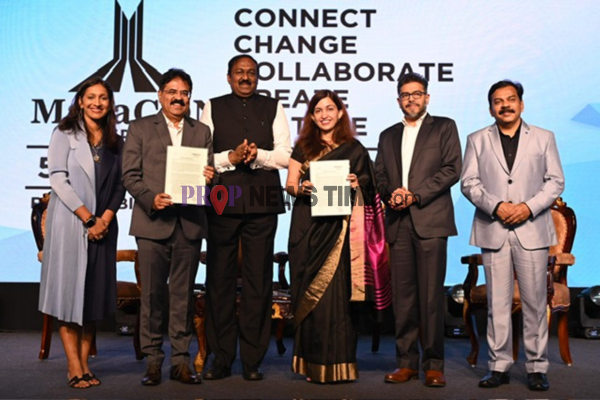
CREDAI Maharashtra has formalised a collaboration with SuperHumanRace, a leading technology firm, to develop and implement Regional Emissions Inventories tailored to the state's real estate sector. This initiative aims to facilitate the adoption of sustainable practices by developers, enhancing both their market credibility and competitiveness. Key representatives at the event included Pramod Khairnar, President of CREDAI Maharashtra; Aalok A. Deshmukh, Managing Director of SuperHumanRace; Ayashkanta Rout, Sustainability Lead at Oberoi Realty; and Gagandeep Bhullar, CEO of SuperHumanRace. Advertisement






Khairnar emphasised that the real estate sector in Maharashtra is pivotal to India's urban transformation. He stated that the initiative was a timely intervention to ensure environmentally sustainable and economically viable development. Highlighting the financial landscape, he mentioned that 2024 saw institutional real estate investments reaching a record high of USD 8.9 billion. However, he noted that India requires USD 50 billion annually in private financing until 2036 to meet urban infrastructure goals. He further observed that urbanisation, while driving economic growth, poses significant environmental challenges. By 2030, cities are projected to generate 70% of the nation's GDP and accommodate 40% of its population, while contributing over 30% of national emissions. He underscored the urgency of developing low-carbon infrastructure to meet India's commitments under the Paris Agreement.
Deshmukh remarked that developing Regional Emissions Inventories is a critical step in addressing carbon risks linked to India's urban growth. He highlighted that the partnership will empower the real estate sector to proactively manage emissions and improve global competitiveness.
Rout pointed out that carbon costs embedded in construction materials could raise project expenses and impact profitability. He stressed the need for reliable emissions data to mitigate these costs and enhance export competitiveness, particularly in carbon-regulated markets. The initiative's objectives include providing granular emissions data to improve the global competitiveness of developers and construction material manufacturers, identifying supply chain hotspots to enable sustainable procurement practices, preparing the sector for future carbon taxes and regulatory frameworks, and encouraging investments in low-carbon technologies and green certifications to attract climate-conscious investors.
The initiative will leverage advanced AI and machine learning technologies to automate emissions data collection and analysis across the real estate value chain. SuperHumanRace's sustainability platform, Green Dash, already serves clients across 30+ countries, including prominent Indian developers such as Oberoi Realty and Godrej Properties.
This collaboration between CREDAI Maharashtra and SuperHumanRace represents a significant step towards integrating sustainability into India's rapidly evolving real estate sector. As India progresses towards becoming a low-carbon economy, such innovative partnerships underscore the importance of balancing economic growth with environmental responsibility. The success of this initiative could serve as a model for other states and sectors aiming to achieve sustainable development goals.
Advertisement













 Facebook
 Whatsapp
