Advertisement






What really powers the cloud? Behind every Google search, A...
A lot of what defines a home isn’t visible at handover. I...
Private equity has played a significant role in shaping Indi...
Luxury real estate is one of the most talked-about segments ...
Airports play a much bigger role than just enabling travel -...
• The Haryana Cabinet has approved a revised project cost of INR 10,266.54 crore for the Gurugram Metro Rail project connecting Millennium City Centre and Cyber City in Gurugram.
• The revised estimate is nearly double the earlier sanctioned cost of INR 5,452.72 crore and includes inflation-linked escalation, GST revisions, additional rolling stock and revised infrastructure requirements.
• The 28.5-km corridor, planned with 27 stations, will also include a 1.8-km spur linking Sector-5 and Gurugram Railway Station to improve multimodal connectivity.
• Haryana has approved supplementary reports for Rapid Metro integration and decided to seek World Bank funding for the project’s full soft loan component following delays in funding confirmation from the European Investment Bank.
• The approvals are intended to accelerate implementation of the long-pending metro corridor in Gurugram, one of the NCR’s largest commercial and residential markets.
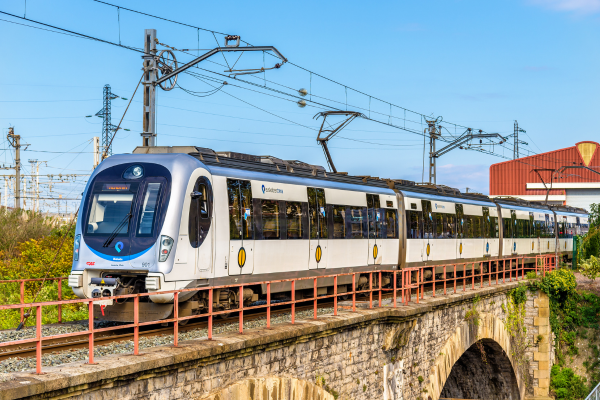
The Haryana Cabinet has approved a revised project cost of INR 10,266.54 crore for the Gurugram Metro Rail project connecting Millennium City Centre and Cyber City in Gurugram, alongside supplementary approvals linked to Rapid Metro integration, railway station connectivity and revised financing arrangements. The decisions were taken during a Cabinet meeting chaired by Chief Minister Nayab Singh Saini in Chandigarh in the past week. Advertisement






The revised project cost marks a substantial increase from the previously approved estimate of INR 5,452.72 crore. State government officials attributed the escalation to price increases recorded between 2019 and 2023, revisions in GST rates, additional standalone infrastructure requirements for the corridor, changes in alignment planning linked to the Regional Rapid Transit System (RRTS), the requirement for a full-scale depot, procurement of additional rolling stock and the inclusion of a metro spur connecting Gurugram Railway Station.
The metro corridor, prepared through a Detailed Project Report by RITES Limited, spans 28.5 km and includes 27 stations between Millennium City Centre and Cyber City. The project had originally received approval from the Haryana Cabinet in August 2020 and was subsequently cleared by the Union government.
According to the revised financial structure approved by the Cabinet, INR 7,098.70 crore has been allocated towards escalation in project costs and GST-related revisions. Another INR 947.06 crore has been earmarked for additional standalone corridor infrastructure requirements, while INR 454.32 crore has been approved for the proposed metro spur extending from Sector-5 to Gurugram Railway Station.
The state government also cleared supplementary reports concerning the integration of the proposed corridor with Gurugram’s existing Rapid Metro network. Officials stated that the revised standalone configuration required the development of independent depot and operational facilities spread across nearly 22.86 hectares of government land in Sector-33, Gurugram.
The proposed railway station spur, estimated at approximately 1.8 km in length, has been planned to strengthen multimodal urban connectivity by integrating metro and railway transit systems within Gurugram.
Alongside the engineering and cost revisions, the Haryana Cabinet approved a proposal to route the entire soft loan component of the project through the World Bank. The original financing structure included a soft loan component of INR 2,688.57 crore, with funding proposed from both the World Bank and the European Investment Bank. Officials stated that delays in confirmation from the European lender prompted Gurugram Metro Rail Limited to consider shifting the remaining funding requirement to the World Bank to prevent further delays in implementation.
Source - PTI
Advertisement













 Facebook
 Whatsapp
