Advertisement






The Gulf conflict has disrupted global supply chains, pushed...
REITs have changed the way commercial real estate is owned a...
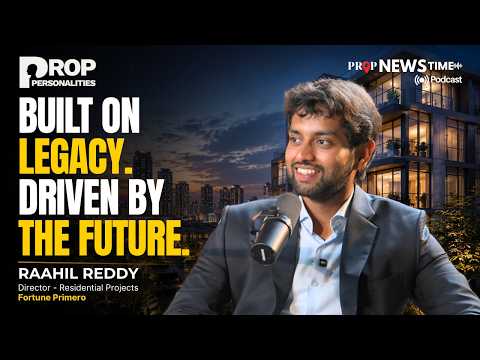
What does it take to preserve a real estate legacy while bui...
What really powers the cloud? Behind every Google search, A...
A lot of what defines a home isn’t visible at handover. I...
Linking Road in Mumbai’s western suburbs is witnessing increased attention from commercial developers, driven by its location across Bandra, Khar and Santacruz, proximity to Bandra-Kurla Complex, and sustained consumer footfall. The four-kilometre stretch, historically known for street retail, is now emerging as a high-value commercial corridor supported by redevelopment potential and evolving consumption patterns. Ageing low-rise structures along the stretch present opportunities for vertical, mixed-use developments combining retail and office spaces. Improved connectivity and planned infrastructure upgrades are further strengthening its positioning within Mumbai’s commercial landscape. Market trends indicate steady property value appreciation and growing interest in cluster redevelopment, as developers look to optimise land use and enhance returns in one of the city’s supply-constrained urban corridors.

Linking Road, spanning approximately four kilometres across Bandra, Khar and Santacruz in Mumbai, is emerging as a key focus area for commercial real estate developers, supported by its strategic location, established retail ecosystem and redevelopment potential within a land-constrained urban environment. The corridor, long known for its street shopping and consistent footfall, has seen a gradual shift towards higher-value commercial activity in recent years. Advertisement






The stretch benefits from proximity to established residential neighbourhoods in the western suburbs as well as connectivity to the Bandra-Kurla Complex, one of Mumbai’s primary business districts. This positioning enables access to both high-income consumers and a large working population, creating sustained demand for retail and commercial spaces. The resulting ecosystem supports a steady flow of footfall, which remains a key factor in the viability of commercial developments.
Unlike single-format retail destinations, Linking Road functions as a layered market where informal street vendors operate alongside organised retail, premium brands and food and beverage outlets. This diversity contributes to year-round activity and reduces dependence on seasonal demand cycles. For developers, such conditions support leasing prospects and enable the development of projects designed to accommodate multiple commercial uses.
A significant portion of the existing building stock along the corridor comprises older, low-rise structures developed in earlier phases of urban growth. These assets are increasingly being viewed as candidates for redevelopment, particularly as space utilisation and design standards have evolved. In established micro-markets such as this, redevelopment offers an opportunity to enhance asset value while leveraging existing demand rather than relying on new, untested locations.
Developers are adopting vertically integrated formats that combine ground-level retail with upper-floor office spaces, co-working environments and other commercial uses. This approach allows for higher revenue generation per square foot, which is critical in a market characterised by high land costs and limited availability. Such configurations also align with changing occupier requirements, where flexibility and accessibility are key considerations.
Infrastructure continues to play a central role in supporting this transition. Linking Road is connected to suburban railway networks and arterial road systems, with ongoing and planned transit improvements expected to further enhance accessibility. As connectivity improves, the corridor is likely to function not only as a retail destination but also as a broader commercial link within Mumbai’s urban framework.
From a regulatory perspective, commercial developments often benefit from relatively higher permissible built-up areas, enabling developers to create larger and more efficient assets. This has encouraged a shift towards design-led commercial projects that integrate retail and workplace environments within a single development.
Property values along Linking Road have shown steady appreciation in recent years, and redevelopment is gaining traction among property owners. The area is witnessing more coordinated, cluster-based redevelopment activity, allowing for larger project footprints and more comprehensive planning.
The evolving landscape of Linking Road reflects a broader pattern within Mumbai, where established urban corridors are being reconfigured to accommodate higher-density, mixed-use developments.
Disclaimer:
The views, opinions, and information expressed in this article are solely those of the author and do not necessarily reflect the views of Prop News Time. The content has not been independently verified or endorsed by Prop News Time. Readers are advised to exercise their own discretion and seek professional advice if required.
Advertisement













 Facebook
 Whatsapp
