Advertisement






What really powers the cloud? Behind every Google search, A...
A lot of what defines a home isn’t visible at handover. I...
Private equity has played a significant role in shaping Indi...
Luxury real estate is one of the most talked-about segments ...
Airports play a much bigger role than just enabling travel -...
Borivali, long regarded as a stable suburban residential destination in Mumbai's western corridor, is undergoing a structural transformation driven by redevelopment activity, infrastructure expansion and the entry of large developers. Over the past few years, several branded developers have launched high-rise residential projects, introducing larger gated communities and premium housing formats to the suburb. Improved connectivity through Metro Line 2A and other planned infrastructure projects has strengthened its accessibility across the Mumbai Metropolitan Region. At the same time, large-scale redevelopment of ageing housing societies is changing the built environment and adding new housing supply. Rising homebuyer demand, supported by established social infrastructure and a strong end-user base, is gradually positioning Borivali as one of Mumbai's emerging premium residential micro-markets.
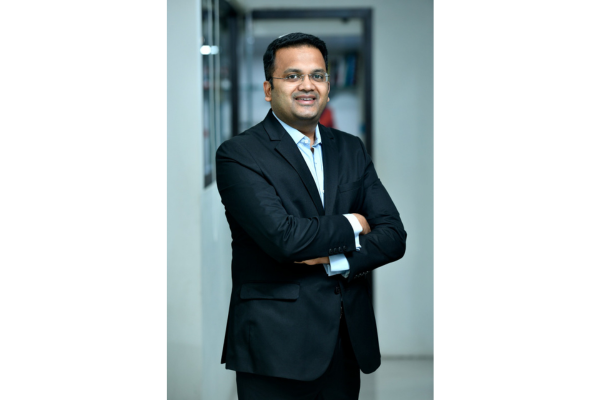
Borivali, traditionally known as a stable residential suburb in Mumbai's western corridor, is witnessing a period of transformation as redevelopment projects, infrastructure upgrades and developer interest reshape its housing market. Advertisement






The suburb has long attracted families seeking relatively spacious homes within a socially established neighbourhood. In recent years, however, Borivali has entered a new phase of urban development marked by the arrival of large real estate developers and the introduction of large-scale residential projects.
Major developers including Lodha Group, Godrej Properties and Oberoi Realty have expanded their presence in the area, signalling increasing confidence in the suburb's long-term growth potential. Projects such as Oberoi Sky City have introduced large residential complexes featuring high-rise towers and gated communities with premium amenities.
Buildings rising between 50 and 60 storeys are becoming more common, reflecting a shift in development scale that was previously associated with Mumbai's prime western neighbourhoods. Alongside this physical transformation, residential pricing in several premium projects has also begun drawing comparisons with established addresses such as Juhu and Bandra.
A key factor behind Borivali's changing residential dynamics is the ongoing expansion of transport infrastructure across the Mumbai Metropolitan Region. The operational Mumbai Metro Line 2A has significantly reduced travel time between Borivali and Andheri, strengthening connectivity along the western suburbs. The corridor is integrated with Mumbai Metro Line 7 along the Western Express Highway, improving north-south mobility across the region.
Additional projects are expected to further enhance accessibility. These include the proposed Thane-Borivali Twin Tube Tunnel, which aims to significantly reduce travel time between the eastern and western suburbs. Similarly, the planned Goregaon-Mulund Link Road is expected to improve east-west connectivity and link with future phases of the Mumbai Coastal Road.
Rail infrastructure improvements are also underway. The addition of fifth and sixth railway lines between Borivali and Virar is expected to separate suburban and long-distance train traffic, improving operational efficiency along one of the busiest rail corridors in the region.
At the same time, redevelopment of ageing housing societies is significantly altering the suburb's built environment. More than 200 redevelopment projects are currently underway across Borivali, replacing older co-operative housing buildings with modern residential towers offering contemporary amenities such as landscaped podiums, co-working spaces, wellness facilities and smart-home features.
The scale of market activity reflects this transition. Residential transactions in Borivali and nearby micro-markets are estimated to have crossed around INR 40,000 crore during FY 2024-25, indicating strong buyer participation and growing investor interest.
Historically, the suburb has also attracted entrepreneurs and business families connected to industrial clusters in regions such as Vapi, Umargaon, Valsad, Palghar and Boisar. Its location along the Western Railway corridor has historically made it a convenient residential base for business owners who travel frequently between Mumbai and these industrial centres.
Despite the transformation in its skyline, Borivali continues to retain elements that have long supported its residential appeal. Proximity to Sanjay Gandhi National Park provides access to one of the city's largest green spaces, while established schools, healthcare facilities and retail corridors support everyday urban living.
As redevelopment activity continues and infrastructure connectivity improves, Borivali is gradually transitioning from a peripheral suburb to a more strategically connected residential destination within the Mumbai Metropolitan Region.
Disclaimer:
The views, opinions, and information expressed in this article are solely those of the author and do not necessarily reflect the views of Prop News Time. The content has not been independently verified or endorsed by Prop News Time. Readers are advised to exercise their own discretion and seek professional advice if required.
Advertisement













 Facebook
 Whatsapp
