Advertisement






What really powers the cloud? Behind every Google search, A...
A lot of what defines a home isn’t visible at handover. I...
Private equity has played a significant role in shaping Indi...
Luxury real estate is one of the most talked-about segments ...
Airports play a much bigger role than just enabling travel -...
The ePlane Company has developed a digital twin of its e200x electric air taxi using NVIDIA's Omniverse and IGX platforms. The virtual model allows engineers to simulate flight physics, sensor performance and emergency scenarios before real-world testing. The Chennai-based startup is using this system to improve safety validation, autonomy testing and predictive maintenance. The company, incubated at IIT Madras, already holds a Design Organisation Approval and operates a 60,000 sq ft manufacturing facility. The initiative is aimed at strengthening certification efforts and accelerating India's electric urban air mobility plans.
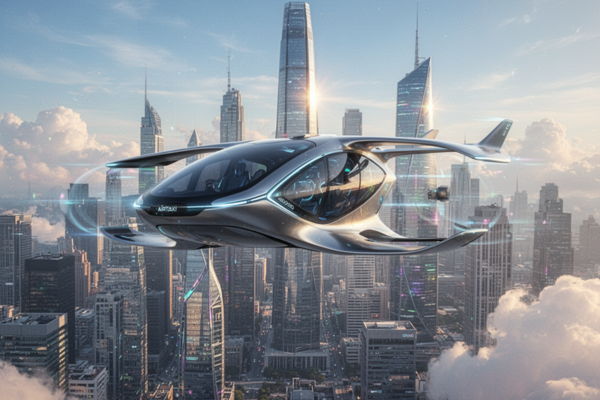
The ePlane Company, a Chennai-based electric aviation startup incubated at IIT Madras, has developed a high-fidelity digital twin of its e200x electric vertical take-off and landing (eVTOL) air taxi using technology from NVIDIA. The digital twin has been created using NVIDIA Omniverse libraries and is supported by the NVIDIA IGX platform, which will function as the aircraft's onboard computing system. Advertisement






The company stated that the digital twin enables engineers to simulate complex aerodynamic behaviour, sensor fusion systems and real-world flight scenarios before conducting physical trials. This approach allows the team to run extensive virtual flight tests, including extreme weather conditions, system failures and rare edge cases that are difficult or unsafe to recreate during actual flights.
Officials from the company explained that the simulation environment allows them to push the aircraft to operational limits in a controlled manner. By doing so, the development team can validate flight physics models, autonomy software and collision-avoidance systems more efficiently. The digital twin also supports testing of integration between hardware and software systems, which is critical for regulatory certification.
In addition, the NVIDIA IGX edge computing platform is being integrated into the e200x to manage real-time data processing, sensor inputs and decision-making functions. This setup is expected to support autonomous capabilities, situational awareness and onboard analytics during operations. The company indicated that combining simulation with onboard computing helps treat the aircraft as a fully integrated digital and physical system.
The e200x is being positioned as a compact electric air taxi for urban mobility. The startup already holds a Design Organisation Approval in India for a private electric aircraft and operates a 60,000 sq ft manufacturing facility in Chennai to support production and testing. The digital twin is expected to assist in documentation, validation and compliance processes required by aviation regulators.
Urban air mobility projects face strict safety and certification requirements. By using high-performance simulation tools, the company aims to reduce development risks and lower the cost of repeated physical trials. The virtual testing platform can simulate thousands of operational hours, helping identify potential issues early in the design phase.
This development comes as India gradually strengthens its focus on advanced air mobility and electric aviation technologies. The use of digital engineering tools is increasingly becoming part of aircraft development worldwide, especially for new-generation electric and autonomous platforms.

5th Jun, 2025

25th May, 2023

11th May, 2023

27th Apr, 2023
Advertisement









 Facebook
 Whatsapp
