Advertisement






What really powers the cloud? Behind every Google search, A...
A lot of what defines a home isn’t visible at handover. I...
Private equity has played a significant role in shaping Indi...
Luxury real estate is one of the most talked-about segments ...
Airports play a much bigger role than just enabling travel -...
The Mumbai-Ahmedabad high-speed rail project marked a major construction milestone with the completion of Mountain Tunnel 5 (MT 5) in Palghar district, Maharashtra. Spanning 1.5 km between Virar and Boisar stations, it is the first mountain tunnel on the 508 km corridor. This breakthrough clears almost the entire alignment between Thane and Ahmedabad, leaving only the Mumbai-Thane undersea stretch pending. The corridor will feature 12 stations and three depots, with trains running at speeds of 320 kmph, reducing travel time to about 2 hours 17 minutes. Phased commissioning will start before the full route becomes operational.
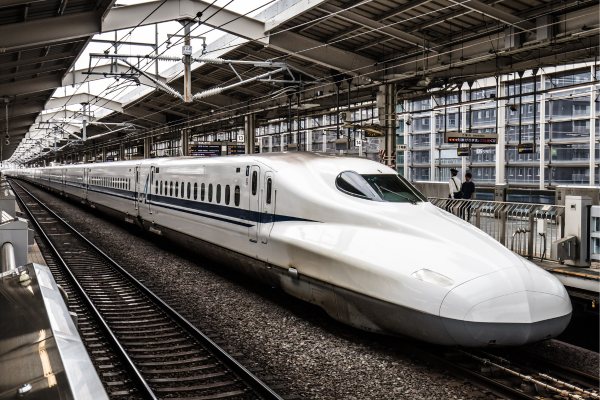
The Mumbai-Ahmedabad high-speed rail corridor reached an important milestone with the successful breakthrough of its first mountain tunnel in Maharashtra's Palghar district. Mountain Tunnel 5 (MT 5), spanning 1.5 km between the Virar and Boisar stations, is among the longer tunnels along the route and the first of seven planned mountain tunnels to be completed. Advertisement






Railway Minister Ashwini Vaishnaw virtually observed the breakthrough from Rail Bhawan in New Delhi. He noted that this achievement clears almost the entire alignment between Thane and Ahmedabad, with only the Mumbai-Thane undersea section remaining to be completed. The breakthrough follows the earlier completion of a five km underground tunnel between Thane and the Bandra Kurla Complex (BKC) in September last year.
The Mumbai-Ahmedabad corridor, spanning 508 km through Maharashtra, Gujarat, and Dadra and Nagar Haveli, is being developed with technical cooperation from Japan. Designed for speeds of 320 kmph, the corridor will reduce travel time to around 2 hours and 17 minutes. It includes 12 stations, with BKC in Mumbai and Sabarmati in Gujarat as terminal stations.
Three maintenance depots are being built along the route. Normally, two depots are sufficient for such a corridor, but delays in granting permissions during the previous Maharashtra government's tenure required the addition of a third depot to maintain operational readiness.
Phased commissioning is planned, beginning with the Surat-Bilimora stretch, followed by Vapi-Surat, Vapi-Ahmedabad, Thane-Ahmedabad, and finally the full Mumbai-Ahmedabad route. The corridor represents a complex engineering effort, with multiple mountain and underground tunnels, viaducts, and station infrastructure being executed simultaneously.
This milestone also aligns with broader infrastructure initiatives in India. The successful tunnel breakthrough demonstrates steady progress in high-speed rail construction, combining modern engineering solutions with regional transportation goals. Officials remain focused on completing the remaining sections to meet the project's timeline, with India's first bullet train expected to be operational on August 15, 2027.
The corridor is expected to enhance connectivity and support economic growth in Maharashtra and Gujarat, providing faster travel and modern rail infrastructure in one of the country's busiest transport corridors. Alongside passenger benefits, the project includes advanced safety systems, signalling technology, and operational depots to ensure smooth, reliable service.
Advertisement













 Facebook
 Whatsapp
