Advertisement






What really powers the cloud? Behind every Google search, A...
A lot of what defines a home isn’t visible at handover. I...
Private equity has played a significant role in shaping Indi...
Luxury real estate is one of the most talked-about segments ...
Airports play a much bigger role than just enabling travel -...
The Kolkata Metro, India's first urban rapid transit system, has been a cornerstone of urban mobility since its launch in 1984. Spanning 59.38 km across four operational lines, the system connects key areas of Kolkata and its suburbs, offering eco-friendly and time-efficient transportation. Landmark projects include the North-South Corridor (31.4 km) and the East-West Corridor (16.6 km), the latter featuring India's first underwater metro tunnel beneath the Hooghly River. With ongoing expansions like the Joka-Esplanade and New Garia-Airport corridors, the network aims to cover over 120 km.
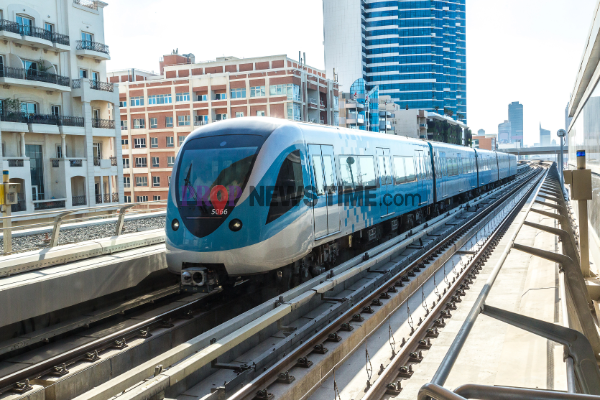
The Kolkata Metro, India's first urban rapid transit system, has been a vital part of the city's transportation network since its launch in 1984. Over the decades, it has expanded and modernized, becoming a crucial solution for the growing traffic congestion in Kolkata. The metro connects various parts of the city, offering a reliable, eco-friendly, and time-efficient mode of transportation for millions of commuters. The cumulative investment in the Kolkata Metro network has exceeded INR 30,000 crores, reflecting the project's scale and ambition. For instance, the East-West Corridor alone had an estimated cost of INR 8,575 crores. Advertisement






The idea of a metro system in Kolkata was first proposed in the 1940s. However, it wasn't until December 29, 1972, that the foundation stone for the project was laid by Prime Minister Indira Gandhi. Construction began in the early 1970s, and after many technical and logistical challenges, the first stretch of the metro - from Esplanade to Bhowanipore (now Netaji Bhavan) - opened to the public on October 24, 1984. This 3.4 km section marked the beginning of India's metro journey. The North-South Corridor, or Line 1, became the backbone of the system, connecting the northern and southern fringes of the city and facilitating smoother transit.
The Kolkata Metro currently has four operational lines covering a total of 59.38 km.The North-South Corridor, or Line 1, extends from Dakshineswar to Kavi Subhash, covering approximately 31.4 kilometres with 26 stations. This line was constructed at a cost of INR 1,550 crore and has been instrumental in connecting the northern and southern parts of Kolkata. The East-West Corridor, or Line 2, spans around 16.6 kilometres, linking Salt Lake Sector V to Howrah Maidan. This line is particularly notable for its engineering marvel-the underwater section beneath the Hooghly River, marking India's first underwater metro tunnel. The project cost for this line is approximately INR 8,575 crores, and it has 12 stations.
The Joka-Esplanade Corridor, or Line 3, is under construction, with a portion from Joka to Taratala already operational, covering about 7.7 kilometres. When fully completed, it will span 16.72 kilometres at an estimated cost of INR 2,477 crore, enhancing east-west connectivity in the city. The New Garia-Airport Corridor, or Line 6, is partially operational between Kavi Subhash and Hemanta Mukherjee, covering 5.68 kilometres. Once fully extended to Netaji Subhas Chandra Bose International Airport, it will span 29.87 kilometres, with a project cost of INR 29,014 crore. This line is expected to streamline travel for air passengers by integrating the metro with airport facilities.
Several lines are under construction or planned, which will further expand the Kolkata Metro network. The extension of Line 3 from Taratala to Esplanade will complete the 16.72 km corridor, costing INR 2,619 crore. The Yellow Line, or Line 4, from Noapara to Barasat, will cover 16.2 km and has an estimated cost of INR 4,829 crore. The Pink Line, or Line 5, is planned to connect Baranagar to Barrackpore, spanning 12.4 km at a cost of INR 2,069 crore.
The Kolkata Metro system features a combination of underground, elevated, and at-grade tracks. It operates on broad gauge (Line 1) and standard gauge (Lines 2, 3, and 6) with trains powered by a 750 V DC third rail system. Line 2 uses advanced Communication-Based Train Control (CBTC) signaling for improved safety and efficiency. The metro fares are economical, ranging from INR 5 to INR 50, making it accessible for daily commuters. The system operates from 6:50 AM to 10:40 PM, catering to the city's peak travel hours.
The expansion of the Kolkata Metro has faced numerous challenges. Construction delays, particularly in congested areas like Bowbazar, have posed significant obstacles. Incidents during tunnel boring led to structural damage in adjacent buildings, necessitating evacuations and remedial work. Despite these challenges, the metro has achieved remarkable milestones. The inauguration of the Howrah Maidan to Esplanade section in March 2024, featuring India's deepest metro station at Howrah, is a testament to the project's engineering capabilities.
The metro has also seen a rise in ridership. From January to December 2023, the North-South Metro carried approximately 17.69 crore passengers, marking a 14.93% increase from the previous year. This upward trend continued into 2024, with over 5.3 crore passengers using the metro in the three months of May, June, and July, reflecting the public's growing reliance on the system.
The Kolkata Metro's journey reflects a blend of visionary planning, engineering innovation, and resilience in the face of challenges. It not only alleviates traffic congestion but also sets a benchmark for sustainable urban transit in India. With ongoing expansions and improvements, the metro is poised to enhance connectivity and offer better commuting experiences for millions. As it continues to grow, the Kolkata Metro remains a symbol of progress, transforming urban mobility and paving the way for a more connected future.

5th Jun, 2025

25th May, 2023

11th May, 2023

27th Apr, 2023
Advertisement









 Facebook
 Whatsapp
