Advertisement






What really powers the cloud? Behind every Google search, A...
A lot of what defines a home isn’t visible at handover. I...
Private equity has played a significant role in shaping Indi...
Luxury real estate is one of the most talked-about segments ...
Airports play a much bigger role than just enabling travel -...
The Guwahati Metro project is an ambitious plan to introduce a modern rapid transit system to Assam's largest city. Envisioned with four corridors and 54 stations spanning over 61 kilometres, it aims to address escalating traffic congestion and offer a more efficient public transport alternative. Initial costs are estimated at around INR 16,850 crore. While the state government approved a Detailed Project Report (DPR) in 2016, subsequent policy changes led to revisions and further studies, leaving the initiative still in the planning phase as of December 2024. If successfully implemented, the Guwahati Metro could significantly improve travel experiences and support sustainable urban development.
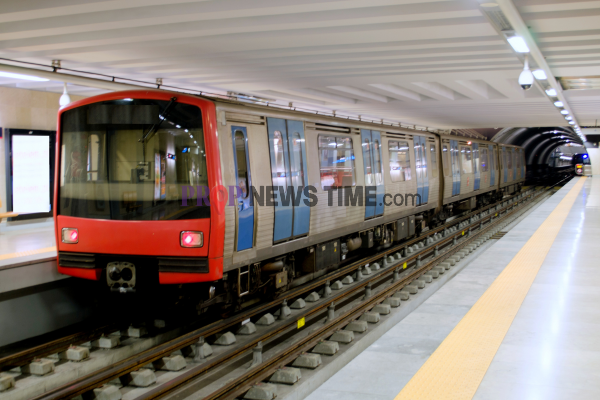
The Guwahati Metro project is an ambitious initiative aimed at transforming urban mobility in Assam's rapidly expanding capital. As the largest city in Northeast India, Guwahati has experienced significant population growth and urbanization, leading to increased traffic congestion and a pressing need for efficient public transportation. The proposed metro system seeks to address these challenges by providing a sustainable and reliable transit solution. Advertisement






The initial phase of the Guwahati Metro project envisions a Mass Rapid Transit System (MRTS) spanning approximately 61.4 kilometres, comprising four corridors with a total of 54 stations. These corridors are strategically planned to connect key areas of the city, facilitating seamless movement for commuters and reducing dependence on private vehicles.
The proposed metro network expansion plan includes four key corridors, each with its unique characteristics and cost estimates. Corridor 1, stretching from Dharapur to Narangi over 22.6 kilometres, will be entirely elevated with 22 stations. Given the average cost of INR 250 crore per kilometre for elevated lines, this corridor is expected to cost roughly INR 5,650 crore. Corridor 2, from MG Road to Khanapara, spans 10 kilometres and will run underground with 10 stations. Considering an underground line's cost at approximately INR 400 crore per kilometre, the total estimated cost for this corridor is around INR 4,000 crore.
Similarly, Corridor 3 connecting Jalukbari to Khanapara covers 19.4 kilometres, features 14 elevated stations, and is projected at about INR 4,850 crore in total. Finally, Corridor 4, linking ISBT to Paltan Bazar over 9.4 kilometres with 8 elevated stations, will likely require an investment of around INR 2,350 crore. Collectively, these corridors represent a substantial infrastructural undertaking designed to enhance connectivity and improve urban mobility.
Summing up these estimates, the overall projected cost for the initial phase of the Guwahati Metro is approximately INR 16,850 crore. It's important to note that these figures are based on preliminary estimates, and actual costs may vary due to factors such as inflation, changes in material costs, and design modifications.
The project's journey began in January 2016 when RITES Ltd. completed the Feasibility Report and Detailed Project Report (DPR) for Phase I. Subsequently, on February 26, 2016, the Assam state government approved the DPR and established the Guwahati Metro Rail Corporation Limited (GMRCL) to oversee the project's execution. citeturn0search10
In January 2017, the state cabinet reviewed the project and recommended revisions to the DPR, including additional lines connecting Dharapur to Guwahati Airport and North Guwahati to AIIMS in Phase I. To align with the Metro Rail Policy 2017, which mandates a rigorous assessment of new metro proposals, the state government entrusted RITES Ltd. with preparing a Comprehensive Mobility Plan (CMP) and an Alternative Analysis (AA) report. citeturn0search6
As of December 2024, the project remains in the planning stage. The CMP and AA reports have been submitted, and the DPR is pending revision based on these assessments. The establishment of the Unified Metropolitan Transport Authority (UMTA) in August 2022 aims to streamline decision-making and investment in urban transport infrastructure, including the metro project.
The estimated cost for Phase I of the Guwahati Metro is approximately INR 16,850 crore. This substantial investment underscores the project's scale and the financial commitment required to bring it to fruition. Securing funding, possibly through a combination of state and central government allocations, as well as private partnerships, will be crucial for the project's advancement.
Despite these challenges, the Guwahati Metro holds the promise of significantly alleviating traffic congestion, reducing travel time, and lowering pollution levels in the city. It will provide a reliable and efficient mode of transportation for residents and visitors, potentially boosting economic activities and improving the overall quality of life.
Guwahati badly needs a metro. Buses are choc-a-bloc with people. Almost all of its counterpart cities in other states have metro or are undergoing construction. Dunno what is taking so long for the @HBS govt. It should be sanctioned ASAP for Guwahati.
Advertisement













 Facebook
 Whatsapp
