Advertisement










Private equity has played a significant role in shaping Indi...
In today’s real estate landscape, fitness is often treated...
In this episode of Prop Personalities, we sit down with Hars...
Luxury real estate is one of the most talked-about segments ...
Welcome to Prop Personalities by Prop News Time - a podcast ...
21 Mar 2026
Borivali, long regarded as a stable suburban residential destination in Mumbai's western corridor, is undergoing a structural transformation driven by redevelopment activity, infrastructure expansion and the entry of large developers. Over the past few years, several branded developers have launched high-rise residential projects, introducing larger gated communities and premium housing formats to the suburb. Improved connectivity through Metro Line 2A and other planned infrastructure projects has strengthened its accessibility across the Mumbai Metropolitan Region. At the same time, large-scale redevelopment of ageing housing societies is changing the built environment and adding new housing supply. Rising homebuyer demand, supported by established social infrastructure and a strong end-user base, is gradually positioning Borivali as one of Mumbai's emerging premium residential micro-markets.Read more
15 Mar 2026
Mira Road in Mumbai's extended western suburbs is increasingly emerging as a premium residential micro-market as infrastructure upgrades, improved connectivity and comparatively lower property prices attract homebuyers and developers. Enhanced road and metro connectivity to major employment hubs, including Bandra-Kurla Complex, SEEPZ and South Mumbai, has strengthened the area's appeal for residential development. The locality also benefits from proximity to the Western Express Highway, Ghodbunder Road and several upcoming infrastructure projects such as the Borivali-Thane Tunnel and the Mumbai Coastal Road extension. Compared with neighbouring suburbs like Borivali and Kandivali, property prices in Mira Road remain around 35-50% lower, providing larger residential configurations and modern amenities at competitive price points. Developers indicate that improved infrastructure and growing residential demand are supporting the area's transition into an emerging premium housing destination within the Mumbai Metropolitan Region.Read more
07 Mar 2026
Bengaluru's residential market is witnessing a clear shift as premium housing demand moves beyond traditional hotspots into emerging micro-markets with stronger planning and infrastructure support. Sadaramangala and Panathur, located in East Bengaluru, are increasingly being viewed as next-generation premium residential destinations. Backed by proximity to major technology hubs, improved metro and road connectivity, and expanding social infrastructure, both locations are attracting discerning end-users and long-term investors. Industry data from 2024-25 highlights East Bengaluru as a key contributor to the city's residential absorption, with mid-premium and premium segments seeing sustained traction. While Sadaramangala benefits from its quieter, low-density character near Whitefield, Panathur's growth is driven by scale, integrated developments and its strategic position along the Outer Ring Road IT corridor. Together, they reflect changing buyer priorities centred on lifestyle quality, access and long-term value.Read more
01 Mar 2026
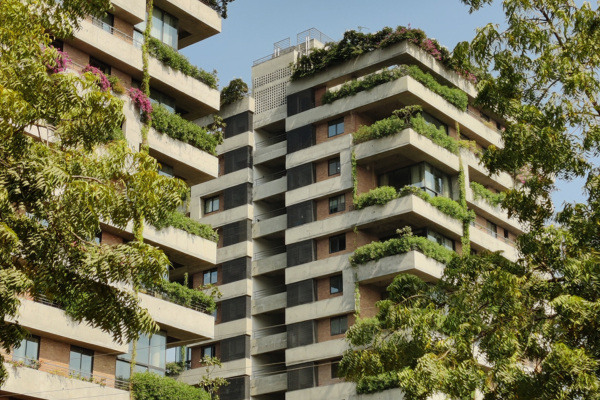
Aakruthi develops residential communities that combine natural elements with urban living. Its projects, such as Roots & Rays and the upcoming Svanta, feature well-planned open areas, eco-friendly infrastructure, and essential modern amenities to support a balanced lifestyle. The company incorporates sustainability practices like green landscaping, rainwater harvesting, and self-sustaining ecosystems in its designs. It emphasizes transparent processes and ethical practices to maintain quality. Locations are chosen near key infrastructure and growth corridors to ensure accessibility and potential long-term value for residents and investors.Read more
01 Mar 2026
Mumbai's redevelopment landscape has evolved beyond the replacement of ageing buildings, emerging as a key driver of premium residential growth across suburban markets. As redevelopment activity gathered pace earlier this year, projects across several suburbs moved towards completion or entered new phases, reflecting a broader shift in urban renewal. What began as a response to ageing housing stock and land constraints has developed into a new phase often described as Luxury 2.0, where redevelopment projects integrate modern infrastructure, enhanced amenities and long-term value creation. Supported by policy incentives under Development Control and Promotion Regulations 2034 and strengthened by metro expansion and road connectivity, suburban redevelopment is increasingly delivering high-end housing. Locations across western and central Mumbai are witnessing rising per sq ft values, larger homes and lifestyle-led developments, repositioning suburbs as core residential destinations rather than peripheral markets.Read more

Advertisement


28 Feb 2026
Mumbai-based real estate developer Platinum Corp. has entered into a design collaboration with interior designer Sussanne Khan for a set of upcoming residential developments planned across key micro-markets in Mumbai, including Bandra, Khar, Santacruz and Andheri. The partnership forms part of the developer's 2026 development pipeline and is aimed at integrating interior design planning more closely with architectural and lifestyle-led residential formats. Khan will be involved across shared and private residential spaces, with a focus on understated, experience-driven interiors aligned with Platinum Corp's redevelopment-led luxury housing strategy. The developer stated that the collaboration seeks to deliver consistency in design language across select projects, while retaining functional planning and long-term residential usability within high-density urban locations.Read more

28 Feb 2026
Sion is emerging as a case study in how focused redevelopment and infrastructure-led planning can reshape established urban neighbourhoods within Mumbai's existing boundaries. Traditionally viewed as a transit zone between South Mumbai and the eastern suburbs, the locality is gaining relevance among contemporary homebuyers due to its central location, improving connectivity and steady residential renewal. Ongoing and proposed infrastructure projects, including flyovers and bridge redevelopment, are addressing long-standing mobility constraints, while structured redevelopment is replacing ageing housing stock with better-planned residential buildings. Supported by social infrastructure, relative affordability and proximity to major employment hubs, Sion is increasingly being positioned as a balanced residential micro-market. Its transformation reflects a broader shift in Mumbai's urban strategy, where planned upgrades within mature neighbourhoods are contributing to more liveable, sustainable urban environments.Read more

22 Feb 2026
Gurugram has evolved into the most sought-after luxury real estate destination in the National Capital Region (NCR), driven by robust infrastructure, corporate expansion and rising affluence. Strategic connectivity to New Delhi and Indira Gandhi International Airport, alongside key corridors such as Dwarka Expressway and Golf Course Extension Road, has cemented its market dominance. The city's status as India's corporate capital continues to attract global professionals, NRIs and high-net-worth individuals seeking world-class living standards. Luxury developments now combine architectural excellence, sustainability and advanced security, offering curated lifestyles rather than mere residences. Gurugram's blend of global sophistication and Indian cultural roots positions it as the premier address for aspirational buyers across the world.Read more
22 Feb 2026
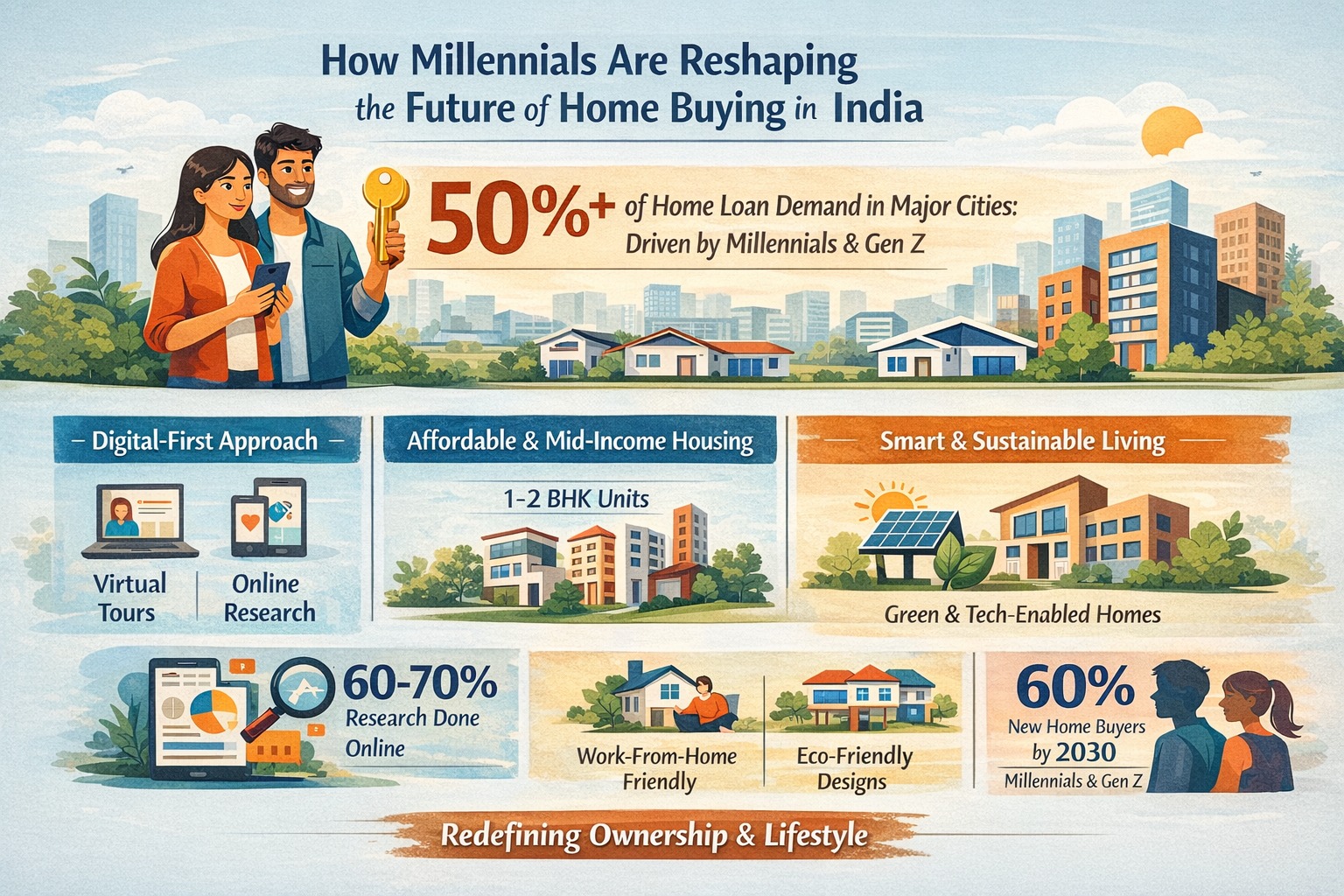
India's housing market is witnessing a generational reset, with Millennials emerging as the dominant force in urban home buying. Once associated with renting and lifestyle flexibility, this cohort is now driving a strong shift toward ownership, particularly in affordable and mid-income segments across Mumbai, Bengaluru and NCR. Post-pandemic priorities, hybrid work models and rising rental costs have accelerated this transition. Millennials and Gen Z together account for over half of home-loan demand in major cities, reshaping how homes are designed, marketed and delivered. Digital-first research, preference for efficient layouts, smart-home technology and sustainability-focused living have become defining purchase criteria. As this demographic is projected to form nearly 60 per cent of new homebuyers by 2030, their evolving preferences are fundamentally redefining India's residential real estate landscape.Read more
21 Feb 2026
Buying a home is one of life's most significant decisions both emotional and practical. Unlike other purchases, a house shapes everyday routines, long-term finances and family wellbeing. In today's fast-moving property market, particularly in metro and Tier 1 cities, informed buyers are better positioned to make sustainable choices. With easy access to digital research tools, virtual tours and locality insights, modern homebuyers can evaluate affordability, connectivity, safety and construction quality before committing. However, while information is widely available, careful analysis and the right professional guidance remain essential. Buyers who balance emotional aspirations with practical considerations ultimately make decisions that deliver stability, long-term value and peace of mind.Read more

Advertisement





