Advertisement










Private equity has played a significant role in shaping Indi...
In today’s real estate landscape, fitness is often treated...
In this episode of Prop Personalities, we sit down with Hars...
Luxury real estate is one of the most talked-about segments ...
Welcome to Prop Personalities by Prop News Time - a podcast ...
15 Apr 2026
Shri Narendra Modi and Donald Trump held a discussion on the West Asia crisis, focusing on ensuring the Strait of Hormuz remains open amid rising global energy concerns. The conversation, held in the past week, also covered progress in India US bilateral ties. US officials indicated that several big-ticket agreements, particularly in the energy sector, are expected to be finalised in the coming weeks. The development comes against the backdrop of tensions involving Iran and disruptions to global shipping routes. Both countries are also preparing for upcoming diplomatic engagements, including a planned visit by senior US officials to India, signalling continued efforts to stabilise and strengthen bilateral relations.Read more
14 Apr 2026
Escalating conflict in West Asia could push up to 2.5 million Indians into poverty and impact economic stability, according to a UNDP report. Rising fuel prices, higher freight costs and supply disruptions are reducing purchasing power, increasing food insecurity and straining public finances. India's strong dependence on the region for oil, fertilisers and trade makes it vulnerable to these shocks. Export delays, rising input costs and risks to the Kharif season may affect businesses and agriculture. Remittances from Gulf countries could also slow, impacting incomes, while job risks rise across key sectors, highlighting growing pressure on supply chains and economic resilience.Read more

14 Apr 2026
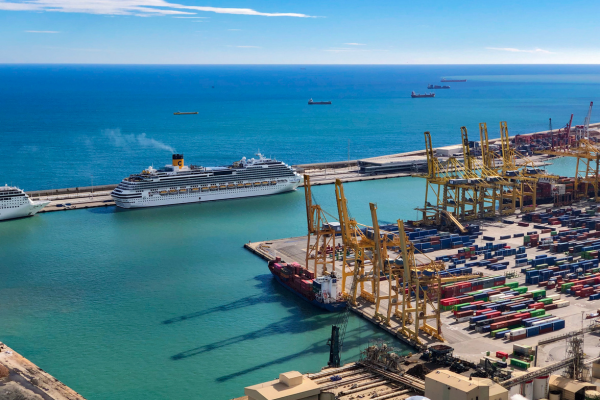
India has granted a one-time exemption for four vessels carrying Iranian crude to dock at Gujarat's Sikka port, following a request from Reliance Industries. The move comes after the US temporarily eased sanctions on Iranian oil trade to stabilise global prices amid supply disruptions in the Strait of Hormuz. India has not imported Iranian oil since 2019, making this a notable development. The permitted vessels, all older and under sanctions, have bypassed standard maritime requirements. The development reflects shifting global energy dynamics as India explores options to secure crude supplies while adhering to regulatory frameworks.Read more
13 Apr 2026
The Jammu and Kashmir government has set up a vacuum bag-based wool collection centre in Rajouri to improve wool handling and support local sheep breeders. The district produces around seven lakh kilograms of wool annually, but limited infrastructure has affected market access, especially for the Bakerwal community. The new facility uses vacuum technology to compress and protect wool, making storage and transport more efficient. Additional measures include distributing shearing machines and promoting farmer producer organisations to establish processing units with government support. The initiative aims to strengthen the supply chain and improve income opportunities for wool producers in the region.Read more
28 Mar 2026
Bhopal Municipal Corporation has presented a budget of about INR 3,938 crore for FY 2026-27, keeping property tax and water charges unchanged while increasing sewage fees. The budget focuses strongly on improving water supply and sewage infrastructure, with major investments in pipelines, treatment facilities and household tap connections. Projects under AMRUT 2.0 continue to drive expansion. Despite the relief on taxes, the civic body has projected a deficit of around INR 108 crore, reflecting financial pressure amid rising infrastructure needs and growing urban demand.Read more
Advertisement


27 Mar 2026
The Delhi government has presented a INR 1.037 lakh crore budget for FY27, outlining allocations across infrastructure, urban development, transport and social welfare. The budget designates 21 per cent of total spending towards environmental initiatives, while key sectors such as education, health, transport and urban development receive significant allocations. Measures include expansion of electric public transport, road upgrades, water and sewage infrastructure, and new urban facilities. The plan also introduces welfare schemes covering healthcare, women's support and education, alongside proposals for semiconductor policy development and disaster management infrastructure. The budget reflects a combined focus on urban infrastructure, environmental measures and service delivery improvements.Read more
26 Mar 2026
Delhi Chief Minister and Finance Minister Rekha Gupta presented the 2026-27 budget with a total outlay of around INR 1,03,700 crore, positioning it as a & green budget focused on infrastructure, connectivity, and urban development. The government projected tax revenue of INR 74,000 crore and significant allocations across sectors, including public works, power, water management, and municipal support. Key announcements included road upgrades, flyover expansion, dust-free road initiatives, and strengthened firefighting systems. The budget also emphasized development in trans-Yamuna areas and industrial zones.Read more
26 Mar 2026
A debate in the Rajya Sabha has brought attention to a significant gap between the Union Budget estimates and revised figures. TMC MP Saket Gokhale alleged that the NDA government revised its 2025-26 Budget Estimate by nearly INR 10 lakh crore. He highlighted major reductions in allocations across key sectors such as housing, sanitation, and employment, and raised concerns over underutilisation of funds in schemes like the Jal Jeevan Mission. The government was also criticised for high debt servicing costs and pending dues to states, particularly West Bengal.Read more
25 Mar 2026
Delhi's economic survey for 2025-26 indicates steady growth, with per capita income expected to reach around INR 5,31,610, marking a rise of nearly 8 per cent. The report highlights strong infrastructure, welfare spending, and a services-led economy as key drivers. While the government continues to maintain a revenue surplus, higher capital expenditure has led to an increase in fiscal deficit. Tax collections are projected to grow significantly, supported largely by GST and VAT. Overall, the data reflects a stable financial position with increased public spending aimed at long-term development.Read more

25 Mar 2026
The Thane Municipal Corporation has presented its INR 6,221.12 crore budget for the 2026-27 financial year, focusing on infrastructure, healthcare, education, and basic civic services while keeping municipal taxes unchanged. Revenue income is estimated at INR 4,078 crore, with the gap to be managed through internal earnings, grants, and borrowings. Key allocations include waste management, water supply, and ward-level facilities. The administration has also highlighted financial discipline, improved transparency, and sustainable development, while targeting completion of major ongoing civic projects by the end of 2026.Read more
Advertisement





