Advertisement










In this episode of Prop Personalities, we sit down with Hars...
Luxury real estate is one of the most talked-about segments ...
Welcome to Prop Personalities by Prop News Time - a podcast ...
Airports play a much bigger role than just enabling travel -...
Why does the same hotel brand operate multiple properties in...
India has granted a one-time exemption for four vessels carrying Iranian crude to dock at Gujarat's Sikka port, following a request from Reliance Industries. The move comes after the US temporarily eased sanctions on Iranian oil trade to stabilise global prices amid supply disruptions in the Strait of Hormuz. India has not imported Iranian oil since 2019, making this a notable development. The permitted vessels, all older and under sanctions, have bypassed standard maritime requirements. The development reflects shifting global energy dynamics as India explores options to secure crude supplies while adhering to regulatory frameworks.
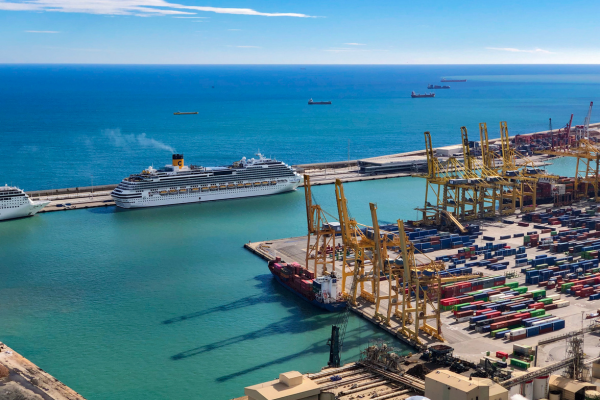
India's shipping ministry has granted special permission to four vessels carrying Iranian crude to berth at Sikka port in Gujarat, following a request from Reliance Industries, according to industry sources. Advertisement


This marks a rare development as India has not imported oil from Iran since May 2019 due to US sanctions. The decision comes after the United States temporarily eased restrictions on Iranian oil trade at sea last month to stabilise global crude prices. The waiver is valid until April 19.
The approval has been issued as a one-time exemption, driven by supply concerns following disruptions in the Strait of Hormuz, a key global oil transit route. Under Indian maritime regulations, vessels lacking recognised insurance or safety certifications require government clearance to dock at ports.
The four vessels granted permission include Comoros-flagged aframax Kaviz, Curacao-flagged very large crude carrier (VLCC) Lenore, and Iran-flagged VLCCs Felicity and Hedy. All four ships are over 20 years old and are under US sanctions. Each VLCC has a carrying capacity of up to 2 million barrels of crude oil.
Typically, India mandates that older tankers obtain seaworthiness certification from recognised international bodies such as the International Association of Classification Societies or authorised domestic agencies. The exemption allows these vessels to bypass standard requirements.
Tracking data indicates that some of the vessels have recently operated near Iranian ports. The Lenore loaded crude from Kharg Island in March, while Felicity and Hedy have been positioned near Chabahar port since early April. The Kaviz was last reported exiting the Gulf.
Despite the clearance, it remains uncertain whether Reliance Industries will process the Iranian crude. The company is expected to ensure that any transactions comply with applicable sanctions and domestic regulations before proceeding.
Separately, Indian Oil Corporation has reportedly purchased Iranian oil transported via a sanctioned tanker, according to ship tracking data.
The development highlights evolving dynamics in global energy trade amid geopolitical tensions and supply disruptions, with India exploring options to secure crude supplies while navigating regulatory frameworks.
Source: Reuters

5th Jun, 2025

25th May, 2023

11th May, 2023

27th Apr, 2023
Advertisement





 Facebook
 Whatsapp
