SBI Term Loan: RLLR: 8.15 | 7.25% - 8.45%
Canara Bank: RLLR: 8 | 7.15% - 10%
ICICI Bank: RLLR: -- | 8.5% - 9.65%
Punjab & Sind Bank: RLLR: 7.3 | 7.3% - 10.7%
Bank of Baroda: RLLR: 7.9 | 7.2% - 8.95%
Federal Bank: RLLR: -- | 8.75% - 10%
IndusInd Bank: RLLR: -- | 7.5% - 9.75%
Bank of Maharashtra: RLLR: 8.05 | 7.1% - 9.15%
Yes Bank: RLLR: -- | 7.4% - 10.54%
Karur Vysya Bank: RLLR: 8.8 | 8.5% - 10.65%

Iconic Building

Trevi Fountain Rome, Italy

The Trevi Fountain, known as Fontana di Trevi in Italian, is a monumental Baroque fountain located in the heart of Rome, Italy. Completed in 1762, it stands at an impressive height of 26.3 meters (86 feet) and spans 49.15 meters (161.3 feet) in width, making it the largest fountain in the city and one of the most famous in the world. The name "Trevi" derives from the Italian words for "three streets" (tre vie), as the fountain is situated at the intersection of three roads. The Trevi Fountain is crafted from travertine stone, the same material used in the construction of the Roman Colosseum. The fountain's design includes a large central arch, flanked by two smaller ones, with cascading water flowing over rocks and sculptures, creating a dramatic and picturesque scene. The intricate details of the sculptures depict various sea creatures and mythological figures, showcasing the artistic prowess of the Baroque period. The fountain is not only a visual masterpiece but also a functionin ...

Read more
iconic building image

Little Mermaid, Denmark

The Little Mermaid, or Den lille Havfrue in Danish, is a bronze statue located at Langelinie Pier in Copenhagen, Denmark. This enchanting sculpture has become one of the most recognized landmarks in the world, symbolizing not only the city of Copenhagen but also the rich literary heritage of Denmark. Inspired by Hans Christian Andersen's beloved fairy tale, the statue captures the poignant themes of love, sacrifice, and longing, making it a powerful representation of the human experience. The Little Mermaid has transcended its origins as a fairy tale character to become a symbol of Copenhagen and Denmark as a whole. It embodies the spirit of Danish culture, reflecting the nation's deep-rooted connection to storytelling and the arts. The statue attracts over 5 million visitors each year, making it one of the most photographed attractions in the world. In addition to its popularity among tourists, the Little Mermaid has also been a source of inspiration for various artists, writer ...

Read more
iconic building image

Christ the Redeemer, Brazil

Christ the Redeemer is an iconic statue of Jesus Christ that overlooks the city of Rio de Janeiro, Brazil, from the summit of Mount Corcovado. Standing at an impressive height of 30 meters (98 feet) and with an arm span of 28 meters (92 feet), it is not only a religious symbol but also a cultural emblem of Brazil. The statue is made of reinforced concrete and is clad in millions of triangular soapstone tiles, which give it a distinctive, gleaming appearance against the backdrop of the lush green mountains and the vibrant city below. Christ the Redeemer is celebrated for its Art Deco style, which was popular during the early 20th century. The statue's design emphasizes simplicity and elegance, with its outstretched arms symbolizing openness and acceptance. The use of soapstone, chosen for its durability and aesthetic qualities, allows the statue to withstand the elements, including heavy rains and strong winds. The statue is situated within the Tijuca National Park, a sprawling urban ...

Read more
iconic building image

Fatehpur Sikri, India

Fatehpur Sikri is a historic town located in the Agra District of Uttar Pradesh, India, approximately 35.7 kilometers from Agra. Founded in 1569 by the Mughal Emperor Akbar, it served as the capital of the Mughal Empire until 1585. The city was built in honor of Sheikh Salim Chishti, a Sufi saint who prophesied the birth of Akbar's son, Jahangir. Akbar named the city ""Fatehpur Sikri,"" meaning ""City of Victory,"" after his successful campaign in Gujarat in 1573. The architectural design of Fatehpur Sikri reflects a blend of Persian, Islamic, and Indian styles, characterized by its use of red sandstone. Key structures within the complex include the grand Buland Darwaza (Victory Gate), which is the highest gateway in the world at 54 meters, the Jama Masjid (Great Mosque), and the Tomb of Sheikh Salim Chishti. The city was abandoned due to a lack of water supply, and by 1610, it was entirely deserted. Today, Fatehpur Sikri is a UNESCO World Heritage Site, recognized for its historica ...

Read more
iconic building image

The Acropolis, Athens, Greece

The Acropolis of Athens is an ancient citadel located on a rocky outcrop above the city of Athens, Greece. It is one of the most famous archaeological sites in the world and a UNESCO World Heritage Site.The Acropolis was inhabited as early as the 4th millennium BCE and was later fortified by the Mycenaeans in the 13th century BCE. It served as a military stronghold and a religious center dedicated to the goddess Athena. The most famous building on the Acropolis is the Parthenon, a temple dedicated to Athena that was built in the 5th century BCE during the Golden Age of Athens. The Acropolis was also home to several other important structures, including the Propylaea, the Erechtheion, and the Temple of Athena Nike. Fun Fact: The Acropolis was badly damaged during the Morean War in the late 17th century when the Parthenon was used to store gunpowder and was hit by a Venetian cannonball ...

Read more
iconic building image

Ma'an Governorate, Jordan

Ma'an Governorate is the largest governorate in Jordan by area, located in the southern part of the country. Its capital is the city of Ma'an, which serves as a regional trade center for the sparsely populated southern region.The governorate has a rich history, with evidence of human settlement dating back to at least 7000 BC. It was once under the control of various ancient kingdoms, including the Edomites, Nabataeans, and Lihyanites. The ancient city of Petra, one of Jordan's primary tourist destinations, is located about 30 km northwest of Ma'an. Fun fact: In Autumn 1996 and Spring 1997, the Al-Jafr desert in Ma'an Governorate was the location of extensive tests for the ThrustSSC, the British-built vehicle that became the first land vehicle to break the sound barrier in 1997 ...

Read more
iconic building image

Machu Picchu, Peru

Machu Picchu is a 15th-century Inca citadel situated in the Eastern Cordillera of southern Peru, at an elevation of approximately 2,430 meters (7,970 feet) above sea level. Often referred to as the "Lost City of the Incas," it is the most recognized symbol of the Inca Empire and is located about 80 kilometers (50 miles) northwest of Cusco, above the Sacred Valley. The site features remarkable stone structures, including temples, terraces, and residential buildings, all constructed using a technique known as ashlar, where stones are cut to fit together without the use of mortar. This construction method has contributed to the site's remarkable preservation, making it one of the best-preserved archaeological sites from the Inca era. Machu Picchu was built around 1450 AD during the reign of Pachacuti Inca Yupanqui and was designated a UNESCO World Heritage Site in 1983. It was also named one of the New Seven Wonders of the World in 2007. The site is not only an architectural marvel but ...

Read more
iconic building image

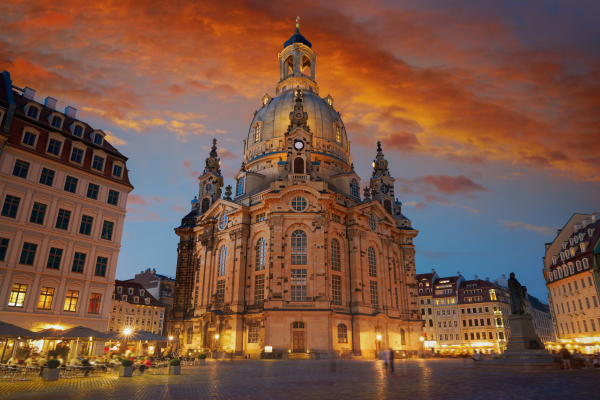
Dresden Frauenkirche — Dresden, Germany

The Sacré-Cœur Basilica, located in the heart of Montmartre, Paris, is a stunning example of Romano-Byzantine architecture. Constructed between 1875 and 1914, this iconic church stands atop the highest point in the city, offering breathtaking views of Paris. The basilica's distinctive white travertine stone exterior, quarried from the same stone used to build the Louvre, gives it a unique and eye-catching appearance. The church's design, inspired by the Byzantine churches of Constantinople, features a large central dome surrounded by smaller domes and bell towers. Inside, the Sacré-Cœur is equally impressive, with intricate mosaics covering the walls and ceilings, including the main mosaic in the apse that depicts Christ in Majesty surrounded by the Virgin Mary and Joan of Arc. The church's organ, one of the largest in France, features over 8,000 pipes and is a marvel of engineering. The Sacré-Cœur's location atop the Butte Montmartre, the highest point in Paris, adds to it ...

Read more
iconic building image

Mosque of Córdoba — Córdoba, Spain

The Mosque of Córdoba, also known as the Mezquita-Catedral de Córdoba (Mosque-Cathedral of Córdoba), is a stunning example of Moorish architecture in Córdoba, Spain. Originally built as a mosque in the 8th century, it was later converted into a cathedral in the 13th century after the Christian conquest of the city during the Reconquista. The mosque's original structure, commissioned by Abd ar-Rahman I in 784-786, featured a vast rectangular floor plan with a central courtyard surrounded by cloisters on three sides. Extensions in the 9th and 10th centuries doubled its size, making it one of the largest sacred buildings in the Islamic world at the time. The interior of the mosque is particularly impressive, with over 850 columns made of porphyry, jasper, and multicolored marble that support a series of horseshoe arches in two tiers. The most exquisite decoration is found in the third mihrab, a small octagonal recess with walls inlaid with Byzantine-style mosaics and gold. After it ...

Read more
iconic building image

Famous Casa Milà Building – Barcelona, Spain

Casa Milà, popularly known as La Pedrera, is a Modernista building in Barcelona, Catalonia, Spain. Designed by the renowned architect Antoni Gaudí, it was the last private residence he completed, built between 1906 and 1912. The building's undulating stone facade, twisting wrought iron balconies, and innovative structural design, including a self-supporting stone façade and a free-plan floor, make it a unique and iconic example of Gaudí's organic architecture. In 1984, Casa Milà was declared a World Heritage Site by UNESCO, and it now serves as the headquarters of the Fundació Catalunya La Pedrera, which manages visits to the building and hosts various cultural and educational activities. Visitors can explore the stunning rooftop, with its imaginative chimneys and ventilation shafts that resemble medieval knights, as well as the building's interior, which features Gaudí's signature curved forms and natural materials. Fun Fact: The design of Casa Milà was controversial at ...

Read more
iconic building image

Parliament Building — Budapest, Hungary

The Hungarian Parliament Building, located in the heart of Budapest, is a stunning example of neo-Gothic architecture. Constructed between 1885 and 1902, this iconic building serves as the seat of the National Assembly of Hungary and is a popular tourist destination. The Parliament Building's design, inspired by the Gothic Revival style, features a symmetrical façade and a central dome in the Renaissance Revival style. The building's exterior is adorned with 242 sculptures, including statues of Hungarian rulers, Transylvanian leaders, and famous military figures. Inside, the Parliament Building is equally impressive, with intricate mosaics and stained glass decorating the walls and ceilings. One of the most famous features is the hexadecagonal (sixteen-sided) central hall, with massive chambers adjoining it: the Lower House and the Upper House. The Hungarian Parliament Building is situated on the banks of the Danube River, adding to its grandeur and accessibility. The building c ...

Read more
iconic building image

The Shard — London, UK

The Shard, located in the heart of London, is a stunning example of modern architectural design. Constructed between 2009 and 2012, this iconic skyscraper stands at an impressive 309.6 meters (1,016 feet), making it the tallest building in the United Kingdom. The building's distinctive glass and steel exterior, designed by the renowned architect Renzo Piano, gives it a unique and eye-catching appearance. The Shard's design is inspired by the spires of London's churches, with its tapered shape and sharp edges creating a striking silhouette on the city's skyline. Inside, the Shard is equally impressive, with a range of amenities and attractions for visitors to enjoy, including a public viewing platform on the 72nd floor that offers breathtaking 360-degree views of London and the surrounding countryside. The Shard's location in the heart of London's financial district adds to its grandeur, and the building can be easily accessed by public transportation. Visitors can also enjoy the ...

Read more
iconic building image

Sacré-Coeur — Paris, France

The Sacré-Cœur Basilica, located in the heart of Montmartre, Paris, is a stunning example of Romano-Byzantine architecture. Constructed between 1875 and 1914, this iconic church stands atop the highest point in the city, offering breathtaking views of Paris. The basilica's distinctive white travertine stone exterior, quarried from the same stone used to build the Louvre, gives it a unique and eye-catching appearance. The church's design, inspired by the Byzantine churches of Constantinople, features a large central dome surrounded by smaller domes and bell towers. Inside, the Sacré-Cœur is equally impressive, with intricate mosaics covering the walls and ceilings. The main mosaic, located in the apse, depicts Christ in Majesty surrounded by the Virgin Mary and Joan of Arc. The church's organ, one of the largest in France, features over 8,000 pipes and is a marvel of engineering. The Sacré-Cœur's location atop the Butte Montmartre, the highest point in Paris, adds to its ...

Read more
iconic building image

Amphitheatre of Arles, Provence, France

The Amphitheatre of Arles, located in Provence, France, is a remarkably well-preserved Roman arena that dates back to the 1st century AD. This impressive structure, also known as the Arles Amphitheatre, was built around 90 AD and could accommodate up to 20,000 spectators for gladiatorial contests and public spectacles. The amphitheatre's elliptical shape and two-story arcaded façade are characteristic of Roman amphitheatre architecture. The exterior features 60 arched entrances and a façade decorated with half-columns in the Doric, Ionic, and Corinthian orders. The interior consists of a vast arena surrounded by seating tiers, which were originally made of stone but have been reconstructed over the centuries. One of the most fascinating aspects of the Amphitheatre of Arles is its long and varied history. After the fall of the Roman Empire, the structure was used as a fortress, a residence, and even a bullring. In the 18th century, it was converted into housing, with apartments ...

Read more
iconic building image

Hohensalzburg Fortress, Salzburg, Austria

Hohensalzburg Fortress, located in Salzburg, Austria, is one of the largest and best-preserved medieval castles in Europe. Perched atop the Festungsberg hill, this impressive fortress commands stunning views of the city of Salzburg and the surrounding Alps. Construction of the castle began in 1077 under the rule of Archbishop Gebhard von Helfenstein, who sought to protect the city and its archbishops from invaders. Over the centuries, the fortress underwent numerous expansions and renovations, with each archbishop leaving their mark on its architecture. The castle's most significant additions came during the 15th and 16th centuries under the leadership of Archbishop Leonhard von Keutschach. He transformed the fortress into a luxurious residence, complete with a grand courtyard, a state-of-the-art defense system, and opulent living quarters. One of the most striking features of Hohensalzburg Fortress is its well-preserved medieval architecture. The castle's thick walls, towers, a ...

Read more
iconic building image

Wat Phra Kaew, Grand Palace, Bangkok, Thailand

Wat Phra Kaew, nestled within the grounds of the Grand Palace in Bangkok, Thailand, is far from an ordinary temple. Known as the Temple of the Emerald Buddha, it is one of the most sacred and revered religious sites in Thailand, symbolizing the spiritual heart of Thai Buddhism and the nation itself. Constructed in 1782, the same year Bangkok was founded as the capital of Thailand, Wat Phra Kaew is a stunning example of Thai architecture and artistry. The temple complex is a harmonious blend of intricate buildings, golden spires, and elaborately decorated statues, all reflecting the grandeur of the Rattanakosin style. The centerpiece of Wat Phra Kaew is the Emerald Buddha, a 66-centimeter tall statue meticulously carved from a single block of jade. The statue, enshrined on a high altar in the main ordination hall (ubosot), is dressed in seasonal gold costumes by the King of Thailand himself during a ceremonial changing of the robes, marking the country's three seasons: summer, winte ...

Read more
iconic building image

Tower of London, London, UK

The Tower of London, majestically situated on the banks of the River Thames in London, UK, is far from an ordinary fortress. This iconic landmark, steeped in nearly a thousand years of history, stands as a symbol of Britain's tumultuous past and enduring heritage. Founded by William the Conqueror in 1066, the Tower of London was initially built to assert Norman power over the newly conquered capital. The White Tower, the oldest part of the complex, was completed in 1078 and is a quintessential example of Norman military architecture. Its formidable walls and strategic location served as a deterrent to would-be invaders and rebellious citizens alike. Over the centuries, the Tower of London expanded and evolved, becoming a royal residence, treasury, armory, and even a menagerie. Its most notorious role, however, was as a prison. Many high-profile prisoners, including Anne Boleyn, Sir Thomas More, and Guy Fawkes, were held and executed within its walls, adding to its grim reputation ...

Read more
iconic building image

Topkapi Palace, Istanbul, Turkey

Topkapi Palace, located in Istanbul, Turkey, is a magnificent example of Ottoman architecture and a testament to the power and grandeur of the Ottoman Empire. Built in the 15th century, this sprawling palace complex served as the primary residence of the Ottoman sultans for nearly 400 years.The palace is situated on a promontory overlooking the Bosphorus Strait and the Golden Horn, commanding stunning views of the city. Its strategic location and imposing walls made it a formidable fortress, while its lavish interiors and lush gardens reflected the wealth and sophistication of the Ottoman court. Topkapi Palace is renowned for its diverse architectural styles, which blend Byzantine, Islamic, and Ottoman elements. The palace's four main courtyards are surrounded by a series of buildings, each with its own unique purpose and design. The Harem, with its intricate tile work and ornate fountains, is a particular highlight, offering a glimpse into the private lives of the Ottoman rulers.T ...

Read more
iconic building image

Tikal, Guatemala

Tikal, located in the dense jungles of northern Guatemala, is one of the largest and most impressive archaeological sites of the ancient Maya civilization. Founded in the 4th century BC, Tikal flourished during the Classic Period (250-900 AD) and was a powerful city-state with a population estimated at over 100,000 at its peak. The city's architecture is a testament to the engineering prowess and artistic sophistication of the Maya. Tikal's most iconic structures are its towering temple-pyramids, which rise above the jungle canopy. The tallest, Temple IV, stands 64 meters (210 feet) high and offers breathtaking views of the surrounding rainforest. These pyramids were not only places of worship but also served as the tombs of Tikal's rulers. The city's ceremonial center features several plazas, palaces, and temples adorned with intricate stone carvings, hieroglyphic inscriptions, and colorful murals. The Great Plaza, flanked by the North and Central Acropolis, is a prime example o ...

Read more
iconic building image

Tiger's Nest, Bhutan

The Tiger's Nest, also known as Paro Taktsang, is a renowned Buddhist monastery perched on the side of a cliff in the Paro Valley of Bhutan. This iconic landmark is one of the most sacred and recognizable sites in the Himalayan kingdom. The monastery was first built in 1692 around the cave where Guru. Padmasambhava, the revered Buddhist master who introduced Vajrayana Buddhism to Bhutan, is said to have meditated for three years, three months, three weeks, three days, and three hours in the 8th century. According to legend, Guru Padmasambhava flew to the site on the back of a tigress, hence the name "Tiger's Nest." The Tiger's Nest monastery complex consists of four main temples, numerous shrines, and residential quarters for the monks. The buildings are intricately designed with traditional Bhutanese architecture, featuring sloping roofs, intricate woodcarvings, and colorful wall paintings depicting Buddhist deities and scenes. Reaching the Tiger's Nest is a challenging but rewa ...

Read more
iconic building image

The Treasury, Petra, Jordan

The Treasury, Petra, Jordan is one of the most iconic and well-preserved monuments of the ancient Nabataean civilization. Located in the heart of the ancient city of Petra, this magnificent structure is a testament to the architectural and engineering prowess of the Nabataeans. Carved directly into the rose-colored sandstone cliffs, the Treasury is the first structure visitors encounter when entering the Siq, the narrow gorge that serves as the main entrance to Petra. The Treasury's facade is a breathtaking sight, with its intricate carvings, columns, and pediments that showcase the Nabataeans' mastery of Hellenistic architectural styles. The interior of the Treasury is equally impressive, with a large central chamber that was likely used for religious rituals and ceremonies. The walls are adorned with detailed carvings and frescoes, providing a glimpse into the Nabataeans' rich cultural and artistic heritage. Fun Fact : One fascinating fact about the Treasury is that its purp ...

Read more
iconic building image

The Pantheon, Rome, Italy

The Pantheon is an iconic ancient Roman temple located in the heart of Rome, Italy. Originally built between 27-25 BC by the statesman Marcus Agrippa, the current structure was rebuilt by Emperor Hadrian between 118-128 AD and is one of the best-preserved ancient Roman buildings. The Pantheon is a remarkable architectural feat, with its massive concrete dome measuring 142 feet (43 meters) in diameter - making it the largest unreinforced concrete dome ever built, even to this day. The dome's height is equal to its diameter, allowing a perfect sphere to fit inside. The building is also notable for its oculus, a 27-foot (8-meter) circular opening at the top of the dome that allows natural light to flood the interior. Fun Fact; On the annual celebration of Rome's birthday on April 21st, a beam of light shines directly through the oculus and onto the entrance. Additionally, on the Christian feast of Pentecost, a tradition dating back to the Middle Ages involves dropping thousands of r ...

Read more
iconic building image

Temples of Bagan, Myanmar

The Temples of Bagan, located in the ancient city of Bagan, Myanmar, are far from ordinary religious structures. This sprawling archaeological zone, covering over 40 square miles, is home to more than 2,000 temples, stupas, and pagodas, standing as a testament to the spiritual devotion and architectural prowess of the ancient Burmese kingdom. The origins of Bagan trace back to the 9th century when it became the capital of the Pagan Kingdom. During its zenith between the 11th and 13th centuries, Bagan was a thriving center of Theravada Buddhism, and its rulers embarked on an ambitious building spree, constructing thousands of religious monuments. This golden age saw the creation of some of the most magnificent temples in the world, many of which still stand today, weathered yet resilient. Among the most iconic structures in Bagan is the Ananda Temple, often referred to as the ""Westminster Abbey of Burma."" Built in 1105 AD, it is renowned for its symmetrical architecture, four st ...

Read more
iconic building image

Temple of Isis, Aswan, Egypt

The Temple of Isis, located on the beautiful island of Philae near Aswan, Egypt, is far from an ordinary temple. This sacred site, dedicated to the goddess Isis, stands as a testament to the religious and architectural achievements of ancient Egypt and continues to captivate visitors with its historical and cultural significance. Originally constructed during the Ptolemaic Dynasty, between the 3rd and 1st centuries BCE, the Temple of Isis was one of the last classical Egyptian temples built. Its construction continued into the Roman period, reflecting the long-lasting reverence for Isis, who was worshipped as the goddess of health, marriage, and wisdom. The temple complex is renowned for its stunning and well-preserved architecture. The main temple, with its grand entrance and intricate carvings, features a series of colonnaded courtyards, hypostyle halls, and sanctuaries. The reliefs and inscriptions on the temple walls depict scenes of pharaonic rituals, mythological stories, a ...

Read more
iconic building image

Temple of Heaven, Beijing, China

The Temple of Heaven, located in the southeastern part of Beijing, China, is far from an ordinary temple. This architectural marvel, built in the early 15th century, stands as a testament to the spiritual and cultural richness of the Ming and Qing dynasties. Commissioned by Emperor Yongle in 1406 and completed in 1420, the Temple of Heaven was used by emperors for annual ceremonies of prayer to Heaven for good harvests. Its design reflects the philosophical and cosmological principles that were central to Chinese culture, emphasizing harmony between heaven and earth. The temple complex covers 2.7 million square meters, making it larger than the Forbidden City. It is enclosed by a long wall, with the northern part being semicircular to symbolize heaven and the southern part being square to symbolize earth. This layout embodies the ancient Chinese belief in a round heaven and a square earth. The most iconic structure within the Temple of Heaven is the Hall of Prayer for Good Har ...

Read more
iconic building image

Temple of Isis, Aswan, Egypt

The Temple of Isis, located on the beautiful island of Philae near Aswan, Egypt, is far from an ordinary temple. This sacred site, dedicated to the goddess Isis, stands as a testament to the religious and architectural achievements of ancient Egypt and continues to captivate visitors with its historical and cultural significance. Originally constructed during the Ptolemaic Dynasty, between the 3rd and 1st centuries BCE, the Temple of Isis was one of the last classical Egyptian temples built. Its construction continued into the Roman period, reflecting the long-lasting reverence for Isis, who was worshipped as the goddess of health, marriage, and wisdom. The temple complex is renowned for its stunning and well-preserved architecture. The main temple, with its grand entrance and intricate carvings, features a series of colonnaded courtyards, hypostyle halls, and sanctuaries. The reliefs and inscriptions on the temple walls depict scenes of pharaonic rituals, mythological stories, a ...

Read more
iconic building image

Taj Mahal, Agra, India

The Taj Mahal, located in Agra, India, is far from an ordinary mausoleum. This iconic structure, often regarded as the epitome of love and architectural beauty, stands as a testament to the Mughal Empire's grandeur and artistry. Commissioned in 1632 by Emperor Shah Jahan in memory of his beloved wife Mumtaz Mahal, the Taj Mahal took over 20 years to complete, with the efforts of approximately 20,000 artisans and craftsmen. Designed by the Persian architect Ustad Ahmad Lahauri, it is an exquisite example of Mughal architecture, which combines elements from Islamic, Persian, Ottoman Turkish, and Indian architectural styles. The Taj Mahal is renowned for its stunning white marble façade, which changes color with the shifting light of day, from a soft pink at dawn to a brilliant white under the midday sun and a golden hue at sunset. The central dome, standing at 73 meters (240 feet) tall, is flanked by four smaller domes and four slender minarets, all adorned with intricate inlay wo ...

Read more
iconic building image

Summer Palace, Beijing, China

The Summer Palace, located in Beijing, China, is far from an ordinary palace. This vast ensemble of lakes, gardens, and palaces stands as a testament to the grandeur and cultural richness of China's imperial history. Spanning over 290 hectares, it is one of the most significant and well-preserved imperial gardens in the world. Originally constructed in 1750 by Emperor Qianlong, the Summer Palace served as a luxurious retreat for the Qing Dynasty emperors. Its design harmoniously blends natural beauty with intricate architecture, showcasing traditional Chinese landscaping principles. The palace complex was extensively restored and expanded in the late 19th century by Empress Dowager Cixi, who used it as her primary residence. The centerpiece of the Summer Palace is Kunming Lake, a sprawling body of water covering about three-quarters of the park. The lake is adorned with ornate bridges, pavilions, and corridors, providing picturesque views and serene landscapes. The man-made Longe ...

Read more
iconic building image

St Paul’s Cathedral, London, UK

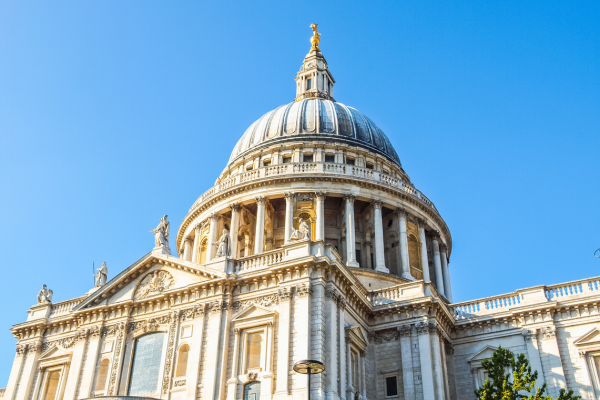
St Paul's Cathedral is an Anglican cathedral in London, England, the seat of the Bishop of London. The cathedral serves as the mother church of the Diocese of London. It is on Ludgate Hill at the highest point of the City of London. Its dedication in honour of Paul the Apostle dates back to the original church on this site, founded in AD 604. The present structure, which was completed in 1710, is a Grade I listed building that was designed in the English Baroque style by Sir Christopher Wren. The cathedral's reconstruction was part of a major rebuilding programme initiated in the aftermath of the Great Fire of London. The earlier Gothic cathedral (Old St Paul's Cathedral), largely destroyed in the Great Fire, was a central focus for medieval and early modern London. St Paul's Cathedral is one of the most famous and recognizable sights of London. Its dome, surrounded by the spires of Wren's City churches, has dominated the skyline for over 300 years. At 365 ft (111 m) high, it was ...

Read more
iconic building image

St Mark’s Basilica, Venice, Italy

St. Mark's Basilica, also known as the Patriarchal Cathedral Basilica of Saint Mark, is the cathedral church of the Patriarchate of Venice and the episcopal seat of the Patriarch of Venice since 1807. It is dedicated to and holds the relics of Saint Mark the Evangelist, the patron saint of the city. The present structure is the third church, begun probably in 1063 to express Venice's growing civic consciousness and pride. The basilica is located on the eastern end of Saint Mark's Square, the former political and religious centre of the Republic of Venice, and is attached to the Doge's Palace. St. Mark's Basilica boasts over 85,000 square feet of mesmerizing mosaics, with 13th-century artwork vividly depicting the perilous sea journey of the stolen relics of St. Mark. The basilica stands as a testament to grandeur and historical richness, with more than 500 Byzantine columns, some dating back to the 6th century. St. Mark's Basilica is now and has always been the center of publi ...

Read more
iconic building image

St Catherine's Monastery, Sharm el-Sheik

St. Catherine's Monastery is an ancient Orthodox Christian monastery located at the foot of Mount Sinai in Sharm el-Sheikh, Egypt. It is one of the oldest continuously inhabited Christian monasteries in the world, with a history dating back to the 6th century AD. The monastery was built around the site where Moses is believed to have seen the burning bush and received the Ten Commandments from God. It is named after St. Catherine, an early Christian martyr who was tortured and beheaded for her faith. The monastery contains a remarkable collection of religious icons, manuscripts, and other artifacts, making it a significant cultural and historical site. Visitors to St. Catherine's Monastery can explore the chapel, bell tower, and gardens, as well as the library which houses one of the world's oldest collections of early Christian manuscripts. The monastery's stunning desert landscape, with the towering Mount Sinai in the background, adds to the site's spiritual and serene atmosphe ...

Read more
iconic building image

St. Basil's Cathedral, Moscow, Russia

St. Basil's Cathedral, also known as the Cathedral of the Intercession of the Most Holy Theotokos on the Moat or Pokrovsky Cathedral, is an iconic Orthodox church located in Red Square in Moscow, Russia. It was commissioned by Ivan the Terrible and built between 1555 and 1561 to commemorate the capture of the Khanates of Kazan and Astrakhan. The cathedral is renowned for its distinctive onion-shaped domes and vibrant colors, which are said to resemble the flame of a bonfire rising into the sky. It is composed of nine separate chapels arranged around a central sanctuary, each dome representing a different chapel. The cathedral's unique architectural design, which blends elements from Byzantine and Russian traditions, has made it an iconic symbol of Russian national identity. Over the centuries, St. Basil's Cathedral has endured numerous threats, including fires, looting, and even attempts by Napoleon and Stalin to destroy it. However, it has survived to the present day, standing a ...

Read more
iconic building image