When should a housing society in Mumbai start considering re...
From GST on JDAs to SEBI’s REIT reclassification and the S...
Stay ahead in the world of real estate with our daily podcas...
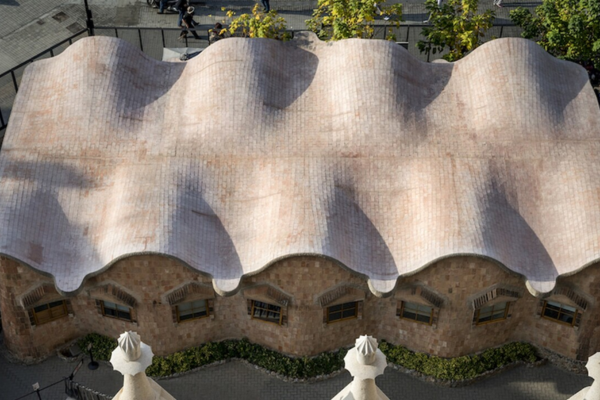
Casa Batlló is a breathtaking example of Antoni Gaudí's unique architectural style located in the heart of Barcelona, Spain. Originally built in 1877, the building was renovated by Gaudí between 1904-1906 for the Batlló family, who wanted a home that would stand out from the rest. Gaudí's design is a masterpiece of organic forms and vibrant colors inspired by the sea. The undulating facade, adorned with a colorful mosaic of broken ceramic tiles called trencadís, resembles waves crashing against the shore. The balconies are designed to look like skulls, adding to the building's unique and mysterious character. One of the most striking features of Casa Batlló is the roof, which is covered in iridescent scales that make it look like the back of a dragon. This detail is a reference to the legend of Saint George, the patron saint of Catalonia, who slew a dragon. The four-armed cross at the top of the roof represents the sword that Saint George used to kill the beast. Fun F ...
Read moreThe Seagram Building is a modernist skyscraper located at 375 Park Avenue in Midtown Manhattan, New York City. Designed by Ludwig Mies van der Rohe and Philip Johnson, the 38-story, 515-foot (157 m) tall building was completed in 1958 as the headquarters for the Canadian distillery company Seagram. The International Style building features a glass curtain wall with vertical bronze mullions and horizontal spandrels made of Muntz metal. The exterior is balanced by a pink granite plaza with fountains at the base of the tower. The building's design is a prime example of Mies van der Rohe's functionalist aesthetic, with the structure's steel frame expressed on the exterior. Phyllis Lambert, daughter of Seagram CEO Samuel Bronfman, played a key role in the building's design, selecting Mies as the architect and establishing the high standards for the project. The Seagram Building was groundbreaking in its use of materials, proportions, and integration of interior and exterior spaces. It c ...
Read moreThe Chengdu Science Fiction Museum, designed by Zaha Hadid Architects, is a stunning 59,000 sq m building that opened in 2023 in Chengdu, China. Situated at the core of Jingrong Lake in the city's Science & Innovation New City district, the museum's fluid, nebula-inspired forms appear to float above the water's surface. The museum's design integrates seamlessly with the surrounding natural landscapes, creating a journey of discovery that weaves between indoor and outdoor plazas at multiple levels. Visitors are guided through a portal that connects the lived experience with imagination, with the building's interior spaces including exhibition galleries, a multi-function hall, a conference center, and supporting amenities. The museum's design has been developed through detailed digital modeling to maximize efficiencies in composition, site conditions, solar irradiation, and structure. It meets the highest 3-star standards of China's Green Building Program, with natural hybrid venti ...
Read moreFallingwater, located in Mill Run, Pennsylvania, is a renowned house designed by the influential architect Frank Lloyd Wright in 1935. Commissioned by Edgar J. Kaufmann, Sr., a department store magnate, Fallingwater serves as a striking example of Wright's philosophy of organic architecture, which seeks harmony between human habitation and nature. The house is uniquely built over a waterfall on Bear Run, allowing the sound and sight of rushing water to permeate the living space, thereby creating a seamless connection with its natural surroundings. Constructed between 1936 and 1938, Fallingwater features a combination of cantilevered terraces and natural stone, with a color palette that includes light ochre concrete and Cherokee red steel. This design not only showcases Wright's innovative use of materials but also reflects the rugged beauty of the Laurel Highlands landscape. The house has a total area of 9,300 square feet, including expansive outdoor terraces that encourage interact ...
Read moreThe Space Needle is an iconic observation tower located in Seattle, Washington, standing at 605 feet (184 meters) tall. Constructed for the 1962 World’s Fair, it symbolizes the city's aspirations during the Space Age and has become a defining feature of the Seattle skyline. Designed by architect John Graham, Jr., and businessman Edward E. Carlson, the tower features a unique saucer-shaped top house that offers 360-degree views of the surrounding landscape, including downtown Seattle, Mount Rainier, and Puget Sound. Visitors can reach the observation deck, located 520 feet (160 meters) above ground, via elevators that ascend at a speed of 800 feet per minute, taking only 41 seconds to complete the journey. The Space Needle is not only a marvel of engineering but also a cultural landmark. It was built to withstand winds of up to 200 miles per hour and seismic activity equivalent to a 9.0 magnitude earthquake, showcasing its robust design. Since its opening, the Space Needle has welc ...
Read moreThe Chrysler Building is an iconic Art Deco skyscraper located in Midtown Manhattan, New York City. Designed by architect William Van Alen, it was commissioned by Walter P. Chrysler, the head of the Chrysler Corporation, as a personal project and real estate investment. Standing at 1,046 feet (319 m) with 77 floors, the Chrysler Building was briefly the world's tallest building in 1930 before being surpassed by the Empire State Building the following year. Its distinctive stainless steel sunburst-patterned spire and terraced crown are among its most recognizable features. The building's facade and interior are characterized by geometric designs and automotive-inspired decorations like radiator caps in the form of the Greek god Mercury. These elements, along with the building's pierless corners and sleek modernist design, exemplify the Art Deco style that was popular in the 1920s. Fun Fact : The Chrysler Building was not intended to serve as the headquarters for the Chrysler ...
Read moreThe Lloyd's Building, located at 1 Lime Street in London, serves as the headquarters for Lloyd's of London, a prominent insurance market. Designed by architect Richard Rogers and completed in 1986, the building is a striking example of Bowellism architecture, characterized by its radical design that places essential services such as ducts, elevators, and staircases on the exterior. This innovative approach maximizes interior space and creates a visually unique structure often referred to as the ""Inside-Out Building."" Standing at 88 meters (289 feet) tall, the Lloyd's Building features a central atrium known as the Underwriting Room, which is illuminated by a barrel-vaulted glass roof. This room houses the historic Lutine Bell, which has been rung for significant announcements since the 19th century. The building's design includes three main towers and three service towers, with twelve glass lifts that were the first of their kind in the UK. The structure's modular design allows fo ...
Read moreSaint Basil's Cathedral, located in Moscow's Red Square, is one of Russia's most iconic landmarks. Officially known as the Cathedral of the Intercession of the Most Holy Theotokos on the Moat, it was commissioned by Tsar Ivan the Terrible in 1555 to commemorate the capture of Kazan and Astrakhan. The construction, completed in 1561, features a unique design with nine domes, each representing a different chapel. The central dome rises majestically, symbolizing the connection between heaven and earth. The cathedral's architectural style is unlike any other in Russia, drawing inspiration from Byzantine and local traditions, and is renowned for its vibrant colors and intricate details that evoke the image of flames reaching skyward. The cathedral's exterior is adorned with vividly painted onion-shaped domes, a characteristic feature that was not part of the original design but was added in the 17th century. This transformation was inspired by biblical descriptions of the Kingdom of Heav ...
Read moreThe Sanctuary of Las Lajas, officially known as the Sanctuary of Our Lady of the Holy Rosary of Las Lajas, is a striking Catholic basilica located in the Guáitara River canyon near Ipiales, Nariño Department, Colombia. This architectural marvel is renowned for its neo-Gothic style, completed between 1916 and 1949, and its dramatic setting, perched 100 meters above the river on a bridge that spans the gorge. The sanctuary is dedicated to the Virgin Mary and is a significant pilgrimage site, attracting thousands of visitors each year due to its religious and historical significance. The origins of the sanctuary are rooted in a miraculous event from 1754, when an Amerindian woman named Maria Meneses de Quiñones and her deaf-mute daughter Rosa sought shelter from a storm. It is said that Rosa heard a voice calling her, leading them to discover an image of the Virgin Mary on the rock face. This miraculous encounter reportedly restored Rosa's ability to hear and speak, prompting the co ...
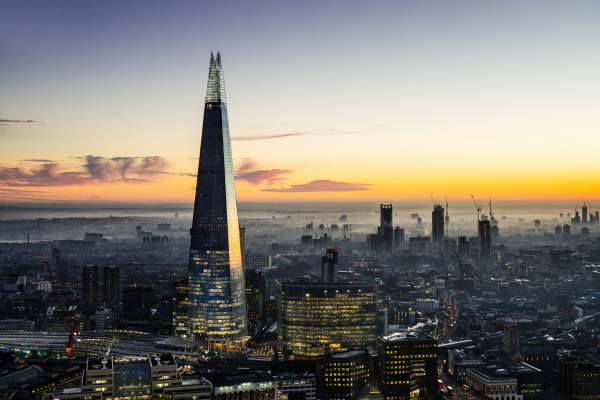
Read moreThe Shard, also known as Shard London Bridge, is a striking skyscraper located in London, designed by architect Renzo Piano. Completed in 2012, it stands at 309.6 meters (1,016 feet) tall, making it the tallest building in the United Kingdom and the second tallest in Europe. The Shard features 72 habitable floors, encompassing a mix of offices, restaurants, a luxury hotel, and private residences, all contributing to its identity as a ""Vertical City."" Its design is inspired by the spires of London churches and the masts of sailing ships, giving it a sharp, pyramid-like silhouette that has become a defining feature of the London skyline. The building's façade is composed of 11,000 glass panels, designed to reflect light and change appearance with the weather, creating a dynamic visual experience. The Shard is also notable for its sustainability features, including a combined heat and power plant that enhances energy efficiency. The observation deck, known as The View from The Shard, ...
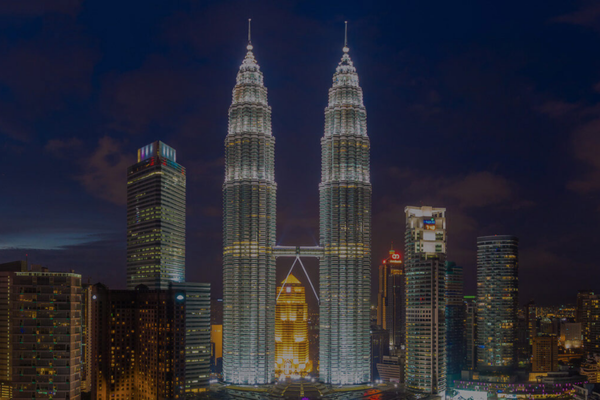
Read moreThe Petronas Towers in Kuala Lumpur, Malaysia are an iconic pair of 88-story skyscrapers standing at 451.9 meters (1,483 feet) tall. Designed by Argentine-American architect César Pelli, the towers feature a distinctive postmodern style with Islamic influences. Construction began in 1993 on the former site of the Selangor Turf Club and was completed in 1998. From 1998 to 2004, the Petronas Towers held the record as the tallest buildings in the world until surpassed by Taipei 101. They are currently the tallest twin towers in the world. The towers are supported by 16 large columns around their perimeter and are made of high-strength, steel-reinforced concrete. The exterior is sheathed in stainless steel and glass. Fun Fact : Petronas Towers is named after the national oil company of Malaysia, Petroliam Nasional Berhad (Petronas). ""Petronas"" is not an actual English word but rather a nickname for the company. Another fun fact is that the towers have a total of 32,000 windows! Th ...
Read moreThe Dome of the Rock is an iconic Islamic shrine located in the Old City of Jerusalem. Built in the late 7th century CE, it is the oldest extant Islamic monument and a masterpiece of Islamic architecture. The shrine is situated on the Temple Mount, a flat elevated plaza known to Muslims as al-Ḥaram al-Sharīf and to Jews as the Temple Mount. According to Islamic tradition, the rock above which the dome is constructed is the spot from which the Prophet Muhammad was taken up into heaven for an encounter with God. The Dome of the Rock's structure and ornamentation are rooted in the Byzantine architectural tradition, yet its construction in the 7th century represents an early stage in the emergence of a distinct Islamic visual style. The octagonal structure is capped by a gilded wooden central dome, approximately 20 meters in diameter, mounted on an elevated drum. The interior and exterior of the structure are decorated with marble, mosaics, and metal plaques featuring Arabic script, ...
Read moreCologne Cathedral, known as Kölner Dom in German, is a magnificent Roman Catholic cathedral located in Cologne, Germany. It stands as the largest Gothic church in Northern Europe, characterized by its impressive twin towers that soar to a height of 515 feet (157 meters). The cathedral's construction began in 1248 and spanned over 600 years, finally completing in 1880. This lengthy process was marked by interruptions due to various historical events, including the French Revolution, which saw the cathedral repurposed as a stable. Despite these challenges, the cathedral was designated a UNESCO World Heritage Site in 1996, celebrated for its architectural grandeur and historical significance. The cathedral houses numerous artistic treasures, including the renowned Shrine of the Three Kings, believed to contain the relics of the Magi. This masterpiece of medieval goldwork was created by Nicholas of Verdun and is a focal point of the cathedral's interior. The stained-glass windows, some ...
Read moreThe Great Mosque of Djenné is a magnificent example of Sudano-Sahelian architecture and the largest mud-brick building in the world. Located in the ancient town of Djenné in Mali, the mosque has been a center of Islamic faith and scholarship since its original construction in the 13th century. The current structure, completed in 1907, rises nearly 20 meters high and features three distinctive minarets and hundreds of wooden support beams called toron protruding from its facade. The mosque's earthen walls, coated with a mixture of mud, clay, and rice husks, provide natural insulation that keeps the interior cool even during the hottest summer days. One of the most unique aspects of the Great Mosque is the annual Crepissage festival, where the entire town comes together to re-plaster the structure. On the day of the festival, teams of young men race up the facade with baskets of wet clay, while women carry water from the river to mix the plaster. Children also participate by help ...
Read moreThe Dancing House, known in Czech as Tančící dům, is a striking architectural landmark located in Prague, Czech Republic. Completed in 1996, it was designed by architects Vlado Milunić and Frank Gehry. This deconstructivist building stands out amidst the city’s historic Baroque and Art Nouveau architecture, symbolizing Prague's transformation after the fall of communism. The design resembles a pair of dancers, with the glass and metal structure representing the male dancer, "Fred," and the stone base representing the female dancer, "Ginger," in homage to the famous dance duo Fred Astaire and Ginger Rogers. The Dancing House is situated on the banks of the Vltava River, near the Jirasek Bridge, and has become a popular tourist attraction due to its unique form and the panoramic views it offers from its rooftop restaurant. The building consists of nine floors, with the top floor housing a restaurant and a bar that provides stunning views of the city skyline. Its interior was de ...
Read moreThe Milwaukee Art Museum (MAM), located on the picturesque shores of Lake Michigan, is a prominent cultural institution in Wisconsin, renowned for its striking architecture and extensive art collection. Founded in 1888, MAM has evolved through several significant phases, beginning with the merger of the Milwaukee Art Institute and the Layton Art Gallery in 1957. The museum's current structure comprises three distinct buildings: the War Memorial Center designed by Eero Saarinen in 1957, the Kahler Building completed in 1975, and the iconic Quadracci Pavilion, which debuted in 2001, designed by Spanish architect Santiago Calatrava. The Quadracci Pavilion is particularly notable for its innovative "brise soleil"—a movable sunscreen that resembles a bird's wings, which opens and closes to regulate light and enhance the visitor experience. MAM houses nearly 25,000 works of art, showcasing a diverse range of styles and periods, from ancient artifacts to contemporary pieces. The collecti ...
Read moreHarpa Concert Hall, located in Reykjavík, Iceland, is a striking architectural landmark that serves as both a concert hall and a conference center. Opened on May 4, 2011, it was designed by the Danish firm Henning Larsen Architects in collaboration with the Danish-Icelandic artist Ólafur Eliasson. The building features a unique façade made of geometric glass panels, which reflect the natural beauty of Iceland's landscape, particularly the basalt formations and the Northern Lights. This innovative design not only enhances its aesthetic appeal but also contributes to energy efficiency by maximizing natural light. Harpa is home to the Iceland Symphony Orchestra and the Icelandic Opera, hosting a variety of performances from classical concerts to contemporary music events. Since its opening, it has welcomed over 7 million visitors and featured renowned artists such as Björk, Cyndi Lauper, and the Berliner Philharmonic. The concert hall's interior is equally impressive, with excellen ...
Read moreThe Cathedral of Brasília is a striking Roman Catholic cathedral that serves as the seat of the Archdiocese of Brasília. Designed by the renowned Brazilian architect Oscar Niemeyer, it is a defining symbol of Brazil's capital city and a marvel of modernist architecture. The cathedral's hyperbolic structure, constructed from 16 curved concrete columns weighing 90 tons each, rises from the ground in a crown-like shape. Niemeyer's intention was to create a volume with the same ""purity"" from any perspective. The exterior is surrounded by a reflecting pool that helps cool the building and adds to its visual appeal. Visitors enter the cathedral through a tunnel and emerge into a bright, spacious interior illuminated by a stunning stained glass ceiling designed by French-Brazilian artist Marianne Peretti. The glass façade allows natural light to flood the nave, creating a warm and inviting atmosphere in contrast to the typical dark cathedrals. Suspended above the nave are three ...
Read moreThe Heydar Aliyev Center, located in Baku, Azerbaijan, is a remarkable architectural marvel designed by the renowned Iraqi-British architect Zaha Hadid. Officially opened on May 10, 2012, the center is named after Heydar Aliyev, the third president of Azerbaijan, who played a significant role in the country’s development. The building spans an impressive 57,500 square meters and is characterized by its fluid, curvilinear form that eschews sharp angles, symbolizing a break from the rigid Soviet architectural style prevalent in Baku. The design of the Heydar Aliyev Center reflects a continuous flow between its exterior and interior spaces, creating an inviting atmosphere for visitors. The building houses a variety of cultural facilities, including a 1,000-seat auditorium, exhibition halls, a museum, and a conference center. Its unique structure allows for a seamless integration of different functions, enhancing the cultural experience for its visitors. The center serves as a venue f ...
Read moreThe Guggenheim Museum Bilbao, located in the Basque Country of Spain, is a renowned institution dedicated to modern and contemporary art. Inaugurated on October 18, 1997, the museum was designed by the acclaimed architect Frank Gehry and is affiliated with the Solomon R. Guggenheim Foundation. The building itself is a masterpiece of contemporary architecture, characterized by its organic forms and innovative use of materials such as titanium, glass, and limestone. Gehry's design was intended to evoke a sense of fluidity and movement, with the exterior's curvilinear shapes reflecting light in dynamic ways. This architectural marvel has been celebrated as one of the most significant buildings completed since 1980, earning accolades for its bold and imaginative design. The museum houses an impressive collection of over 20th-century artworks, including pieces from prominent artists such as Mark Rothko, Jeff Koons, and Richard Serra. Its exhibitions span various movements, including Mini ...
Read moreBeijing Daxing International Airport is a breathtaking new transportation hub located 46 km south of Beijing's city center. Designed by the renowned Zaha Hadid Architects, the airport features a massive 700,000 m^2 terminal building that resembles a phoenix spreading its wings. Nicknamed the ""starfish"", the terminal is the world's largest single-building airport, equivalent to 97 soccer fields. The airport's innovative radial design allows for a compact layout with direct aircraft parking at the terminal, minimizing walking distances for passengers. It takes only 8 minutes to reach any of the 79 gates from the security check, eliminating the need for shuttles and trains. The terminal's central atrium is supported by giant C-shaped columns with 106-meter wide skylights, allowing natural light to flood the space. Construction on the $63 billion project began in 2014 and was completed in just 5 years, with over 40,000 workers at its peak. To make way for the airport, 11 villages wer ...
Read moreJeddah Tower, also known as Burj Jeddah, is an ambitious skyscraper project located in Jeddah, Saudi Arabia. Once completed, it is set to become the tallest building in the world, soaring over 1,000 meters (3,281 feet) high, surpassing the current record holder, the Burj Khalifa in Dubai, by nearly 200 meters. The tower is a central feature of the Jeddah Economic City project, which aims to diversify the Saudi economy and reduce its reliance on oil, aligning with the Vision 2030 initiative. The design of Jeddah Tower, created by Adrian Smith + Gordon Gill Architecture, is inspired by the natural forms of desert plants, symbolizing growth and prosperity. Its unique triangular footprint and tapering silhouette are engineered to withstand high winds and reduce structural loads, making it not only a visual landmark but also a marvel of modern engineering. The building will include a mix of residential, commercial, and hospitality spaces, featuring the world's highest observatory and a l ...
Read moreThe Robot & Artificial Intelligence Museum (RAIM) in Seoul, South Korea, is an innovative cultural institution set to redefine public engagement with technology. Designed by Melike Altınışık Architects, RAIM is currently under construction in the Chang-Dong district as part of the Changbai New Economic Center. This pioneering museum, which spans approximately 7,400 square meters, aims to serve not only as an exhibition space for robots and AI but also as a hub for education and hands-on interaction with cutting-edge technologies. RAIM's architectural design features a fluid, spherical form that symbolizes the integration of technology and art. This non-linear structure fosters an immersive experience, allowing visitors to navigate seamlessly between indoor and outdoor spaces. The museum will include a vertical exhibition tunnel, creating a unique journey that blurs the boundaries between the human experience and the world of robotics. This innovative approach reflects the museum ...
Read moreMont-Saint-Michel is a stunning tidal island located in Normandy, France, renowned for its breathtaking medieval architecture and rich history. Rising dramatically from the sea, the island is crowned by the impressive abbey dedicated to St. Michael, which dates back to the 8th century. The site has been a significant pilgrimage destination since its inception, attracting millions of visitors each year. The island's unique geographical position allows it to be surrounded by vast sandbanks, becoming isolated during high tides, which can reach up to 14 meters—one of the highest in Europe. The architectural layout of Mont-Saint-Michel reflects the feudal hierarchy of its time, with the abbey at the summit, symbolizing the divine, while shops and homes for the nobility and commoners are situated below. This strategic design not only served a religious purpose but also provided natural defense against invaders, allowing the island to remain unconquered during the Hundred Years' War. The ...
Read moreThe Petronas Twin Towers are an iconic landmark in Kuala Lumpur, Malaysia, standing at an impressive height of 451.9 meters (1,483 feet). These stunning skyscrapers were once the tallest buildings in the world from 1998 to 2004, before being surpassed by Taipei 101 in Taiwan. Designed by Argentine-American architect César Pelli, the towers feature a distinctive postmodern style that combines modern architecture with Islamic motifs. The glass façade is designed to resemble intricate Islamic patterns, reflecting Malaysia's rich cultural heritage. Each tower has 88 floors and is supported by 16 large columns around its perimeter, made of high-strength, steel-reinforced concrete. The towers are connected by a double-decker skybridge on the 41st and 42nd floors, which is the highest two-story bridge in the world. The towers are not just an architectural marvel but also a popular tourist attraction. Visitors can enjoy a panoramic view of Kuala Lumpur from the observation deck on the 86t ...
Read moreEdinburgh Castle is an iconic fortress located atop Castle Rock in Edinburgh, Scotland. This historic site has been a significant stronghold since at least the 11th century, serving various roles throughout its history, including royal residence, military garrison, and treasury. The castle's strategic position on a volcanic rock provides natural defenses, making it one of the most besieged locations in British history, with 26 recorded sieges over the past 1,100 years. The castle is home to several notable structures, including St. Margaret's Chapel, the oldest surviving building in Edinburgh, dating back to the early 12th century. The Great Hall, built in the 16th century, showcases stunning medieval architecture and has hosted numerous royal events. Today, Edinburgh Castle is a major tourist attraction, drawing over 2 million visitors annually, and it serves as the backdrop for the famous Royal Edinburgh Military Tattoo during the Edinburgh Festival. The castle is also home to the S ...
Read moreSacré-Cœur, or the Basilica of the Sacred Heart of Paris, is a stunning white-domed church located atop the Montmartre hill in the 18th arrondissement of Paris. Completed in 1914, this iconic landmark stands as a testament to French religious devotion and architectural prowess. Its distinctive Romano-Byzantine style, characterized by white travertine stone and a towering dome, makes it one of the most recognizable buildings in the city. The basilica is situated at the highest point in Paris, offering breathtaking views of the city from its steps and surrounding gardens. Visitors can climb the 300 steps to the base of the dome or take the Funiculaire de Montmartre, a cable car that transports them up the steep hill. Once at the top, they are greeted by a panoramic vista that includes landmarks such as the Eiffel Tower, Notre-Dame Cathedral, and the Montparnasse Tower. Fun Fact - One of the most fascinating aspects of Sacré-Cœur is its connection to the Paris Commune, a revolut ...
Read moreThe Matterhorn is a renowned mountain in the Swiss Alps, straddling the border between Switzerland and Italy. Standing at an impressive height of 4,478 meters (14,692 feet), it is one of the highest peaks in the Alps and a true symbol of Switzerland's rugged beauty. The Matterhorn's distinctive pyramidal shape, with its four steep faces pointing toward the cardinal directions, has made it a favorite subject for artists and photographers alike. The mountain's name, derived from the German words "Matte" (meadow) and "Horn" (peak), reflects its prominence in the landscape. The Matterhorn is part of the Pennine Alps and lies within the Pennine Alps range. It is located near the town of Zermatt in the Swiss canton of Valais, a popular destination for mountaineers and skiers. Fun Fact - One of the most fascinating facts about the Matterhorn is its first successful ascent in 1865. Led by English mountaineer Edward Whymper, the expedition consisted of seven climbers, four of whom tragica ...
Read morePompeii is an ancient Roman city located near Naples in the Campania region of Italy, renowned for its remarkably preserved ruins, which provide a unique glimpse into daily life during the Roman Empire. Founded in the 7th or 6th century BC, Pompeii flourished as a bustling commercial center until its catastrophic destruction in 79 AD, when it was buried under a thick blanket of volcanic ash and pumice following the eruption of Mount Vesuvius. Historical Significance: The eruption of Vesuvius was one of the deadliest in European history, and it preserved Pompeii in a state of remarkable detail. The city was buried under approximately 4 to 6 meters (13 to 20 feet) of ash, which protected many of its buildings, artifacts, and even the remains of its inhabitants from the ravages of time. Excavations began in the 18th century and have continued to this day, revealing well-preserved streets, homes, public baths, and even intricate frescoes that showcase the art and culture of the time. ...
Read moreManneken Pis is a small yet iconic bronze statue located in the heart of Brussels, Belgium. Measuring approximately 55.5 centimeters (21.9 inches) tall, it depicts a naked boy urinating into a fountain's basin. This whimsical figure has become a beloved symbol of the city, representing its irreverent spirit and sense of humor. Historical Significance: The origins of Manneken Pis date back to the early 15th century, with the first documented mention of a fountain bearing the name appearing in 1451. The statue as we know it today was designed by the sculptor Jérôme Duquesnoy the Elder and installed in 1619. Originally crafted from stone, the statue was replaced with the current bronze version, which has become a cultural icon over the centuries. Manneken Pis has faced numerous challenges throughout its history, including theft and vandalism. Notably, it was stolen in 1817 and returned in pieces, which were subsequently restored. The statue has also been the target of various atte ...
Read moreThe Trevi Fountain, known as Fontana di Trevi in Italian, is a monumental Baroque fountain located in the heart of Rome, Italy. Completed in 1762, it stands at an impressive height of 26.3 meters (86 feet) and spans 49.15 meters (161.3 feet) in width, making it the largest fountain in the city and one of the most famous in the world. The name "Trevi" derives from the Italian words for "three streets" (tre vie), as the fountain is situated at the intersection of three roads. The Trevi Fountain is crafted from travertine stone, the same material used in the construction of the Roman Colosseum. The fountain's design includes a large central arch, flanked by two smaller ones, with cascading water flowing over rocks and sculptures, creating a dramatic and picturesque scene. The intricate details of the sculptures depict various sea creatures and mythological figures, showcasing the artistic prowess of the Baroque period. The fountain is not only a visual masterpiece but also a functionin ...
Read more