Advertisement






Private equity has played a significant role in shaping Indi...
In today’s real estate landscape, fitness is often treated...
In this episode of Prop Personalities, we sit down with Hars...
Luxury real estate is one of the most talked-about segments ...
Welcome to Prop Personalities by Prop News Time - a podcast ...
• MMRDA’s feasibility study for the Versova–Dahisar Link Road outlines alignment, engineering and transport planning for the northern extension of the Mumbai Coastal Road project.
• The study evaluates routes aimed at reducing land acquisition and minimising impact on mangrove and Coastal Regulation Zone areas across Mumbai’s western suburbs.
• The report includes passenger and freight movement projections up to 2041 to support long-term regional transport planning and connectivity improvements.
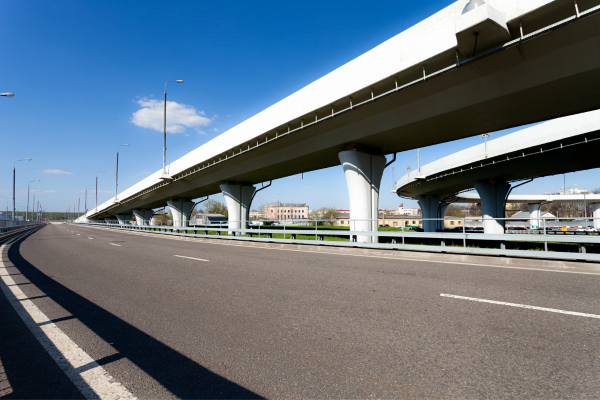
The Mumbai Metropolitan Region Development Authority’s feasibility study for the proposed Versova–Dahisar Link Road has detailed alignment planning, engineering constraints and transportation demand projections for the northern extension of the Mumbai Coastal Road project. The report forms part of the broader Mumbai Coastal Road Project North corridor and evaluates the proposed alignment between Versova and Dahisar across Mumbai’s western corridor. Advertisement






According to the study, the selected alignment has been planned to minimise land acquisition requirements and reduce the project footprint in mangrove areas. The report stated that the alignment traverses creeks, mangroves, urban zones, agricultural land and barren land, requiring multiple technical and environmental considerations during planning and execution.
The feasibility assessment identified several social and environmental constraints associated with the project. These include the need for substantial travel time reduction, provision for faster public transport systems, land availability limitations, climate change and sea-level rise concerns, as well as issues related to noise, air pollution and visual impact from elevated road infrastructure. The study also highlighted that portions of the alignment fall within Coastal Regulation Zone areas.
The report stated that the project planning has been integrated with updated Comprehensive Transportation Study data for the Mumbai Metropolitan Region. The updated CTS exercise reviewed changes in economic activity, travel behaviour and transport demand patterns across the region and was intended to support future infrastructure planning by agencies including MMRDA, CIDCO, MRVC, MSRDC, PWD and municipal transport bodies.
Under the updated CTS framework, the study assessed mode-wise travel demand projections for metro rail, suburban rail, buses and highway corridors for horizon years 2021, 2031 and 2041. Passenger travel demand estimates for the base year 2017 showed suburban rail accounting for the largest share of morning peak-hour movement at 51.1 per cent, followed by buses at 17.9 per cent. Private cars accounted for 6.9 per cent of peak-hour trips, while metro and monorail systems represented 2 per cent.
The report also examined freight movement patterns in the Mumbai Metropolitan Region, including light commercial vehicle and truck traffic during peak hours, as well as movement of vehicles travelling between Mumbai Metropolitan Region and external destinations.
The feasibility study outlined engineering and durability standards proposed for the project infrastructure. It stated that bridge structures would be designed in accordance with IRC standards and include measures such as waterproofing membranes, epoxy-coated reinforcement systems and corrosion protection mechanisms intended to support long-term durability in coastal conditions.
According to the report, financial planning for the alignment selection also considered optimal utilisation of existing infrastructure, reduction in rehabilitation and resettlement requirements and minimisation of environmental impact across the project corridor.
For more similar or related stories, you can check the links below:
https://propnewstime.com/getdetailsStories/MjgxMzA=/bmc-clears-33-structures-to-push-versova-dahisar-coastal-road-work#:~:text=The%20stretch%20has%20faced%20delays,connectivity%20across%20the%20western%20suburbs.

5th Jun, 2025

25th May, 2023

11th May, 2023

27th Apr, 2023
Advertisement









 Facebook
 Whatsapp
