Advertisement






Private equity has played a significant role in shaping Indi...
In today’s real estate landscape, fitness is often treated...
In this episode of Prop Personalities, we sit down with Hars...
Luxury real estate is one of the most talked-about segments ...
Welcome to Prop Personalities by Prop News Time - a podcast ...
• Mumbai’s Slum Rehabilitation Authority (SRA) has cancelled 181 out of 228 slum redevelopment joint venture projects due to slow progress and feasibility concerns.
• Several government agencies reportedly failed to complete basic groundwork such as surveys, beneficiary verification and redevelopment planning.
• The affected projects cover nearly 2.2 lakh slum households across Mumbai and nearby areas.
• A few projects under agencies like BMC, MHADA and MMRDA will continue, while others may now shift to cluster redevelopment models.
• The move comes amid growing concerns over stalled SRA projects, delayed rehabilitation and long-pending redevelopment across the city.
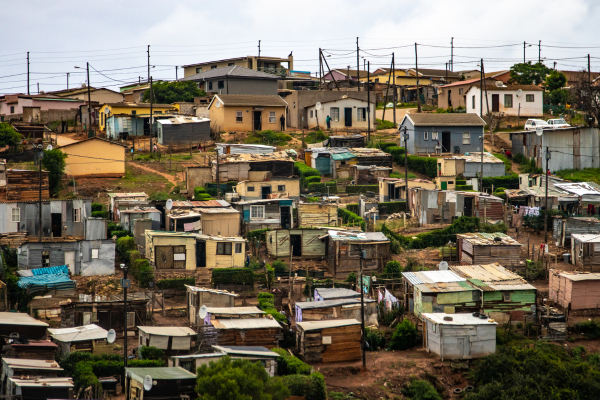
Mumbai’s Slum Rehabilitation Authority (SRA) has cancelled a majority of the slum redevelopment projects that were earlier planned under joint venture arrangements with various government agencies after authorities found that many of the projects had made little progress on the ground. Advertisement






The action affects 181 of the 228 projects that were proposed under the joint venture model across Mumbai and parts of the Mumbai Metropolitan Region. The projects were earlier planned in partnership with agencies including the Brihanmumbai Municipal Corporation (BMC), Maharashtra Housing and Area Development Authority (MHADA), Mumbai Metropolitan Region Development Authority (MMRDA), Maharashtra State Road Development Corporation (MSRDC), CIDCO and MIDC.
The joint venture model was introduced nearly two years ago with the aim of speeding up redevelopment on government-owned land parcels and reducing delays in slum rehabilitation projects. Authorities had expected the involvement of multiple government agencies to improve execution and clear long-pending redevelopment proposals in densely populated slum pockets.
However, officials reviewing the projects reportedly found that several schemes had not moved beyond initial stages. In many cases, agencies had not completed important requirements such as biometric surveys of residents, verification of eligible beneficiaries, feasibility assessments and preparation of detailed redevelopment plans.
SRA Chief Executive Officer Mahindra Kalyankar reportedly stated that many projects lacked basic preparedness despite being announced earlier, which made execution difficult. Officials also found that some projects were financially unviable because of limited free-sale components, rehabilitation costs and infrastructure constraints in congested areas.
Out of the projects initially handed over to various agencies, only a limited number will now continue under the original joint venture structure. Reports stated that BMC will continue with 44 projects out of the 77 assigned to it, while MHADA will retain only two out of 24 projects. MMRDA will continue with one project out of the five that were allotted earlier.
The remaining projects are expected to return to SRA control and may be redeveloped through alternative models, including cluster redevelopment schemes. Authorities are also expected to review whether some of these projects can be merged with larger redevelopment plans to improve viability and speed up rehabilitation.
Officials said the affected projects involve around 2.2 lakh slum families living across different parts of Mumbai and surrounding regions. The scale of the decision highlights the larger difficulties faced by Mumbai’s slum redevelopment sector, where several projects have remained delayed for years due to legal disputes, lack of funding, consent-related issues and slow approvals.
Over the past few years, many SRA projects across Mumbai have remained stalled after developers failed to complete rehabilitation buildings or defaulted on transit rent payments to residents. In several redevelopment projects, families shifted to temporary accommodation years ago but are still waiting for permanent rehabilitation homes.
Areas including Vakola, Golibar, Bandra East and parts of Andheri have witnessed long delays in redevelopment projects, with some schemes remaining incomplete for more than a decade. The state government has recently increased scrutiny of delayed SRA projects and has initiated action in multiple cases involving non-performing developers.
Authorities had also announced plans in recent months to appoint new developers for several stalled projects after repeated complaints from residents regarding unpaid rent and construction delays. The government has been attempting to streamline the redevelopment process as Mumbai continues to face pressure on affordable housing and rehabilitation infrastructure.
Industry experts believe the latest decision reflects a shift towards more practical and financially sustainable redevelopment models rather than continuing with large-scale joint venture structures that struggled to move forward. Experts have often pointed out that redevelopment projects in Mumbai become difficult because of fragmented land ownership, rehabilitation obligations, infrastructure limitations and approval-related delays.
The cancellation of these projects may temporarily slow redevelopment activity in some areas, but officials believe removing inactive and non-viable schemes could help authorities focus on projects that are capable of moving ahead within realistic timelines.

5th Jun, 2025

25th May, 2023

11th May, 2023

27th Apr, 2023
Advertisement









 Facebook
 Whatsapp
