Advertisement






What really powers the cloud? Behind every Google search, A...
A lot of what defines a home isn’t visible at handover. I...
Private equity has played a significant role in shaping Indi...
Luxury real estate is one of the most talked-about segments ...
Airports play a much bigger role than just enabling travel -...
The Mumbai-Ahmedabad bullet train corridor has achieved another major construction milestone with the successful installation of five heavy portal beams over active railway tracks in Ahmedabad’s Maninagar area. Executed by the National High Speed Rail Corporation Ltd (NHSRCL), the work involved some of the heaviest precast structures launched over live Indian Railways lines so far. The complex operation was completed within 22 days using a 2,200 MT crawler crane while maintaining regular train movement. The development marks further progress in India’s first high-speed rail project, which is targeted for operations in 2027.
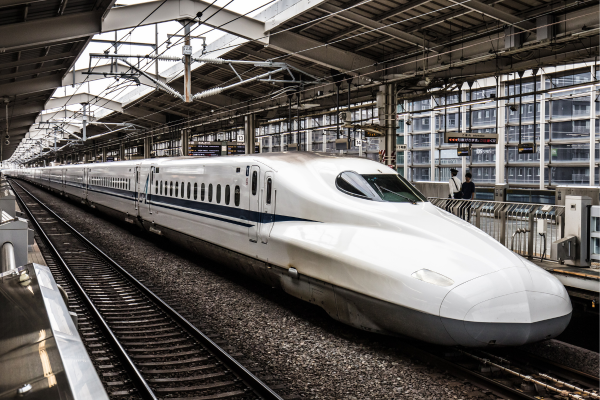
The National High Speed Rail Corporation Ltd (NHSRCL) has completed the installation of five massive portal beams over operational railway tracks in Maninagar, Ahmedabad, marking a significant engineering achievement for the Mumbai-Ahmedabad bullet train project. Advertisement






The work was carried out on the Ahmedabad-Vadodara railway route during the past few weeks and was completed within 22 days. The portal beams were installed at locations where the high-speed rail corridor crosses existing Indian Railways lines at an elevated level. The section is considered one of the more technically challenging parts of the project because of continuous train movement, overhead electrical infrastructure and limited working space.
According to NHSRCL, the beams installed are among the heaviest precast-prestressed concrete portal beams launched over live railway tracks in India till now. The heaviest structure weighed around 1,360 metric tonnes, while the remaining beams weighed between 1,170 MT and 1,360 MT.
Each portal beam measures nearly 34 metres in length and has a cross-section of about 5.5 metres by 4.5 metres. The structures were cast at the project site before being lifted and placed as single integrated units. NHSRCL used a 2,200 MT crawler crane for the operation, which officials said was deployed for the first time over active Indian Railways tracks for this kind of work.
The crossing section includes the Ahmedabad-Vadodara up line, down line and third railway line. Officials stated that due to the skewed alignment and pier spacing ranging from 30 metres to 34 metres, conventional construction methods could not be used. As a result, specially designed heavy portal structures were developed for the corridor.
The beam launching activity was completed under planned traffic and power blocks in coordination with Indian Railways authorities. NHSRCL also managed to reduce the time required for each beam launch to nearly 3.5 hours from earlier estimates of around nine hours, helping minimise disruption to railway operations.
Officials involved in the project said multiple safety checks and real-time monitoring systems were used during the execution process due to the operational nature of the railway lines below. The work was carried out while maintaining regular rail traffic on one of the busy routes in Gujarat.
The Mumbai-Ahmedabad High Speed Rail corridor is India’s first bullet train project and covers a distance of around 508 km between Maharashtra and Gujarat. Once operational, trains on the corridor are expected to run at speeds of up to 320 kmph, reducing travel time between Mumbai and Ahmedabad to nearly two hours.
Construction activity on the project has picked up pace over the past two years across stations, bridges, tunnels and viaduct sections. Earlier updates from NHSRCL had stated that more than 300 km of viaduct construction had already been completed across different stretches of the corridor. Work on the undersea tunnel section near Mumbai and station development packages is also progressing simultaneously.
Railways Minister Ashwini Vaishnaw had earlier stated that the first section of the bullet train project is expected to begin operations by August 15, 2027.

5th Jun, 2025

25th May, 2023

11th May, 2023

27th Apr, 2023
Advertisement









 Facebook
 Whatsapp
